
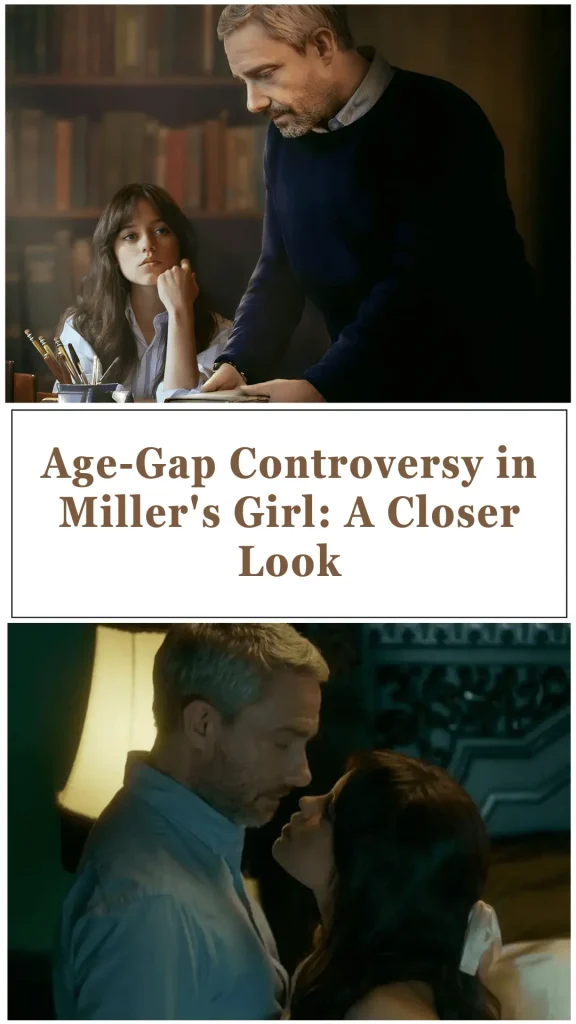

The film Miller’s Girl has recently stirred debate among viewers and critics alike. The controversy centers on the casting of Jenna Ortega, aged 21, opposite Martin Freeman, aged 52, in a role that involves a relationship between a high school teacher and his 18-year-old student. This blog explores the background of the film, the public reaction, and the broader implications of this artistic choice.

The Film and Its Narrative
Miller’s Girl is a film that intentionally pushes the boundaries of traditional storytelling. It presents itself as a literary psychological thriller, more interested in mind games than straightforward romance.
The narrative involves complex, messy relationships that challenge societal norms and ethical lines. At its core is the dynamic between Jonathan Miller (Freeman), a creatively unfulfilled teacher, and his precocious student, Cairo Sweet (Ortega).
A creative writing assignment becomes the catalyst for their increasingly inappropriate bond. Their connection blurs the lines between mentor and mentee, leading them down a dangerous and complicated path.
The film’s depiction of a relationship involving a significant age and power difference has sparked intense discussions. It forces the audience to confront uncomfortable themes.
These themes include the nuances of power imbalances, the nature of consent, intellectual loneliness, and the ethical responsibilities of those in positions of authority.
By choosing to highlight a relationship that many viewers find deeply uncomfortable, the film forces its audience to engage with difficult and often taboo subjects. It is designed to provoke, not to comfort.


Casting Choices and Public Reaction
Jenna Ortega’s involvement in Miller’s Girl, following her global stardom from Wednesday, has not gone unnoticed. Her decision to take on such a challenging and controversial role has placed her directly at the center of public attention.
While her character, Cairo, is 18 years old and thus a legal adult, critics and audiences have still expressed significant concern. The core issue for many is the portrayal of a relationship between a high school teacher and his student.
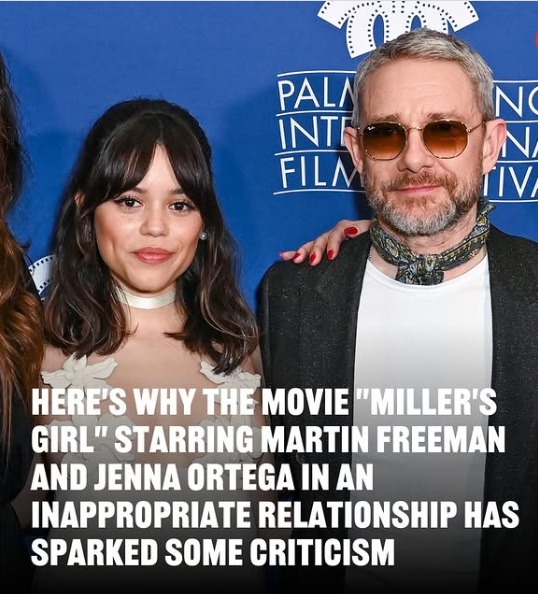
The significant real-world age gap between Ortega (21 at the time of filming) and Freeman (52) has amplified these concerns. This has led to a wave of backlash on social media platforms like TikTok and X (formerly Twitter), as well as in film reviews.
Many viewers have questioned whether such a portrayal is appropriate in today’s cultural climate. They wonder if the film inadvertently glamorizes a power dynamic that is inherently problematic and potentially harmful.
Others have argued that the film exploits provocative themes purely for shock value, rather than offering a meaningful exploration of the subject matter. The “ick factor” became a common refrain in online discussions.
This strong public reaction highlights a growing sensitivity among audiences. Viewers are more willing than ever to call out content they feel crosses an ethical line, regardless of the film’s artistic intentions.

Jenna Ortega’s Response
Amid the heated public debate, Jenna Ortega has addressed the controversy with a maturity and artistic perspective that has been widely noted.
She has acknowledged the discomfort the film has caused for many viewers. She has stated that she understands this reaction is natural, given the highly sensitive subject matter at hand.
In interviews, Ortega noted that not every piece of art is created to be pleasant or comfortable for all audiences. Some art, she suggested, is meant to be challenging.
Her comments frame the film as a deliberate conversation starter. It was designed to evoke strong reactions and prompt discussion about complex social and psychological issues.
She has also emphasized the professionalism on set, particularly when filming the more intimate scenes. Ortega has spoken positively about the role of the film’s intimacy coordinator, Kristina Arjona.
She explained that Arjona’s presence ensured that both she and Freeman felt safe, comfortable, and respected throughout the process. This created a secure environment where they could explore their characters’ difficult dynamic without compromising their own boundaries.
By accepting the criticism while defending the film’s artistic purpose, Ortega has demonstrated a clear commitment to her craft. She continues to choose challenging, unconventional roles that spark conversation.


Examining the Broader Implications
The controversy surrounding Miller’s Girl is not just about one film. It raises important and timeless questions about the intersection of artistic freedom and social responsibility.
Filmmakers and artists have long used provocative and taboo themes to push audiences out of their comfort zones and to reflect on the darker aspects of the human condition.
In this case, the film brings up difficult issues about age, power dynamics, grooming, and the complexities of consent. This has led to a clear division in how the film is perceived.
While some viewers see the portrayal as a meaningful and nuanced exploration of these taboo subjects, others worry that it might inadvertently normalize or romanticize relationships that are inherently harmful in the real world.
This sharp division in opinion highlights the ongoing and ever-evolving debate between creative expression and ethical responsibility within the film industry. Where does one draw the line?


The Importance of Context and Intent
Furthermore, the discussion surrounding the film emphasizes the crucial need for clear communication about a film’s artistic intent. Is the film endorsing this relationship, or is it serving as a cautionary tale?
The tone of Miller’s Girl is that of a dark, psychological thriller, not a straightforward romance. The film’s atmosphere is tense and unsettling, suggesting that this relationship is a destructive force, not an aspirational one.
It is essential for filmmakers and actors to help provide this context. In the case of Miller’s Girl, Jenna Ortega’s explanation of her role and her understanding of the film’s themes helps audiences see beyond the initial shock.
Her commentary provides a framework for understanding the broader message of the film. This kind of transparency from the creators is crucial for fostering constructive dialogue rather than polarizing, reactionary debates.
When the intent is to critique a problematic dynamic, it must be done with skill and clarity to avoid being misinterpreted as a celebration of it.


Conclusion
Ultimately, Miller’s Girl serves as a potent and timely reminder of the power of cinema to provoke thought, stir discomfort, and challenge conventional views.
The age-gap controversy has created a valuable space for important and ongoing conversations. It touches on the limits of artistic expression, the ethics of storytelling, and the responsibilities of those who work in the film industry.
Whether one views the film as a daring and intelligent exploration of complex themes or as a misguided and problematic piece of storytelling, the discussion it has generated is both necessary and culturally relevant.
As the debate continues, it will be fascinating to see how future films choose to address similar sensitive issues. The central question remains: how can cinema strike a delicate balance between a creator’s artistic freedom and a growing sense of social and ethical accountability?thumb_upthumb_down