
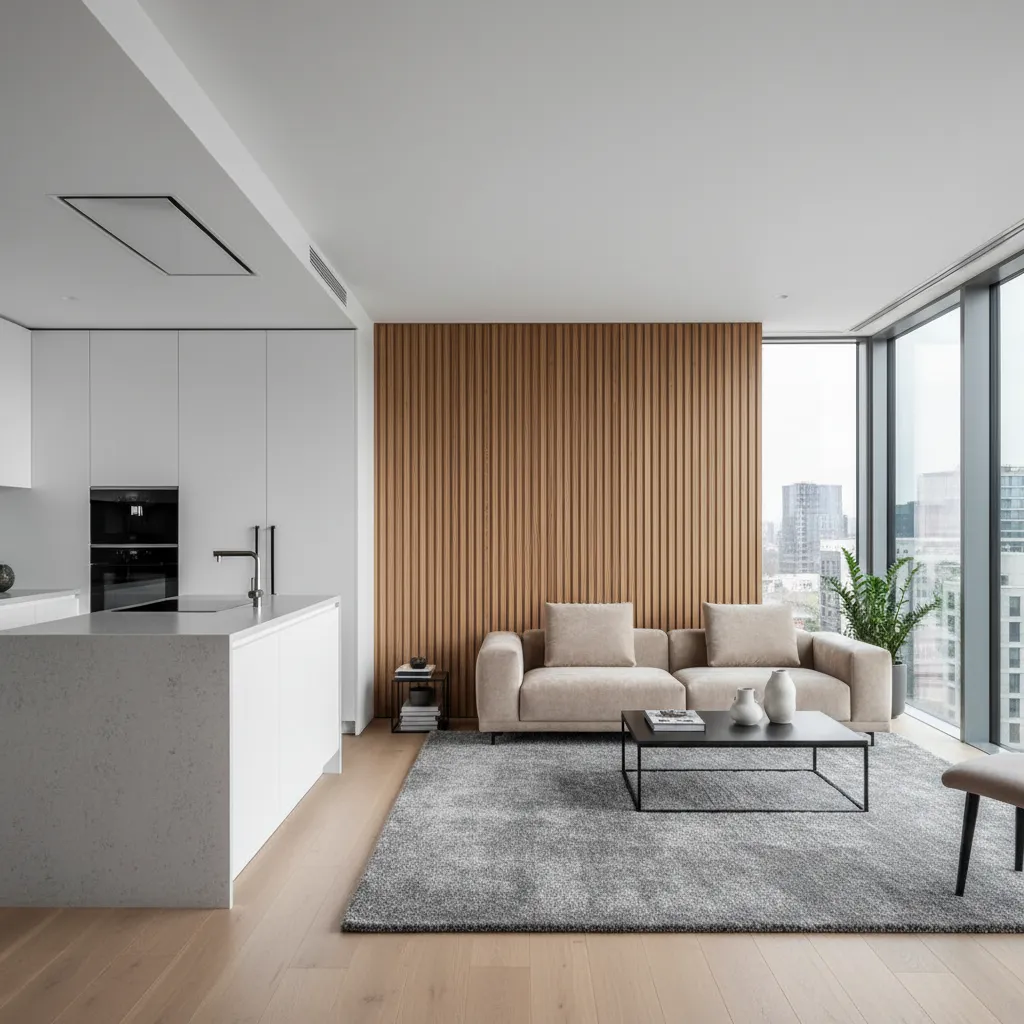

Table of Contents
- 1. Integrate Acoustic Wood Slats and Textiles to Dampen Noise
- 2. Prioritize High-CFM Flush Ventilation to Eliminate Cooking Odors
- 3. Establish Visual Zoning with Strategic Furniture and Rug Dimensions
- 4. Unify the Space with Continuous Large-Format Flooring and Palette
- 5. Implement Hidden Storage Walls to Maintain Minimalist Sightlines
- Harmonizing Your Modern Open Sanctuary
- Curated Open Living Insights
Integrating a kitchen and living space requires a deep understanding of structural flow and material continuity. A well executed floor plan balances load bearing requirements with the visual harmony of unified flooring surfaces. Whether you are drafting a new blueprint or renovating an existing footprint, selecting the right hardwood or tile foundation sets the stage for a seamless transition between culinary and relaxation zones.
Modern open layouts demand a sophisticated approach to zoning through lighting and furniture placement. Designers often utilize pendant lights and kitchen islands to define boundaries without obstructing sightlines. For office environments and residential homes alike, choosing a cohesive color palette ensures that the space feels expansive yet intimate. High quality finishes and custom cabinetry provide the durability needed for high traffic areas while maintaining a polished, professional appearance.
Finalizing your open concept space involves layering handmade decor and personalized accents that reflect your unique style. From crafting bespoke shelving to selecting artisanal textiles, the small details bridge the gap between architectural precision and lived-in comfort. This guide provides actionable insights and detailed comparisons to help you navigate every stage of the design process, ensuring your stylish kitchen and living area is both functional and inspiring.
Integrate Acoustic Wood Slats and Textiles to Dampen Noise

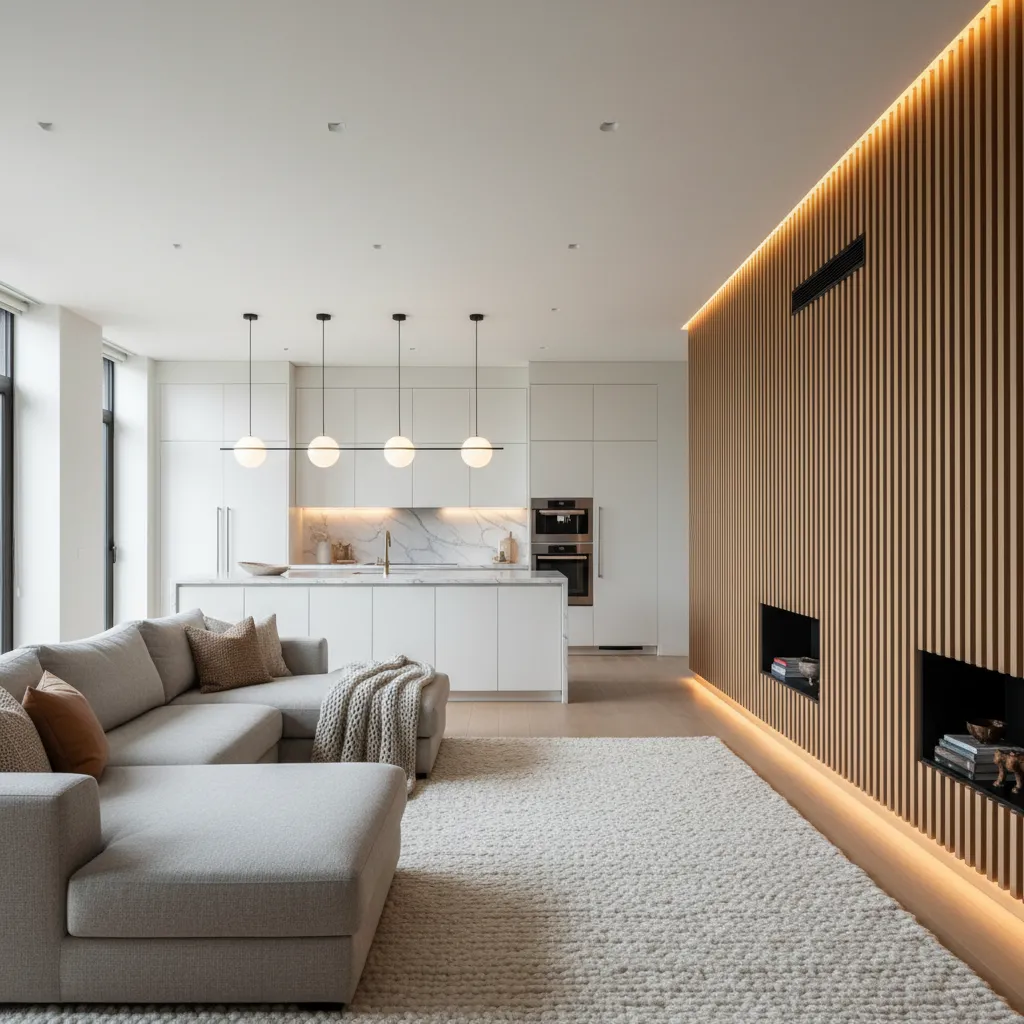
Open floor plans offer a sense of spaciousness but often suffer from poor acoustics. The lack of walls allows kitchen noise to travel freely.
To combat echoes without sacrificing style, designers currently favor acoustic wood slats. These panels combine warm timber with sound-absorbing felt.
The vertical lines draw the eye upward, increasing the perceived height of the room. This adds a layer of architectural sophistication to the space.
Functionally, the felt backing traps sound waves, significantly reducing reverberation. This makes conversations in the living area clearer and more intimate.
This design choice creates a seamless visual transition between zones. It mirrors the aesthetic found in modern houses with wooden slat pattern facades.
True luxury in a modern home is the absence of unwanted noise.
Layering Soft Textiles for Silence

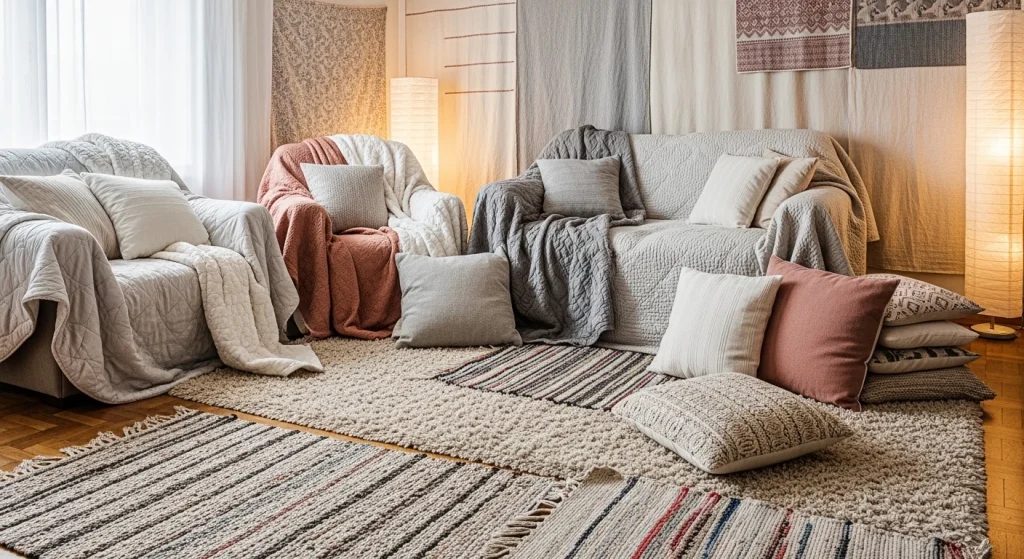
Hard surfaces like granite and concrete amplify sound. You must introduce soft textures to counterbalance these reflective materials.
Heavy drapes and plush upholstery act as sound sponges. Velvet and wool are particularly effective at dampening high-frequency kitchen clatter.
Area rugs are critical for anchoring the soundscape. You should reference a proper rug size for sectional sofa guide to ensure adequate floor coverage.
To control sound, you need to cover at least 25 percent of the room’s hard surfaces with absorbent materials like rugs or acoustic panels.
The Editors, Architectural Digest
Strategically placed textiles also define specific zones. They signal to the brain that the living area is a place for rest and quiet conversation.
The table below compares popular materials based on their ability to dampen noise in an open-concept space.
| Material Choice | Acoustic Performance | Visual Texture |
|---|---|---|
| Acoustic Wood Slats | High (absorbs echoes) | Linear, architectural, warm |
| Heavy Velvet Drapes | Medium-High (dampens outside noise) | Luxurious, soft, flowing |
| Wool Area Rugs | Medium (reduces footfall impact) | Cozy, grounded, woven |
| Standard Drywall | Very Low (reflects sound) | Flat, minimal, cold |
By combining these elements, you create a sanctuary within an open plan. The result is a home that feels as peaceful as it looks.
Acoustic Style Secrets
- Follow the 25% Rule: To effectively neutralize echo in an open-concept layout, ensure at least one-quarter of your hard surfaces (walls and floors) are covered with absorbent materials like area rugs or acoustic panels.
- Vertical Visuals: Install acoustic wood slats vertically rather than horizontally; beyond trapping noise, the upward lines trick the eye into seeing higher ceilings, adding architectural grandeur.
- Prioritize Dense Fabrics: When selecting textiles, opt for heavy materials like velvet or wool over light cottons. These denser fabrics act as superior ‘sound sponges’ specifically for high-frequency kitchen clatter.
Prioritize High-CFM Flush Ventilation to Eliminate Cooking Odors

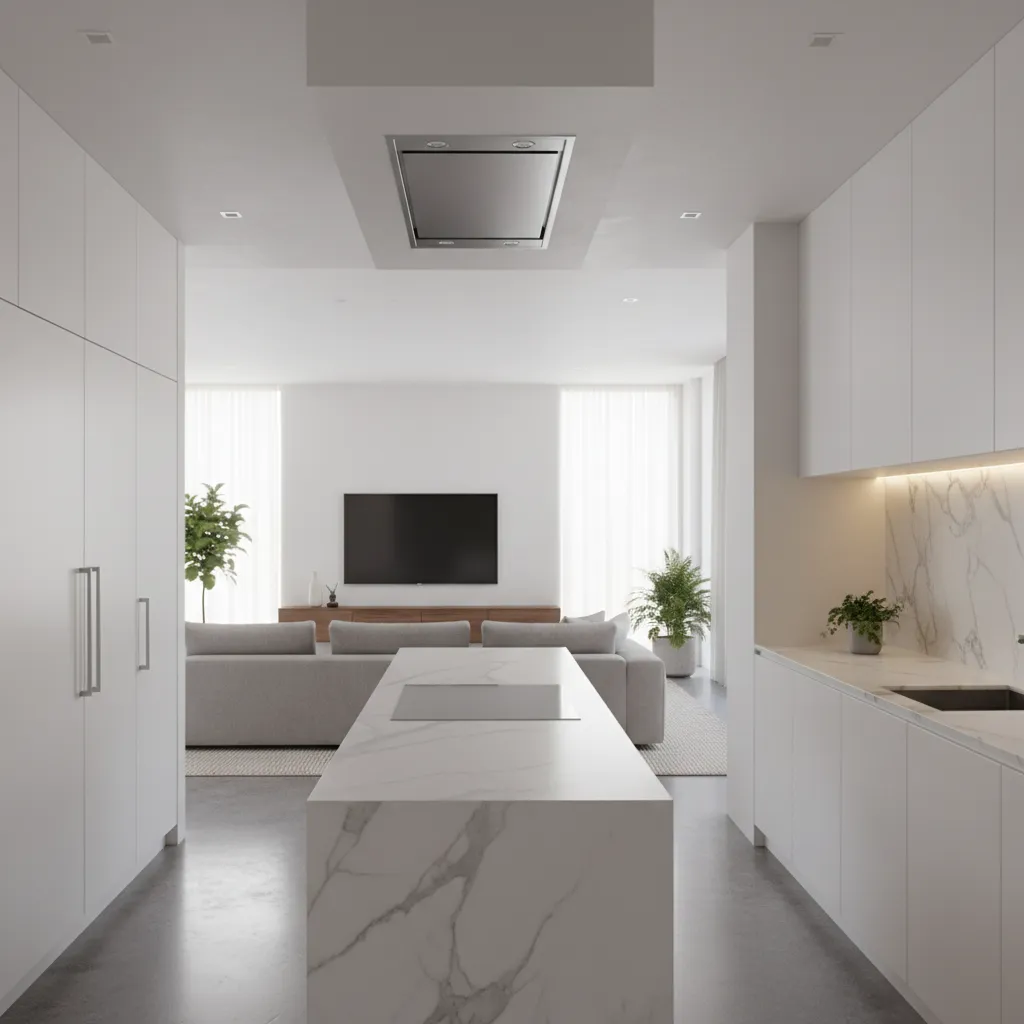
In an open-concept layout, the boundary between culinary creation and relaxation dissolves. Without proper airflow, strong cooking scents can linger on your sofa fabrics and rugs for days.
High-CFM (Cubic Feet per Minute) hoods are essential for rapidly cycling air. A flush-mount design hides the mechanism within the ceiling or cabinetry, maintaining clean sightlines.
True luxury in an open home is invisible; it is the silence of the air and the purity of the space.
Visually, this choice allows other design elements to shine. Imagine a backsplash of textured slate or matte ceramic tiles uninterrupted by a bulky stainless steel chimney.
This seamless integration supports a minimalist aesthetic, common in 52 Scandinavian Living Room Layouts for Open Spaces that rely on unobstructed views and natural light flow.
Calculating Power and Noise Levels

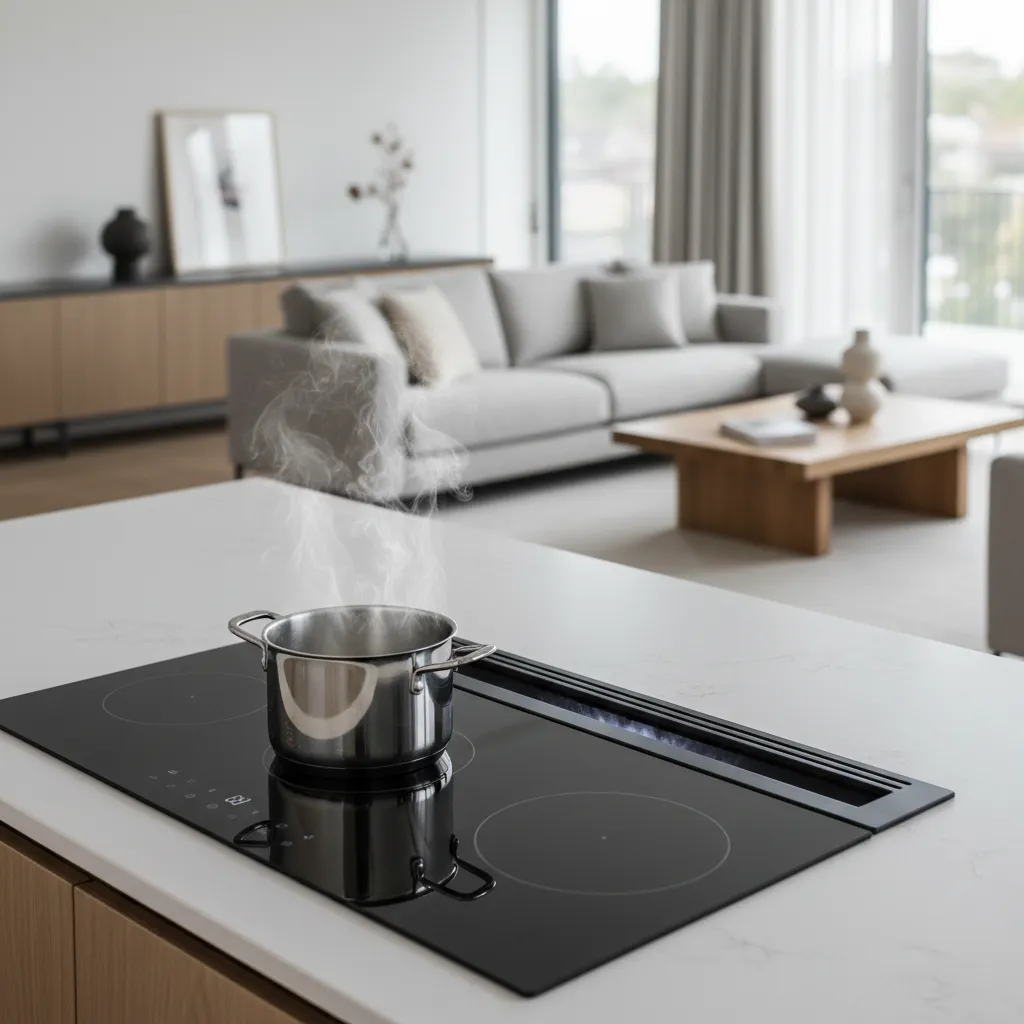
Calculating the correct power level is critical for functionality. A general rule of thumb is to seek 100 CFM for every linear foot of electric cooktop, or significantly more for gas.
If you have an open floor plan, you need to be very careful about noise. You want a hood that moves air but doesn’t sound like a jet engine taking off.
Fu-Tung Cheng, The New York Times
The following checklist ensures your ventilation choice balances power with the acoustic needs of a shared living space.
- Check the Sones Rating: Look for a rating of 1.5 or lower at normal speeds to ensure conversation remains easy in the adjacent living area.
- Verify Duct Size: Ensure your ductwork matches the hood’s requirements to prevent back-pressure and reduce motor strain.
- Remote Blower Options: Consider installing the blower motor in the attic or on the roof to isolate the noise from the kitchen.
- Capture Area: The hood should be at least as wide as your range, ideally three inches wider on each side for optimal smoke capture.
Investing in quality air filtration protects your furniture investment. It ensures that your plush velvet armchairs and linen drapes remain fresh, inviting guests to linger longer.
The Fresh Air Factor
- Turn your hood on 5–10 minutes before cooking to establish a directional airflow current; this ensures smoke is captured the moment it rises rather than drifting sideways.
- If a remote blower isn’t an option for your home’s structure, ask your contractor about installing an in-line duct silencer (muffler) to significantly dampen motor noise.
- Utilize the ‘run-on’ timer feature found in luxury models to keep the fan running on low for 15 minutes post-cooking, scrubbing the air before particles settle on soft furnishings.
Establish Visual Zoning with Strategic Furniture and Rug Dimensions

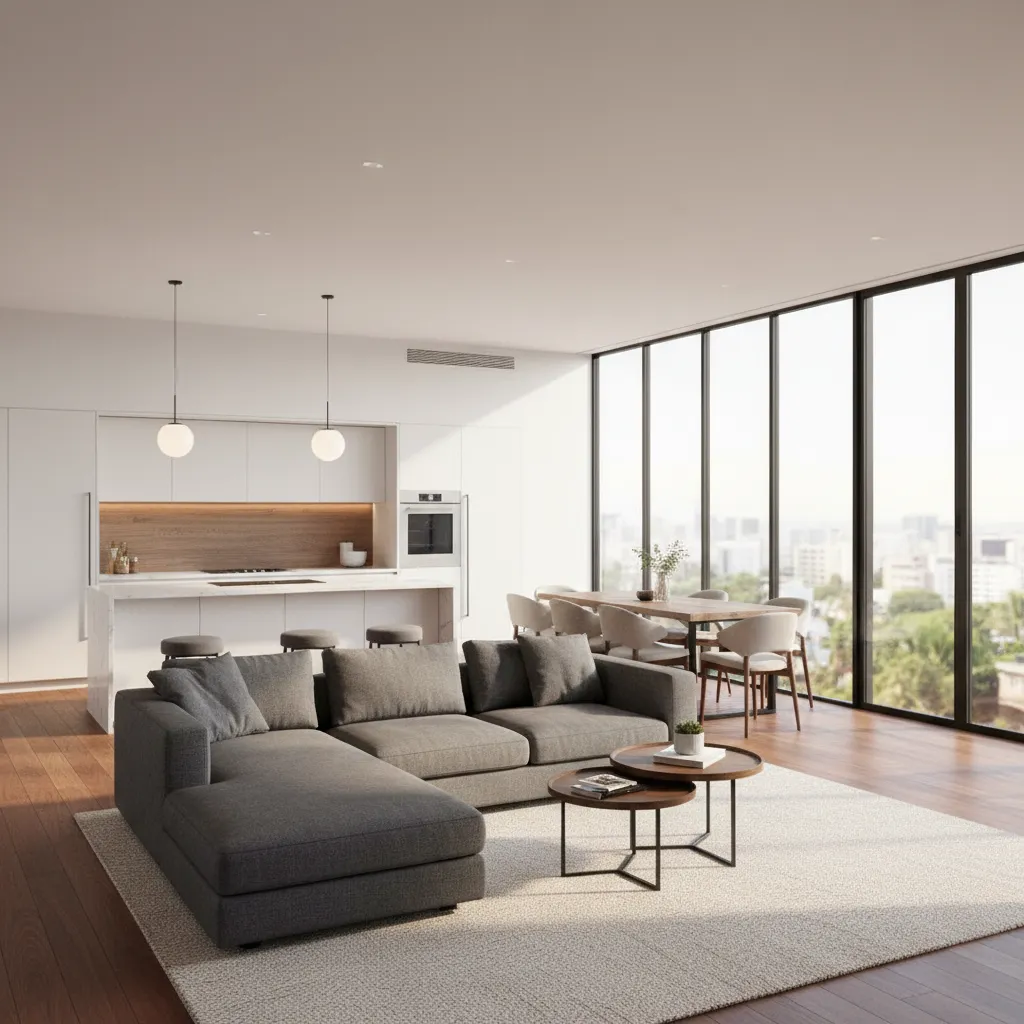
In the absence of physical walls, your furniture arrangement must perform the heavy lifting. You must create invisible boundaries that guide the eye.
Visual zoning prevents an open floor plan from feeling like a chaotic warehouse. It defines purpose while maintaining a cohesive aesthetic flow.
True open-concept design is about creating distinct rooms without using a single wall.
The Anchor Effect of Area Rugs

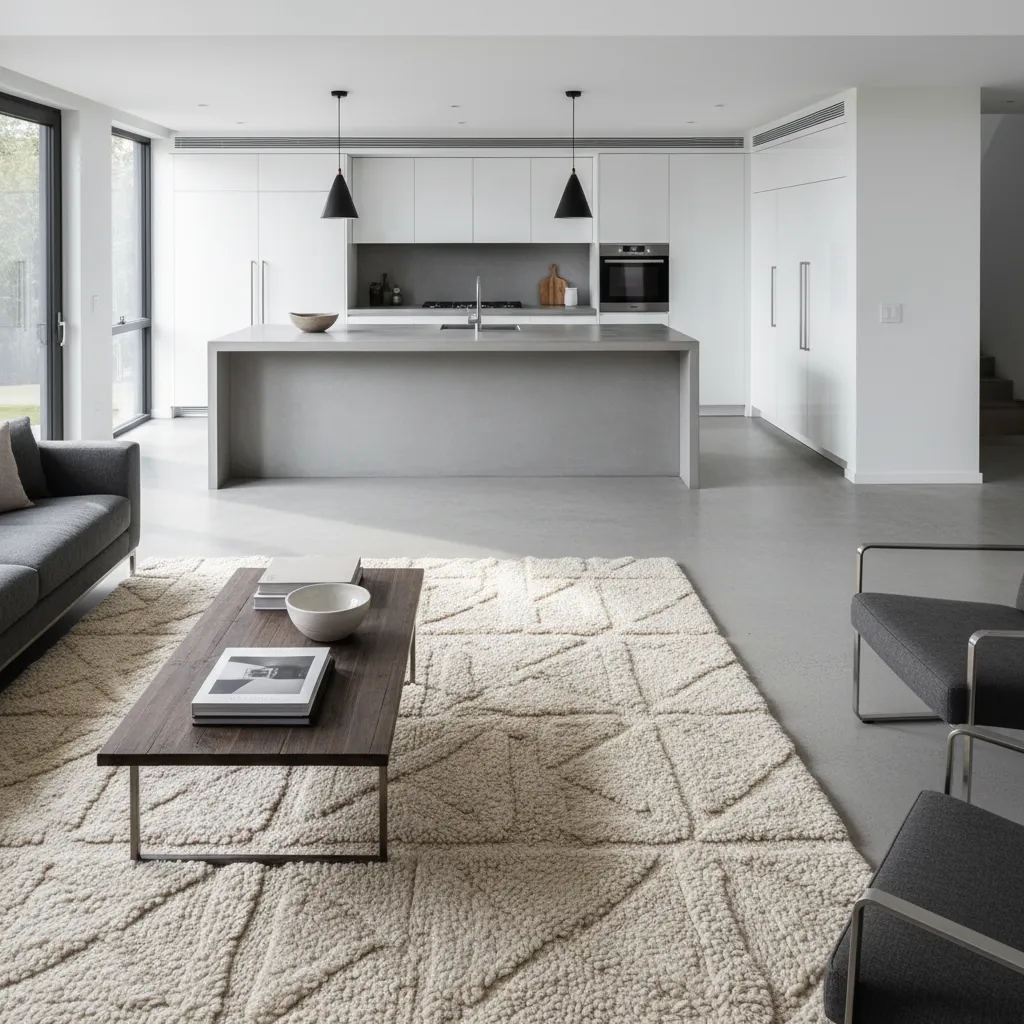
A properly sized rug is the most effective tool for establishing a zone. It acts as an island for your furniture, signaling where the lounge area begins.
Ensure the front legs of all seating furniture rest comfortably on the rug. This creates a unified conversation circle rather than floating pieces.
For those struggling with dimensions, reviewing a proper rug size for sectional sofa guide is essential. Correct sizing prevents the room from feeling disjointed or cluttered.
Texture plays a crucial role here as well. A high-pile plush rug offers a tactile shift from the hard surfaces of a kitchen, subconsciously signaling comfort.
In an open-plan space, you need to use your furniture to create ‘rooms.’ A rug is the best way to do this. It grounds the furniture and defines the area.
Bobby Berk, Architectural Digest
Furniture Placement and Traffic Flow

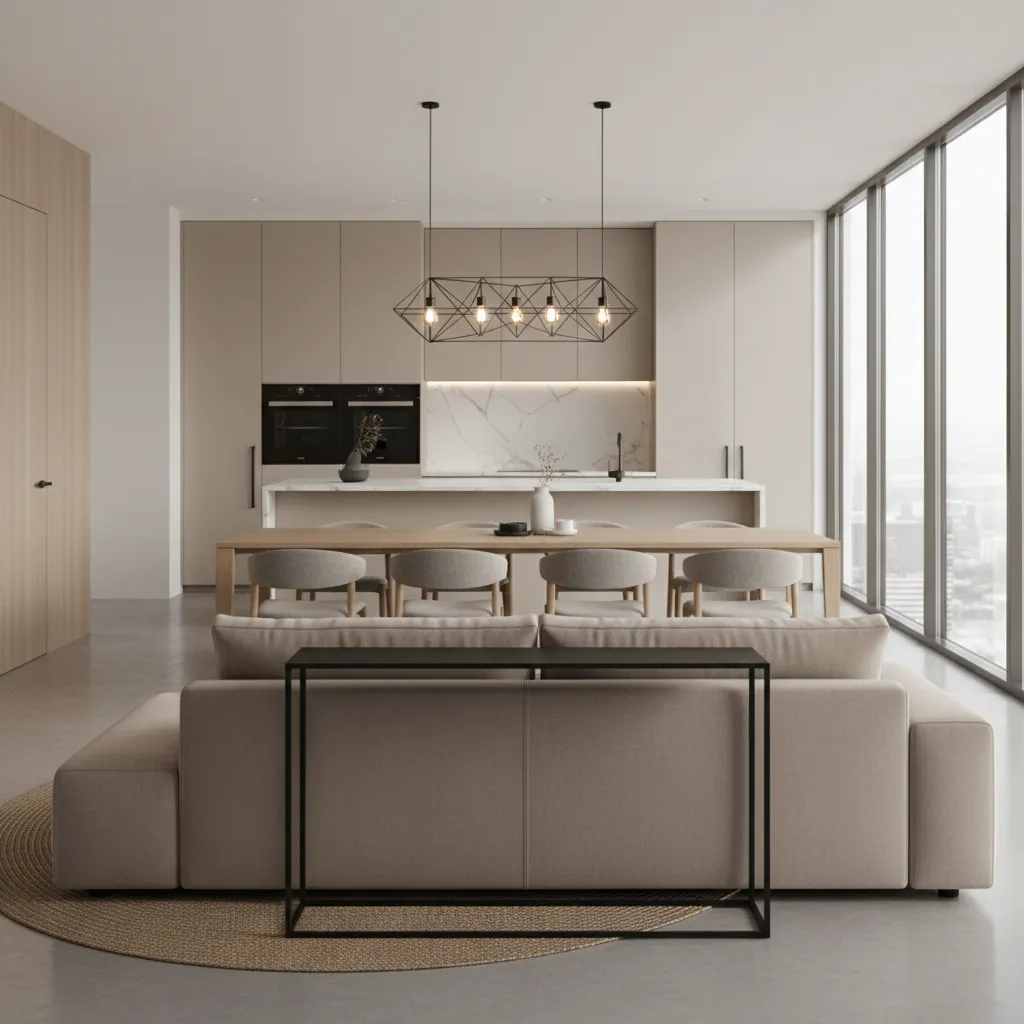
The back of your sofa acts as a low-profile wall. Orienting it away from the kitchen visually separates the culinary workspace from the relaxation zone.
Place a slim console table behind the sofa to soften this boundary. Decorate it with books or ceramics to add a layer of intentional design.
Maintain clear pathways for movement. You never want to force guests to squeeze between an island and a sofa to reach the patio.
If you prefer a minimalist aesthetic, consider Scandinavian living room layouts for open spaces which prioritize airiness and functional simplicity.
Optimal Clearance Dimensions for Flow
Functionality relies on mathematics. Adhering to specific clearance measurements ensures your open layout remains navigable and safe.
| Zone Transition | Minimum Clearance | Functional Impact |
|---|---|---|
| Kitchen Island to Sofa | 42 – 48 inches | Allows two people to pass; prevents cooking splatter reaching upholstery. |
| Dining Chair to Wall | 36 inches | Ensures guests can slide chairs back without hitting a bookshelf or wall. |
| Main Walkways | 36 – 42 inches | Maintains high-traffic flow without bottling up movement during gatherings. |
| Coffee Table to Sofa | 14 – 18 inches | Keeps drinks within reach while allowing comfortable legroom. |
Vertical Zoning with Lighting
Do not rely solely on floor-level elements. Lighting fixtures can carve out distinct volumes of space from the ceiling down.
Install a large pendant light or chandelier directly over the coffee table. This lowers the visual ceiling of the living area, making it feel intimate.
Contrast this with recessed lighting in the kitchen. The difference in light sources creates a psychological boundary between “work” and “rest” areas.
Space-Defining Secrets
- Use painter’s tape on your floors to test clearance paths; aim for at least 36 inches; before committing to large furniture pieces.
- Layer a plush, textured rug over a larger flat-weave base to add extra tactile definition to your ‘conversation island.’
- Place a slim console table behind a ‘floating’ sofa to act as a stylish buffer and provide a landing spot for lighting or decor.
Unify the Space with Continuous Large-Format Flooring and Palette

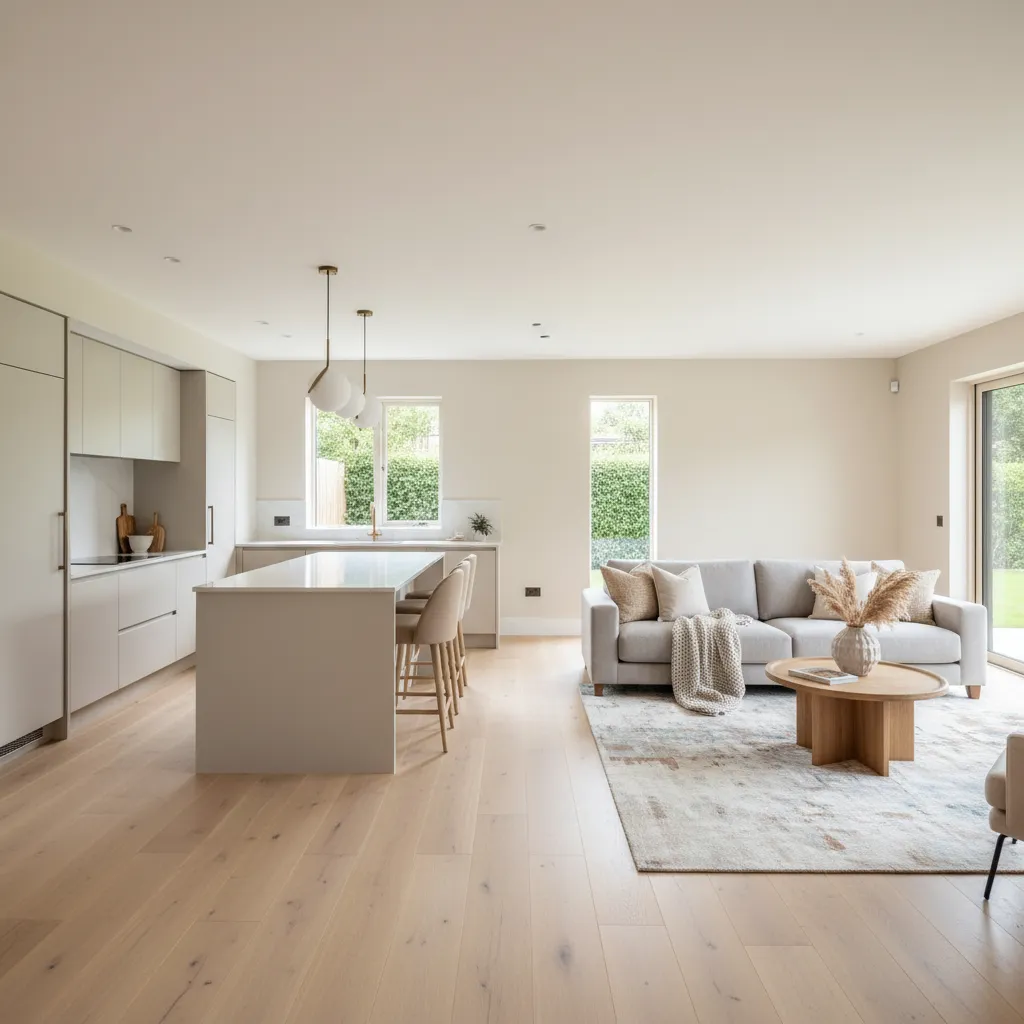
In open-concept layouts, the floor acts as the primary canvas. Using a single material across the kitchen and living area eliminates visual barriers. This instantly expands the perceived space.
Avoid transitioning materials where the rooms meet. A hard line between kitchen tile and living room carpet chops the floor plan in half. Instead, extend one durable material wall-to-wall.
Seamless flooring is the silent architect of an open home, allowing light and energy to travel without interruption.
Selecting Large-Format Materials

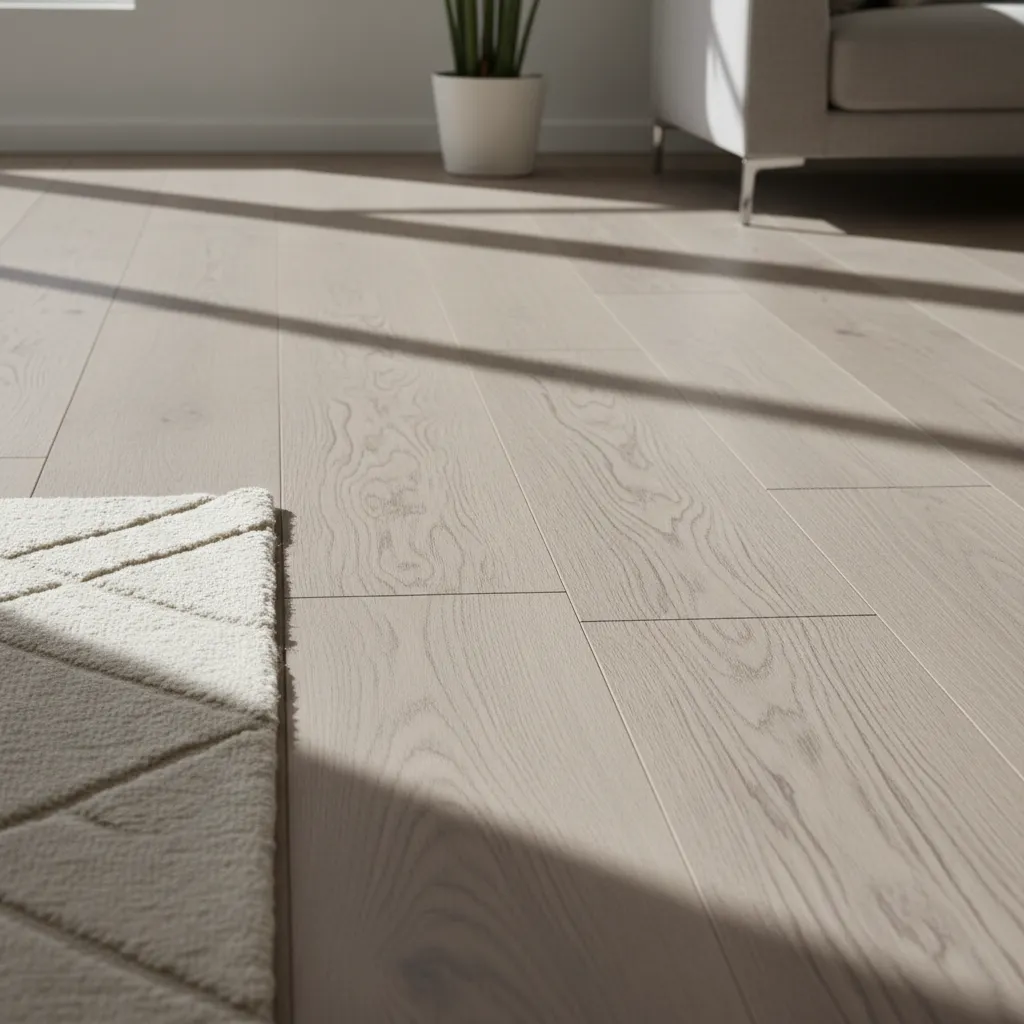
The scale of your flooring impacts the room’s grandeur. Wide planks or large tiles reduce the number of grout lines. This lack of visual clutter creates a serene and expansive atmosphere.
Engineered hardwood is a top choice for modern aesthetics. It offers the warmth of wood with the stability needed for kitchen humidity. Look for planks at least 7 inches wide for a premium look.
If you prefer an industrial edge, consider large-format porcelain tiles. A 24×48 inch tile in a stone finish is incredibly durable. It mimics the sleek look found in Scandinavian modern houses.
To keep the two distinct areas connected, choose a core color palette to use throughout the space… Repeat this color in the dining chairs, a rug, or even a piece of art.
The Spruce Editorial Team, Decorating Tips for Open Floor Plans
Cohesive Color Palette Application

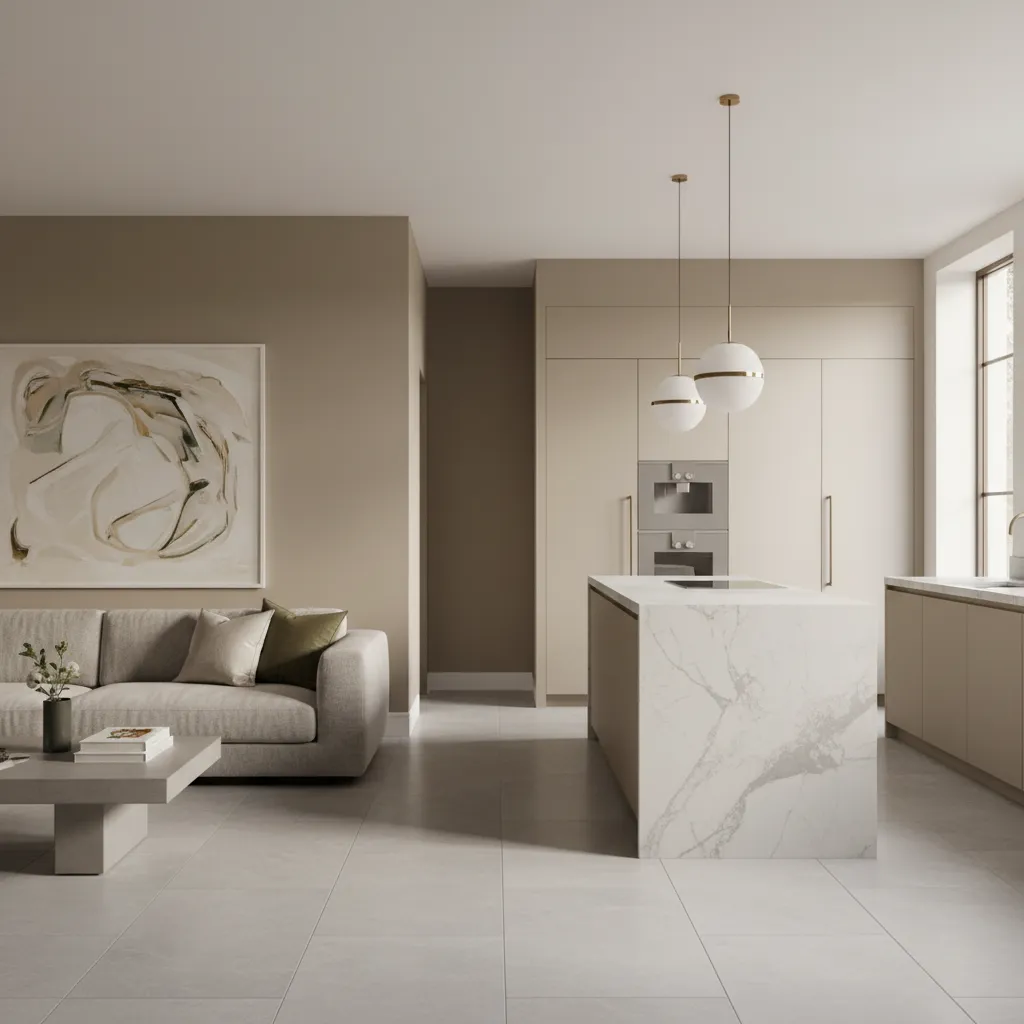
Your color story must flow as smoothly as your flooring. Select a neutral base tone for walls in both zones. This allows the architectural lines of the room to stand out without distraction.
Echo materials to bridge the gap between function and relaxation. If your kitchen island is walnut, use walnut legs on your sofa. This repetition creates a subconscious sense of order.
Textiles soften the acoustics of hard flooring. Use plush rugs to define the lounge area without building walls. For more on layering textures, check our cozy room decor tips.
Material Comparison for Continuous Flow
Choosing the right flooring involves balancing kitchen durability with living room comfort. Below is a comparison of popular large-format options.
| Material Type | Visual Continuity | Kitchen Durability | Living Room Comfort |
|---|---|---|---|
| Engineered Wood | High (Warm & Natural) | Medium (Water Resistant) | High (Warmer underfoot) |
| Porcelain Tile | High (Sleek & Seamless) | Very High (Waterproof) | Low (Cold/Hard) |
| Polished Concrete | Very High (No seams) | Very High (Stain prone) | Low (Industrial feel) |
| Luxury Vinyl (LVP) | Medium (Mimics Wood) | High (Waterproof) | Medium (Softer feel) |
Designer Continuity Hacks
- Match your grout color as closely as possible to your large-format tiles to minimize visible lines and create the illusion of a single, solid surface.
- Run floor planks or tiles parallel to the longest wall or towards the primary light source to draw the eye forward and elongate the room’s perspective.
- To bridge the kitchen and living area effortlessly, match the wood grain of your cabinetry to a piece of furniture in the lounge, such as a coffee table or shelving.
Implement Hidden Storage Walls to Maintain Minimalist Sightlines

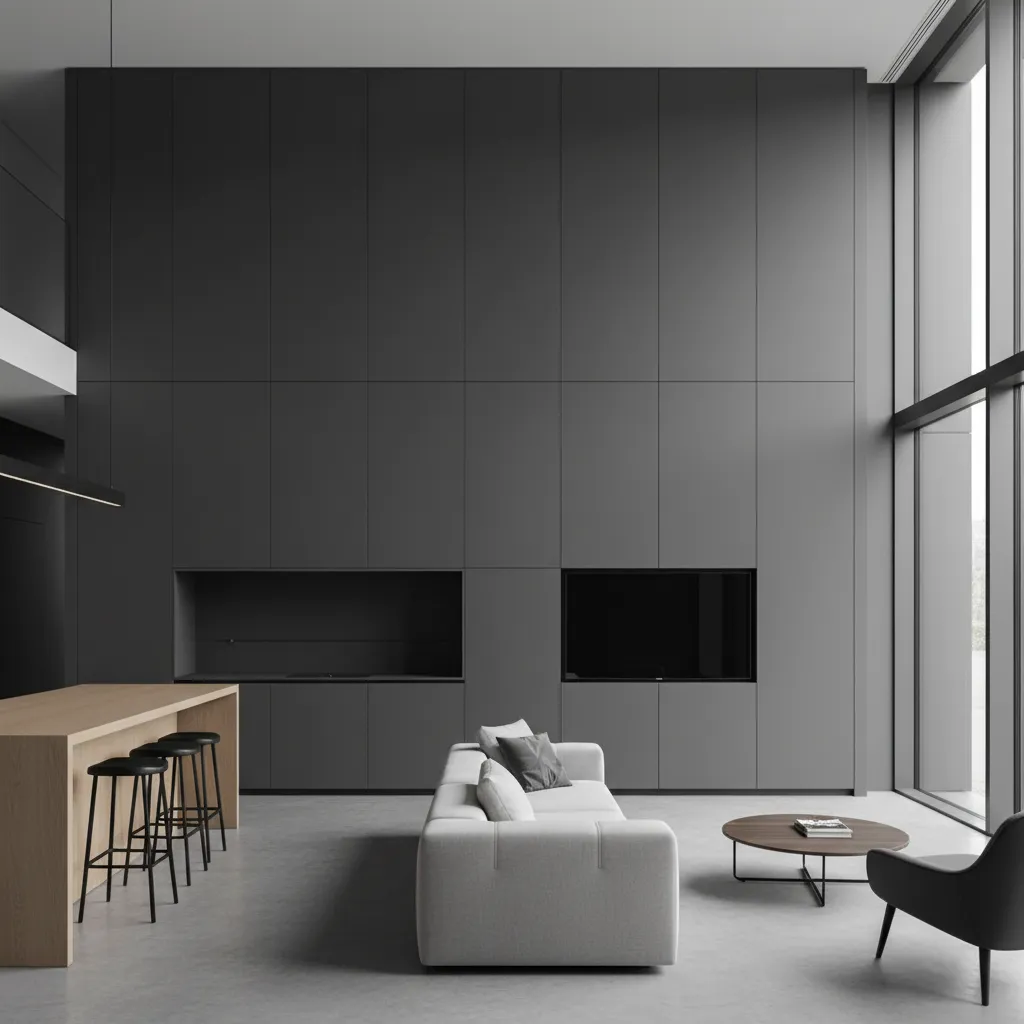
Visual clutter significantly disrupts the flow of modern open interiors. Implementing a floor-to-ceiling storage wall creates a cohesive backdrop that hides daily necessities.
These structures often mimic the architectural shell of the room. By using push-to-open hardware, you eliminate visual noise caused by protruding handles and knobs.
Minimalism is not about removing personality, but about removing the distractions that hide it.
Seamless Material Transitions

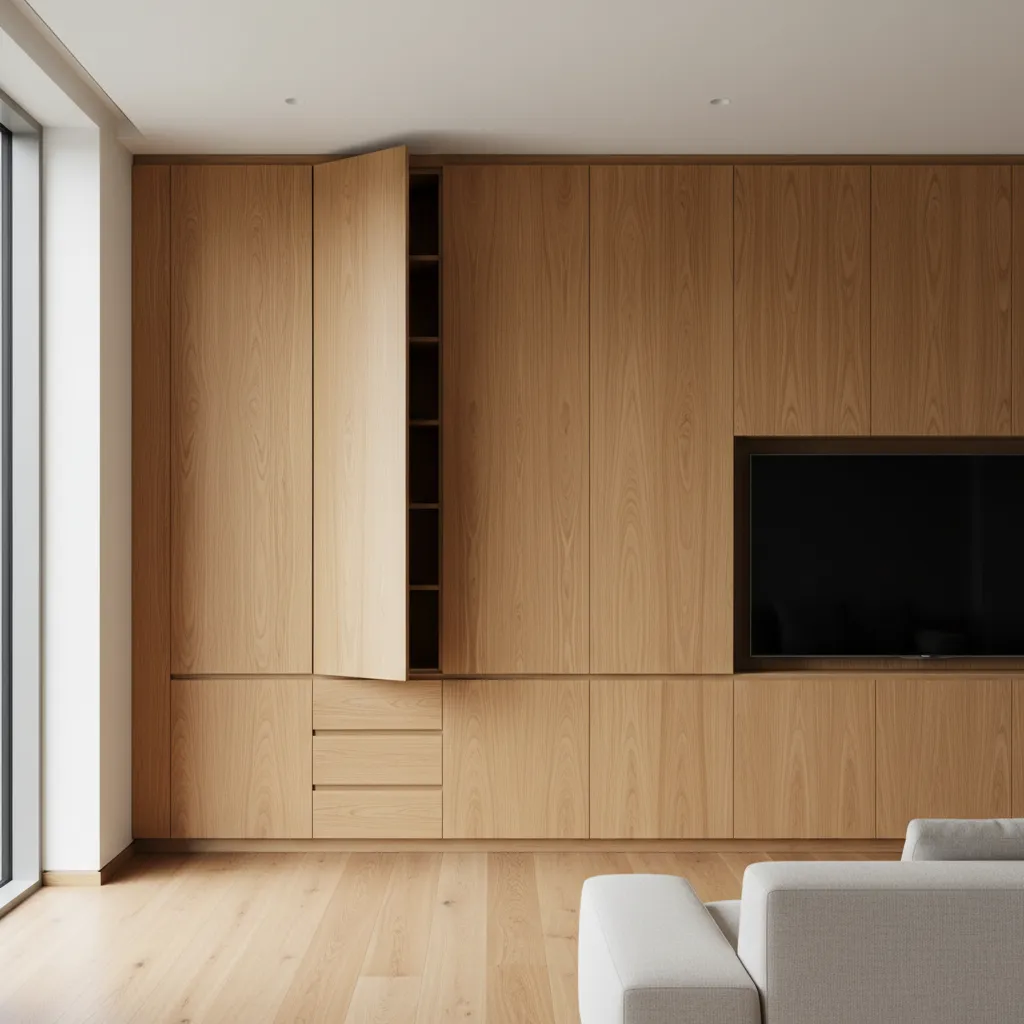
Choose materials that complement your flooring for a continuous look. Natural wood veneers add warmth to the space without overwhelming the existing visual palette.
The interior layout is just as critical as the exterior finish. For those struggling with internal arrangements, exploring 15 closet organization ideas for small closets and tight spaces can maximize the utility of these shallow units.
In open-plan living, storage walls act as a silent partner. They allow the architecture to breathe by absorbing the accumulation of daily life into the fabric of the building.
Elizabeth Stamp, Architectural Digest
The Concealed Appliance Station

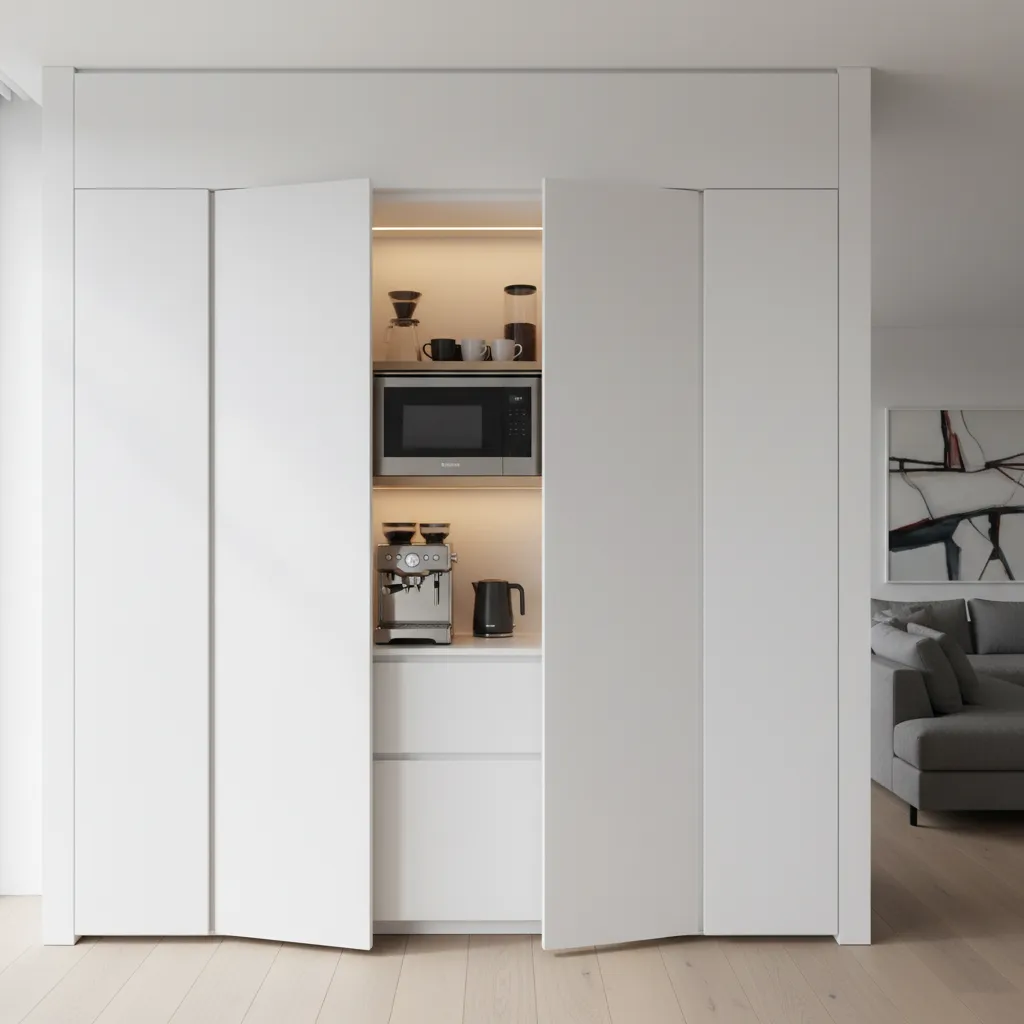
A popular feature in modern walls is the concealed appliance station. Pocket doors slide away to reveal a functional workspace, then close to restore the sleek look.
You might even integrate a station inspired by simple home coffee bar ideas anyone can create today behind retractable pocket doors to keep counters clear.
When selecting the finish for your storage wall, consider how light interacts with the surface. The table below compares popular finishes for modern open-concept spaces.
| Finish Type | Visual Impact | Maintenance Level | Best For |
|---|---|---|---|
| Matte Lacquer | Absorbs light; soft, velvety look | High (shows oils) | Ultra-modern, monochrome themes |
| Wood Veneer | Adds texture and organic warmth | Medium (durable) | Scandi or Japandi styles |
| High-Gloss | Reflects light; expands space | Medium (shows prints) | Smaller or darker rooms |
| Textured Melamine | Mimics stone or linen depth | Low (very durable) | High-traffic family areas |
Strategic lighting enhances these installations. Install LED strips within the cabinetry or recessed spot lighting above to highlight the texture of the doors.
Stealth Storage Secret
- Paint your storage wall the exact same shade and sheen as your surrounding walls to make the units virtually disappear into the architecture.
- Opt for recessed toe-kicks and shadow gaps instead of traditional baseboards to maintain a continuous, floating aesthetic.
- Incorporate internal power outlets inside your hidden appliance stations to eliminate cord clutter on your primary surfaces.
Harmonizing Your Modern Open Sanctuary
Designing an open kitchen requires balancing spaciousness with intimacy. You must manage sound, sightlines, and style to create a cohesive home.
Acoustic treatments like wood slats transform noisy echoes into architectural warmth. Soft textiles ground the living area, defining zones without walls.
True luxury lies in the invisible details. By layering textures and prioritizing function, your open floor plan becomes a peaceful, unified retreat.
Curated Open Living Insights
Incorporate acoustic wood slats and plush rugs. Soft surfaces absorb sound waves, preventing kitchen clatter from overwhelming the living space.
Use furniture placement and lighting. Facing a sofa away from the kitchen or using a large area rug instantly creates a distinct living zone.
Repeat materials and colors. Carry the timber tone from your kitchen cabinetry into the living room furniture or shelving for a unified aesthetic.
Absolutely. By introducing warm textures like wool, velvet, and natural wood, you soften the hard edges of modern design for a cozy atmosphere.