


Creating a home library is a dream for book lovers, but making it both functional and visually appealing requires creativity. With a few DIY tricks, you can enhance your library without spending a fortune. Here are ten clever hacks to transform your reading space.


1. Build Floating Bookshelves
Why It Works
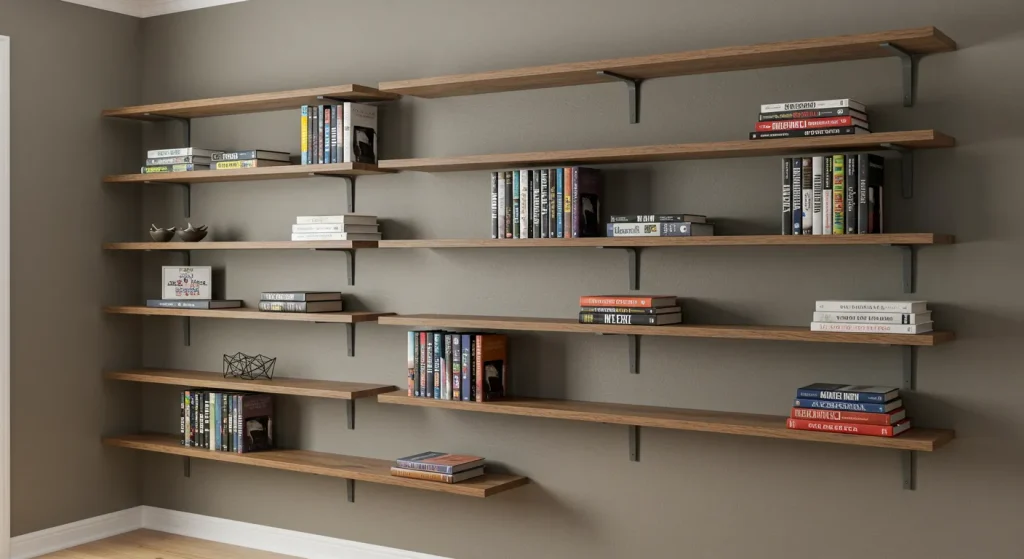
Floating bookshelves maximize space and create a sleek, modern look. They are perfect for small home libraries or rooms with limited floor space.
How to Do It
- Use sturdy, hidden shelf supports or heavy duty floating shelf brackets that screw directly into wall studs for maximum strength.
- Plan your layout with painter’s tape on the wall first to visualize the spacing and arrangement before drilling any holes.
- Paint the shelves the exact same color as your wall to create a seamless, built in effect that makes them visually disappear.
- Arrange the shelves at varying heights or in a staggered pattern to create a more dynamic and visually interesting design.
- Utilize otherwise wasted vertical space by installing shelves in narrow nooks, above doorways, or high up on a wall.
- For a truly magical look, use invisible book ledges, which are small metal shelves that are completely hidden by the first book.
- Choose reclaimed or rustic wood planks to pair with industrial metal brackets for a charming farmhouse aesthetic.
- Always use the appropriate wall anchors for your wall type, such as toggle bolts for drywall, to ensure a secure installation.
- Consider building custom corner floating shelves to take advantage of every available inch of your space.
- Add a very small lip or edge to the front of the shelf to provide extra security and prevent books from slipping off.

2. Create a Cozy Reading Nook
Why It Works
A dedicated reading space makes your library more inviting and comfortable.
How to Do It
- Identify a suitable spot, such as an underused corner, a wide windowsill, or the space underneath a staircase.
- Anchor the space with a comfortable chair, like a plush armchair or a soft papasan, that you can curl up in for hours.
- Layer in plenty of soft textures with oversized cushions, plush pillows, and a chunky knit or faux fur throw blanket.
- Define the area and add warmth underfoot with a small, soft rug.
- Ensure you have excellent, targeted lighting with a nearby floor lamp or an adjustable wall sconce.
- Incorporate a small side table or a garden stool to hold a cup of tea, a notebook, or your reading glasses.
- Add a small footstool or a pouf so you can put your feet up and fully relax.
- Install a few narrow picture ledges on the wall to hold your current reads and favorite covers.
- Create a sense of enclosure and extra coziness by hanging a light, airy curtain from the ceiling to frame the nook.
- Keep a beautiful woven basket next to your chair to hold extra blankets or your “to be read” pile.


3. Repurpose Old Furniture for Bookshelves
Why It Works
Giving old furniture a second life is both budget-friendly and eco-conscious.
How to Do It
- Transform a solid wood dresser into a charming bookshelf by removing the top drawers and reinforcing the inside shelves.
- Find old wooden wine or apple crates and stack them in a modular arrangement, securing them to each other for stability.
- Give any secondhand piece a fresh look with a coat of chalk paint and a new set of stylish hardware.
- Use an old china hutch or glass front cabinet to display and protect your most beautiful or delicate book collections.
- Line the back of the repurposed piece with a fun, patterned wallpaper or a bold paint color for a custom touch.
- Turn a vintage media console or a low credenza into a perfect storage spot for heavy coffee table and art books.
- Repurpose an old, non functional fireplace mantel by placing it against a wall and filling the opening with stacks of books.
- Mount a sturdy wooden pallet vertically on the wall and slide books into the openings for a rustic, industrial display.
- Transform a vintage wardrobe or armoire by removing the doors and adding shelves inside for deep, spacious book storage.
- Use an old metal locker set, painted a bright color, for a durable and playful storage solution in a kids’ room or office.


4. Install a Rolling Ladder
Why It Works
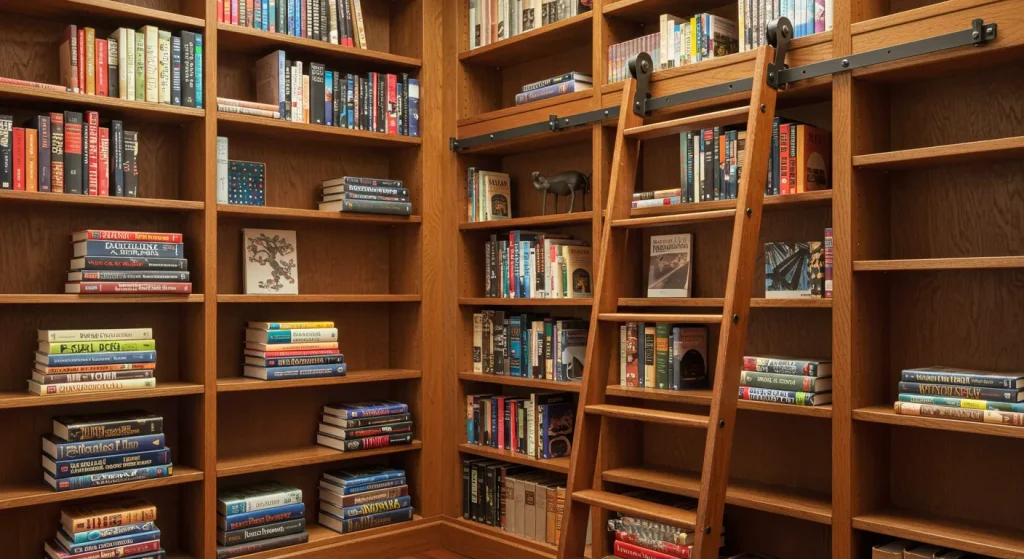
A rolling ladder adds a classic library feel while making high shelves more accessible.
How to Do It
- Purchase a complete rolling ladder kit online to ensure all the hardware, wheels, and rail components are compatible and safe.
- Carefully measure the height of your shelving and the length of the wall to order the correct size rail and ladder.
- Securely attach the sliding rail system to a solid wood header board or directly into the wall studs for maximum support.
- Choose a ladder made from a sturdy wood like oak or maple and select a hardware finish that complements your decor, like matte black or brass.
- Paint the ladder a bold, contrasting color, such as deep green or classic black, to make it a stunning focal point.
- Add felt or rubber pads to the bottom of the ladder feet to protect your floors from scratches as it rolls.
- For a more budget friendly option, consider a non rolling library ladder that simply hooks onto the rail and can be moved manually.
- Ensure the ladder has comfortable, non slip treads for safe climbing.
- Regularly inspect and tighten all the bolts and hardware to ensure the system remains safe and secure over time.
- If you have a corner, use a special curved rail piece to allow the ladder to move seamlessly around it.

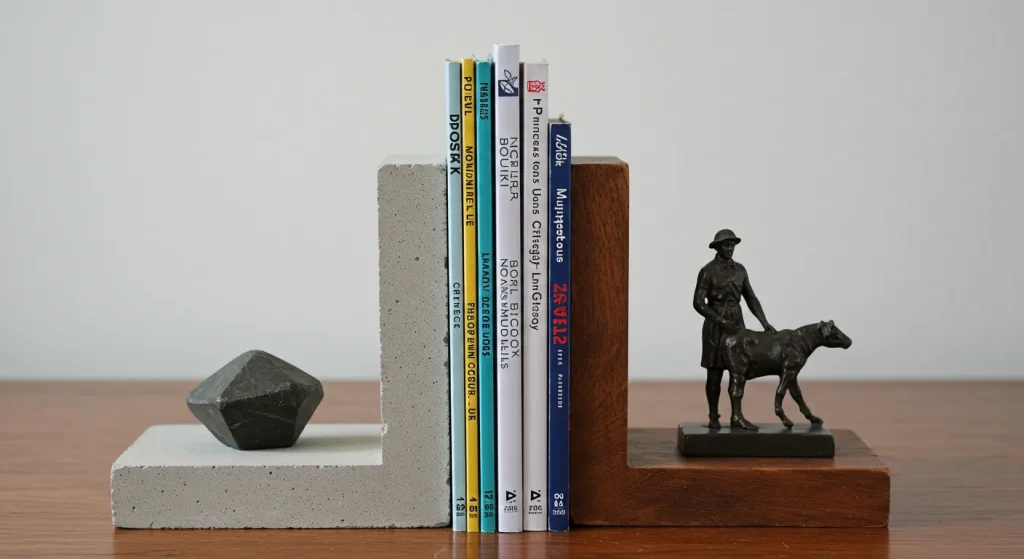
5. Use Bookends Creatively
Why It Works
Bookends keep books organized while adding a decorative touch.
How to Do It
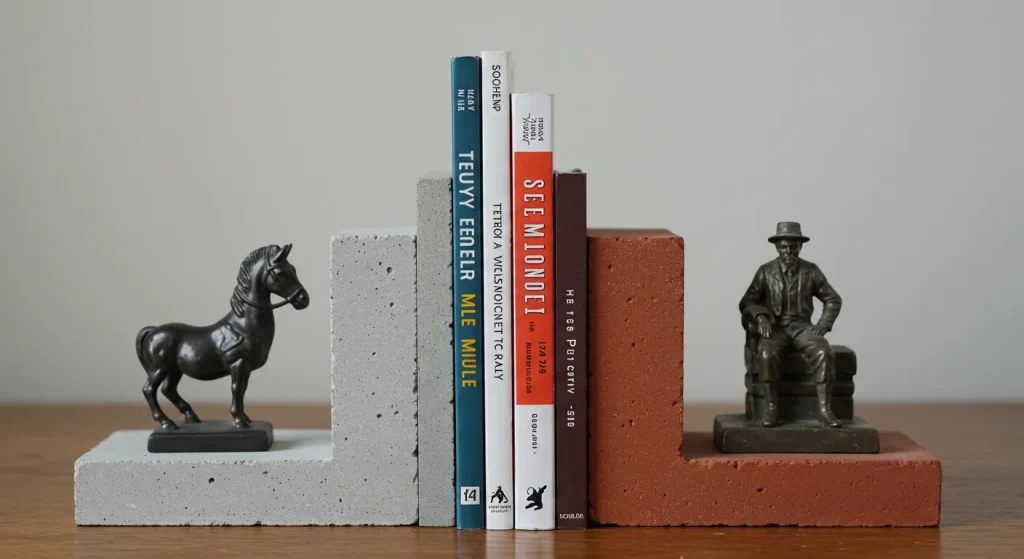
- Spray paint two ordinary bricks or large, smooth stones in a metallic or matte finish for a heavy, minimalist look.
- Use vintage items with natural weight and character, such as old cameras, cast iron sad irons, or wooden shoe forms.
- Create your own custom bookends using quick set concrete poured into molds like milk cartons or food containers.
- Glue interesting plastic animal or dinosaur toys to sturdy L-shaped brackets or wood blocks and spray paint them a single, chic color.
- Fill two identical glass vases or jars with decorative items like sand, colorful stones, wine corks, or even fairy lights.
- Use two halves of a beautiful geode or a large crystal cluster for a touch of natural glamour and sparkle.
- Find a pair of interesting ceramic or plaster figurines at a thrift store to add a touch of whimsy.
- Cover two plain blocks of wood with beautiful fabric or decorative paper using Mod Podge.
- Use sturdy, potted plants like succulents or snake plants in heavy pots as living bookends.
- x`Repurpose old, heavy tools from a flea market for a unique, industrial chic vibe.

6. Add LED Strip Lighting
Why It Works
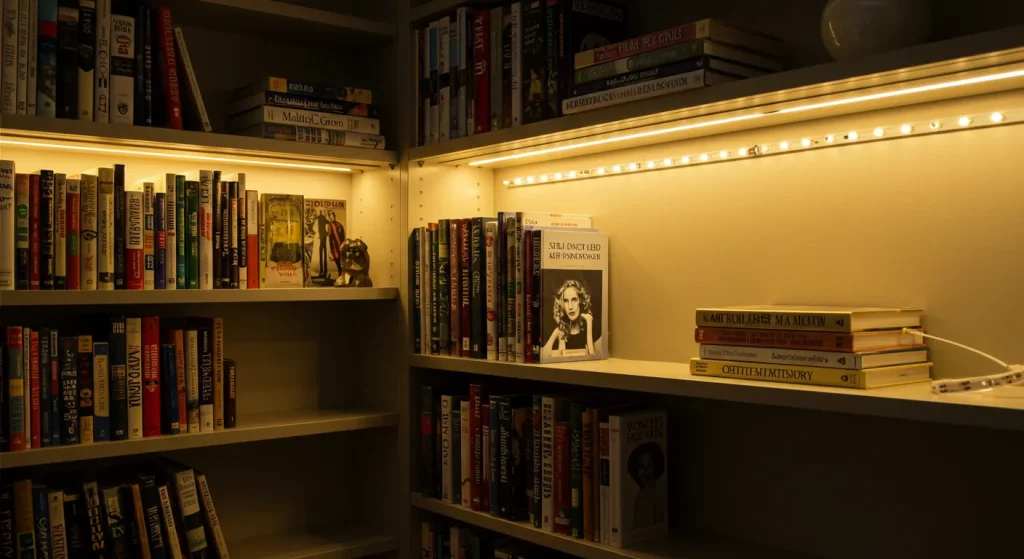
Proper lighting enhances visibility and creates a cozy atmosphere.
How to Do It
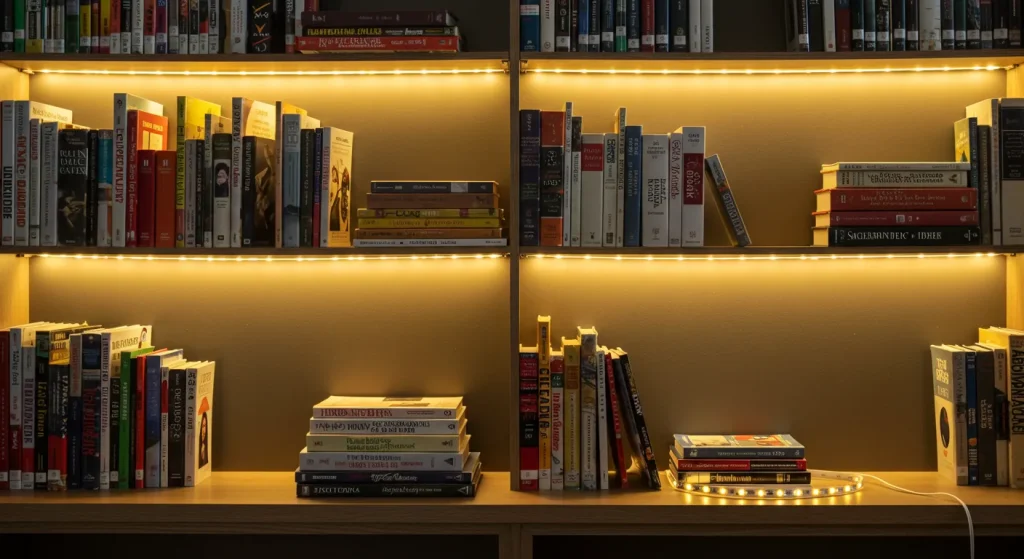
- Use LED tape with a self adhesive backing for a quick and easy installation on the underside of your shelves.
- Place the strips along the front interior edge of each shelf to cast a soft, downward glow directly onto the book spines.
- Choose LED strips with a warm white color temperature, around 2700K to 3000K, for the coziest atmosphere.
- Opt for a dimmable, remote controlled, or smart LED system so you can easily adjust the brightness and mood.
- For a clean installation without visible wires, drill small, discreet holes in the back corners of your bookshelf to thread the cords through.
- Use battery powered, motion activated puck lights for a completely wireless solution inside cabinets or closets.
- Install the LED strips inside plastic channel diffusers for a softer, more even glow that hides the individual light dots.
- Run LED strips vertically along the inside frames of the bookcase to illuminate the sides of the books.
- This is a great way to highlight specific shelves containing your most prized collections or decorative objects.
- Ensure the power supply is properly hidden behind the bookshelf or routed neatly along a baseboard.

7. Label and Categorize Books Creatively
Why It Works
An organized library makes it easier to find books and improves the visual appeal.
How to Do It
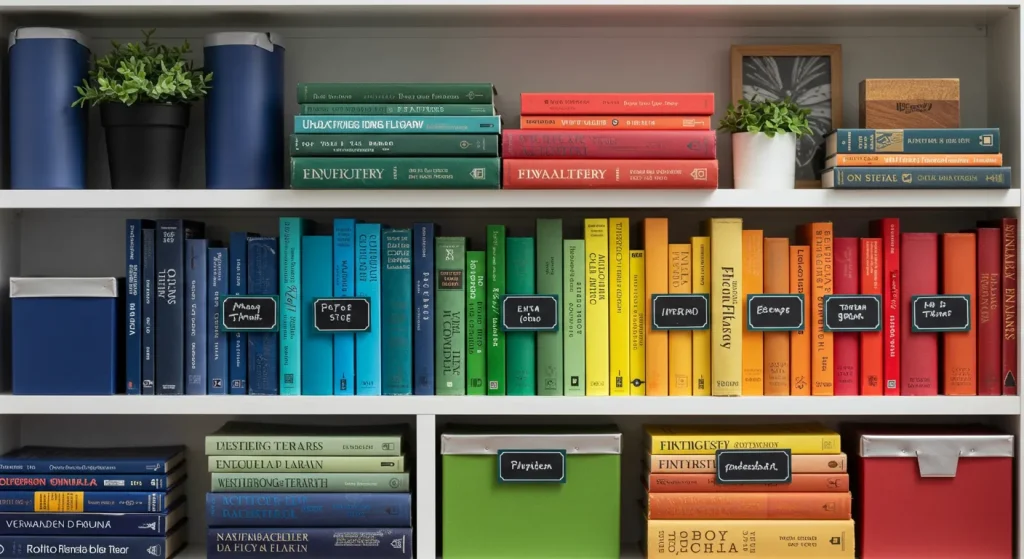
- Sort your books by the color of their spines to create a stunning and artistic rainbow effect on your shelves.
- Use small, decorative metal or wooden tags that clip onto the edge of the shelf to label different genres.
- For a traditional library feel, organize books alphabetically by the author’s last name.
- Create custom labels using a vintage style label maker for a touch of retro charm.
- Designate a specific shelf or a separate book cart for your “to be read” pile to keep your reading goals organized.
- Use small, elegant chalkboard labels that can be easily updated as your collection changes.
- For a truly personal system, organize books based on how they made you feel or by the time in your life you read them.
- Try a fun chronological organization, either by the date they were published or the historical period they cover.
- Group books from specific series or authors together to create cohesive blocks on your shelves.
- In a children’s library, use picture labels alongside text to help little ones find their favorite books.

8. Incorporate a Secret Bookshelf Door
Why It Works
A hidden door adds an element of mystery and sophistication.
How to Do It
- For the safest and most reliable result, start with a pre-fabricated Murphy door kit that includes the jamb, hinges, and bookshelf.
- Use a heavy duty pivot hinge system that is specifically designed to support the significant weight of the door and the books.
- Build the bookshelf to be as lightweight as possible while still being strong, using thinner wood or a hollow core construction.
- Ensure the door is installed perfectly level and plumb so that it swings smoothly without sticking or scraping the floor.
- Create a hidden latch or handle, such as a tilt-to-open book or a discreet pull hidden in the molding.
- Distribute the weight of the books evenly across the shelves, with heavier books placed closer to the hinge side.
- Make sure to install a doorstop to prevent the bookshelf from swinging too far and damaging the wall.
- The illusion works best when the secret door is part of a larger wall of built-in bookshelves.
- Add fake book spines to the hinge side of the bookshelf to better conceal the gap between the door and the frame.
- Consult with a professional builder or carpenter to ensure the installation is structurally sound and safe.


9. Personalize with DIY Wall Art
Why It Works
Adding custom artwork makes your library unique and inspiring.
How to Do It
- Choose your favorite quotes from books and print them in a beautiful font to frame and hang.
- Create an eclectic gallery wall featuring a mix of author portraits, vintage book cover prints, and literary maps.
- Use removable wall decals or washi tape to create a temporary geometric design or spell out a word on the wall.
- Scan and enlarge a beautiful illustration or endpaper from a favorite vintage book to create a large scale art piece.
- Press and frame flowers or leaves that are significant to a particular novel or poem.
- Use Scrabble tiles or wooden letters to spell out book related words and mount them in a shadow box.
- Paint a canvas with chalkboard paint to create a reusable surface for writing out rotating quotes and messages.
- Craft a beautiful mobile by cutting shapes out of the pages of an old, damaged book and hanging them from an embroidery hoop.
- Frame a collection of your favorite, most beautiful postage stamps that feature famous authors or literary characters.
- Create your own minimalist art by typing a single, powerful line from a book on a vintage typewriter and framing the page.


10. Upcycle Old Ladders into Bookshelves
Why It Works
Ladder bookshelves add a rustic charm and are easy to make.
How to Do It
- Find a sturdy, old wooden ladder at a flea market or antique store, paying attention to its character and patina.
- Thoroughly clean the ladder and either sand and repaint it, or seal the existing weathered finish with a clear matte varnish.
- For a simple leaning bookshelf, just lean the ladder against the wall and place books directly across the rungs.
- For more stability and space, place wide wooden planks across the rungs of an A-frame stepladder.
- Mount a long, straight ladder horizontally on the wall to create several long, rustic display shelves.
- Use a small stepladder in a corner to create a tiered display for books and small potted plants.
- Ensure the ladder is stable; if it is just leaning, use non slip pads on the feet and consider securing the top to the wall.
- Paint the ladder a bright, fun color to make it a bold statement piece in the room.
- Hang small S-hooks or wire baskets from the rungs to hold smaller items or trailing plants.
- Use two identical small ladders with planks between them to create a larger, freestanding shelving unit.


Conclusion
Enhancing your home library does not have to be expensive or complicated. With these ten DIY hacks, you can create a space that is both stylish and functional. Whether you add floating shelves, cozy seating, or creative book displays, your library will become a personal retreat that reflects your love for books.