


The act of building a home library is a profound way to curate your personal history and display your intellectual journey through life. It is not merely about storage but about creating an environment that breathes with the stories contained within the pages of your books.
A dedicated reading space serves as a sanctuary where the chaos of modern life is replaced by the quiet rustle of paper and the scent of ink. Whether you have an entire room or a small corner, the right aesthetic choices can turn any area into a literary retreat.
Aesthetic reading nooks are designed to prioritize comfort and visual harmony while celebrating the physical beauty of books. These spaces encourage us to slow down, put away our digital devices, and immerse ourselves in a world created by words and imagination.


1. The Sun Drenched Window Seat Library
A window seat is the quintessential reading nook because it offers a direct connection to the outside world while keeping you cozy indoors. Natural light is the most efficient and pleasing light source for long hours of reading without straining your eyes.
Integrating bookshelves directly into the architecture surrounding a window creates a seamless look that maximizes every available inch of space. You can utilize the area above, below, and on the sides of the window frame to house an extensive collection.
The changing light throughout the day will shift the mood of your library, from the bright energy of the morning to the golden warmth of the afternoon. This dynamic environment keeps the reading experience fresh and connected to the natural rhythm of the day.
DIY Tips
- Select a window with a deep sill or build a wooden bench extension to create enough surface area for comfortable sitting.
- Use high density upholstery foam wrapped in batting to create a seat cushion that will not flatten out after repeated use.
- Install recessed shelving into the wall cavities on either side of the window to create a sleek and built in appearance.
- Paint the interior of the bookshelves a light color to reflect as much natural sunlight as possible back into the room.
- Apply a UV protective film to the window glass to prevent the sun from fading the spines and pages of your book collection.
- Add a small wall mounted sconce with a flexible arm for continued reading sessions once the sun has set in the evening.

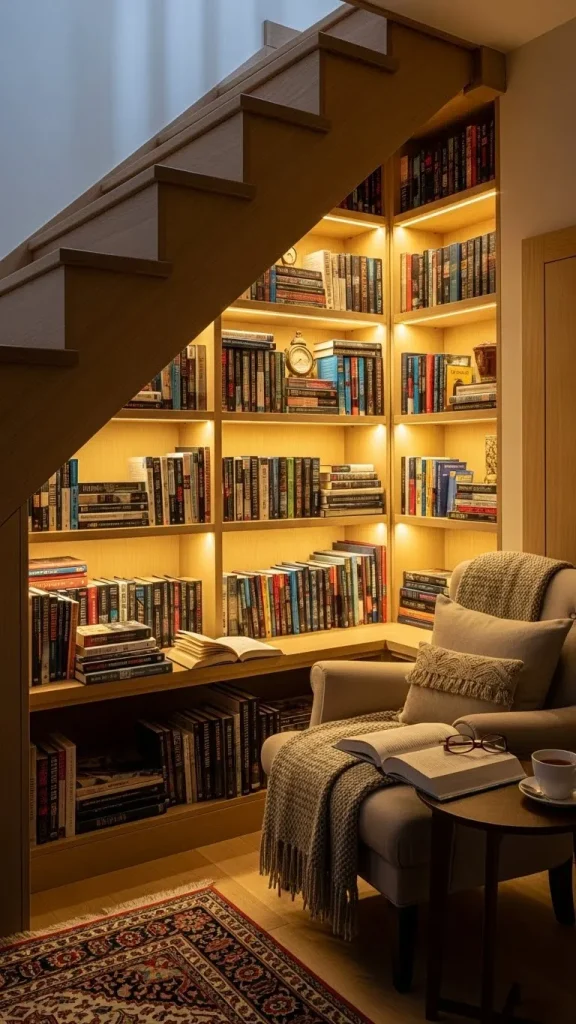
2. The Under the Stairs Secret Nook
The space beneath a staircase is often overlooked or relegated to dusty storage, but it holds immense potential for a private reading retreat. Its natural enclosure provides a sense of security and quiet that is difficult to find in more open areas of the home.
Custom shelving that follows the diagonal line of the stairs creates a visually striking and highly efficient storage solution for bibliophiles. This setup transforms a transitional space into a destination that adds character and functional value to your household.
Because these spaces are often small, they excel at creating a burrow like atmosphere that is incredibly cozy and intimate. It is the perfect place to hide away with a long novel and forget about the responsibilities waiting for you in the rest of the house.
DIY Tips
- Remove the existing drywall under the stairs to reveal the structural framing and determine the exact amount of usable depth available.
- Build individual wooden boxes of varying sizes and stack them within the frame to create a custom modular shelving unit.
- Install a warm LED light strip along the inner edge of the stairs to provide consistent illumination without taking up physical space.
- Place a thick rug or a custom cut piece of carpet on the floor to dampen the sound of footsteps coming from the stairs above.
- Use a light colored wood or paint the interior white to prevent the small enclosed space from feeling too dark or claustrophobic.
- Incorporate a small pull out drawer at the very bottom of the unit to store reading accessories like bookmarks and reading glasses.


3. The Floor to Ceiling Grand Library
For those with an extensive collection, a floor to ceiling library offers a sense of grandeur and intellectual scale that is truly unmatched. This design transforms an entire wall into a tapestry of colors, textures, and titles that defines the personality of the room.
The verticality of these shelves draws the eye upward, which can make a standard room feel much taller and more spacious than it actually is. It is a bold design choice that serves as both a functional storage solution and a massive piece of interior art.
A rolling ladder is the perfect functional accessory for a library of this scale, allowing you easy access to the highest volumes. It adds a touch of classic charm and professional sophistication that makes the space feel like a traditional European study.
DIY Tips
- Use heavy duty L brackets to secure the top of the bookshelves directly into the wall studs to prevent any tipping or movement.
- Install a metal or wooden rail system along the top of the shelves to support a rolling ladder for safe and easy access.
- Reinforce the middle of long shelves with vertical supports to prevent them from sagging under the immense weight of many books.
- Organize your most frequently read books at eye level while placing rarely used reference books and decor on the highest shelves.
- Add crown molding to the top of the units and baseboards to the bottom to give the shelves a high quality built in appearance.
- Group books by genre or author and use decorative bookends to keep the long rows looking tidy and intentional.


4. The Dark Academia Study
The dark academia aesthetic is inspired by the mood of ancient universities, featuring rich wood tones, vintage furniture, and a somber color palette. It creates an atmosphere of serious study and timeless elegance that is perfect for classic literature lovers.
Deep shades of forest green, navy blue, or burgundy on the walls provide a dramatic backdrop for dark walnut or mahogany bookshelves. This style relies on the play between shadows and soft, warm light to create a space that feels secretive and intellectual.
Incorporate vintage elements like globes, brass telescopes, and framed botanical prints to enhance the historical feel of the library. This aesthetic is about more than just books; it is about cultivating an environment that celebrates the pursuit of knowledge.
DIY Tips
- Visit local antique shops or estate sales to find a heavy wooden desk or a leather wingback chair that has a weathered look.
- Apply a dark oil based stain to unfinished pine bookshelves to mimic the appearance of more expensive woods like mahogany or oak.
- Use vintage style Edison bulbs in your lamps to provide a warm and amber glow that complements the dark tones of the room.
- Frame old maps or pages from discarded encyclopedias to create affordable and thematic wall art for the study.
- Replace standard modern plastic light switches with brass or wooden toggle switches to maintain the historical theme throughout.
- Stack a few books horizontally to act as a pedestal for small statues or antique inkwells to add visual variety to the shelves.


5. The Minimalist Floating Shelf Library
Minimalism focuses on the essentials, and a floating shelf library allows your books to take center stage without the bulk of traditional furniture. This approach creates a clean and modern look that is perfect for contemporary homes and smaller living spaces.
Floating shelves give the illusion that your books are hovering against the wall, which adds a sense of lightness and airiness to the room. It is a highly customizable option that allows you to create unique patterns and arrangements on your walls.
This style is ideal for readers who curate their collection carefully, displaying only their most cherished volumes rather than every book they own. It turns the act of book storage into a deliberate and artistic display of personal taste and style.
DIY Tips
- Use a high quality stud finder to ensure that your floating shelf brackets are anchored into the structural elements of the wall.
- Space the shelves at varying heights to accommodate different book sizes and to create a more dynamic and interesting visual flow.
- Paint the shelves the exact same color as your wall to make the support structure disappear and emphasize the books themselves.
- Avoid overfilling the shelves to maintain the minimalist aesthetic and to ensure that the weight does not exceed the bracket capacity.
- Use hidden bracket systems that slide into the back of the shelf for the cleanest possible look without visible hardware.
- Incorporate one or two small succulents or a single minimalist vase to break up the lines of the books and add a natural element.


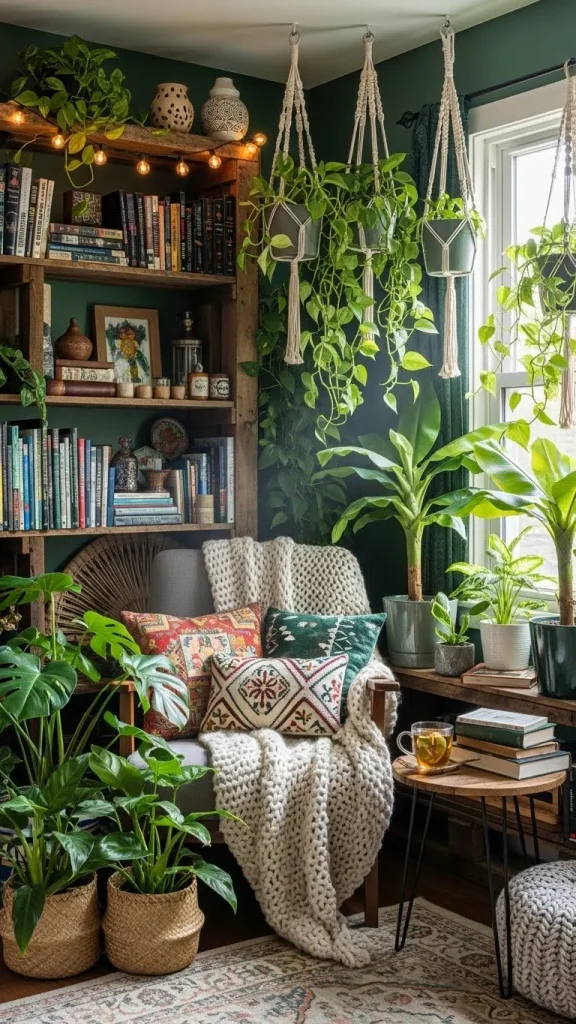
6. The Bohemian Jungle Nook
The bohemian style is characterized by a relaxed and eclectic mix of textures, colors, and natural elements like indoor plants. A bohemian jungle library combines the love of reading with the refreshing energy of a lush indoor garden.
Hanging plants like pothos and spider plants look beautiful when draped over the edges of bookshelves, mingling with the spines of your books. The combination of green leaves and colorful covers creates a vibrant and life affirming environment for reading.
Low seating options like floor cushions, poufs, or a low slung rattan chair encourage a grounded and informal atmosphere. This style is about comfort and self expression, allowing you to mix and match patterns and styles without the need for strict symmetry.
DIY Tips
- Place waterproof saucers or decorative pots without drainage holes under your plants to prevent water from leaking onto your book collection.
- Use macrame hangers to suspend plants from the ceiling at different heights around your reading chair for a layered jungle effect.
- Incorporate a variety of textures by adding a jute rug, a velvet pillow, and a chunky knit throw blanket to your seating area.
- Choose plants that thrive in the specific light conditions of your room to ensure your indoor garden remains healthy and green.
- Repurpose old wooden crates or vintage suitcases as low level bookshelves to add to the eclectic and traveled feel of the space.
- String some warm white fairy lights through the branches of your plants to create a magical and glowing atmosphere in the evenings.

7. The Attic Escape Library
An attic offers a unique architectural opportunity for a library due to its secluded location and the interesting angles of the roofline. It is a space that is naturally separated from the noise of the main house, providing a true sanctuary for readers.
Built in bookshelves that fit into the low knee walls maximize the storage capacity of the room without taking up valuable standing space. The sloped ceilings create a sense of intimacy that makes the attic feel like a secret hideaway or a cozy loft.
Adding a large skylight can transform a dark attic into a bright and inspiring library filled with natural light and views of the sky. It is a wonderful place to watch the rain fall or to stargaze while taking a break from your favorite book.
DIY Tips
- Install track lighting along the ridge beam of the ceiling to ensure that the entire space is well lit without the need for bulky floor lamps.
- Measure the angle of your roof pitch carefully before building custom shelves to ensure they fit perfectly into the sloped wall sections.
- Use light colored paint or natural wood finishes to keep the attic feeling bright and to prevent the low ceilings from feeling heavy.
- Add a thick layer of area rugs and wall hangings to help insulate the space and to reduce the sound of echoes in the room.
- Incorporate a small built in desk under a window or skylight to create a dedicated space for writing or reflecting on what you read.
- Check the floor joists of your attic to ensure they are strong enough to support the significant weight of a large book collection.


8. The Color Coded Rainbow Library
Organizing your books by color is a visually stunning way to turn your library into a primary design feature of your home. A rainbow library creates a sense of order and playfulness that can make a large collection feel more approachable and artistic.
This method of organization allows the covers and spines of the books to function as a large scale color gradient on your wall. It is a popular choice for modern interiors and can be a great way to introduce a lot of color into a room without using paint.
While some critics argue that it makes finding books more difficult, many people find they remember the color of a book cover as much as the title. It is an intuitive and visual way to interact with your collection that never fails to spark a conversation.
DIY Tips
- Begin by emptying your shelves and sorting all of your books into color piles on the floor to see the distribution of your collection.
- Arrange the books on the shelves following the order of the light spectrum, moving from red to orange, yellow, green, blue, and purple.
- Use white or black books to create transitions between the more vibrant colors for a smoother and more professional looking gradient.
- Turn any books with particularly clashing or unattractive spines around so that the neutral colored pages face outward toward the room.
- Dust your books regularly using a soft microfiber cloth to ensure that the colors remain bright and the display looks clean and sharp.
- Incorporate a few decorative items in matching colors within each section to further enhance the rainbow effect and add visual depth.


9. The Industrial Pipe Library
The industrial style uses raw materials like iron and reclaimed wood to create a look that is both rugged and modern. An industrial pipe library is incredibly durable and adds a strong, masculine aesthetic to a home office or a loft apartment.
Black iron pipes and thick wooden planks can be easily customized to fit any wall size and can hold an immense amount of weight. This makes it a perfect solution for storing heavy art books, law volumes, or large textbooks that might bend thinner shelves.
The open design of pipe shelving keeps the wall visible behind the books, which prevents the library from feeling too heavy or monolithic. It pairs exceptionally well with exposed brick walls, concrete floors, and metal furniture for a cohesive urban look.
DIY Tips
- Purchase black iron pipes and fittings from a local hardware store and clean them thoroughly with a degreaser to remove the factory oil.
- Seal the pipes with a clear matte spray paint to prevent them from rusting and to keep them from staining your hands or books.
- Use reclaimed wood or thick scaffolding planks for the shelves, sanding them down and applying a clear wax for a rustic yet smooth finish.
- Secure the pipe flanges into wall studs or use heavy duty toggle bolts if you are mounting the library into a standard drywall surface.
- Paint the pipes a bold color like brass or copper if you want a more refined and high end version of the industrial aesthetic.
- Leave some of the pipe fittings slightly loose during assembly to allow for small adjustments until the entire structure is perfectly level.


10. The Secret Door Library
A secret door hidden behind a bookshelf is a classic architectural mystery that adds a sense of wonder and fun to any home. It allows you to conceal a private room, a safe, or a quiet office behind a fully functional and filled library.
The secret door, often called a Murphy Door, is engineered to swing on a hidden hinge despite the heavy weight of the books it carries. When closed, it is indistinguishable from the rest of the built in shelving, providing a seamless and clever entrance.
This is the ultimate aesthetic choice for those who want a truly private reading nook that is hidden away from the rest of the world. It creates a sense of adventure every time you enter your library, making the reading experience feel even more special.
DIY Tips
- Purchase a pre engineered hidden door kit to ensure the hinges are strong enough to support the weight of the shelves and books.
- Ensure that the floor is perfectly level across the entire swing path of the door to prevent the shelf from dragging or getting stuck.
- Install a magnetic catch or a ball bearing latch at the top of the door to keep it securely aligned with the neighboring bookshelves.
- Attach a thin plywood backing to the bookshelves on the door to prevent books from falling out when the door is opened or closed.
- Leave a small amount of clearance between the door and the surrounding frame to allow for the natural expansion and contraction of the wood.
- Use a specific book as a decorative handle or install a hidden electronic latch that releases the door when a certain object is moved.

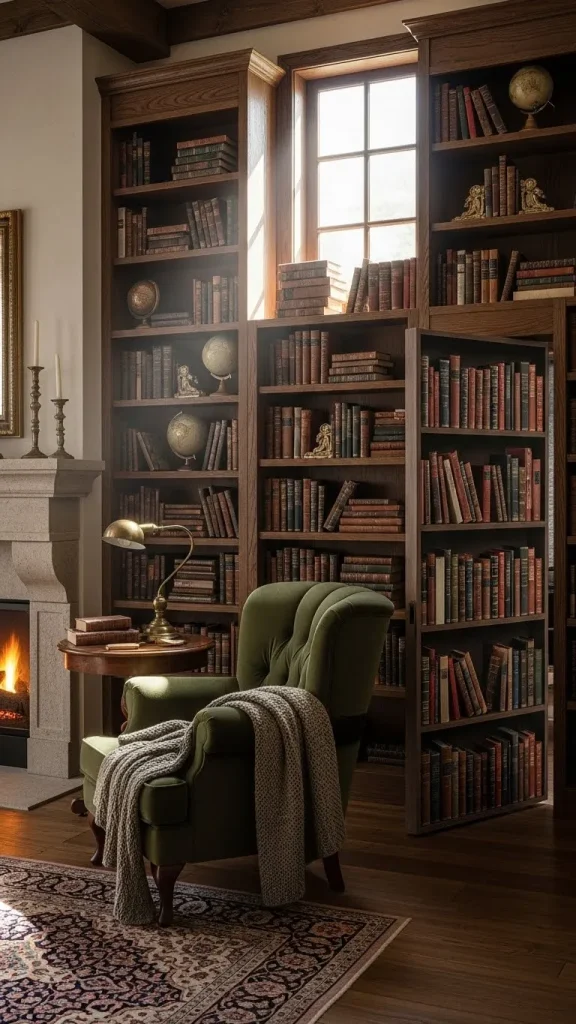
11. The Vintage Victorian Parlor Library
The Victorian era was the golden age of the private library, and this style brings a sense of history and formality to your reading nook. It is characterized by ornate details, rich fabrics, and an abundance of dark, polished wood furniture.
Glass fronted bookcases are a staple of this style, providing an elegant way to display your collection while protecting books from dust. The reflection of the glass adds a layer of depth and light to the room, making it feel more expansive and grand.
Deep jewel tones like emerald green, ruby red, and sapphire blue are perfect for the upholstery and window treatments in a Victorian library. A large, ornate rug with a traditional pattern will ground the room and provide a warm surface for your feet.
DIY Tips
- Find second hand wooden bookcases and add decorative trim or crown molding to the edges to give them a more ornate Victorian appearance.
- Replace standard modern drawer pulls and hinges with antique brass or porcelain hardware to match the historical aesthetic of the room.
- Apply a high gloss varnish to your wooden shelves to give them the polished and luxurious look typical of high end Victorian furniture.
- Use velvet or brocade fabrics for your chair cushions and throw pillows to add the rich textures that are essential to this style.
- Display a collection of vintage curiosities like magnifying glasses, old clocks, and framed butterflies among your books on the shelves.
- Install a ceiling medallion around your light fixture to add an extra layer of architectural detail to the top of the reading room.


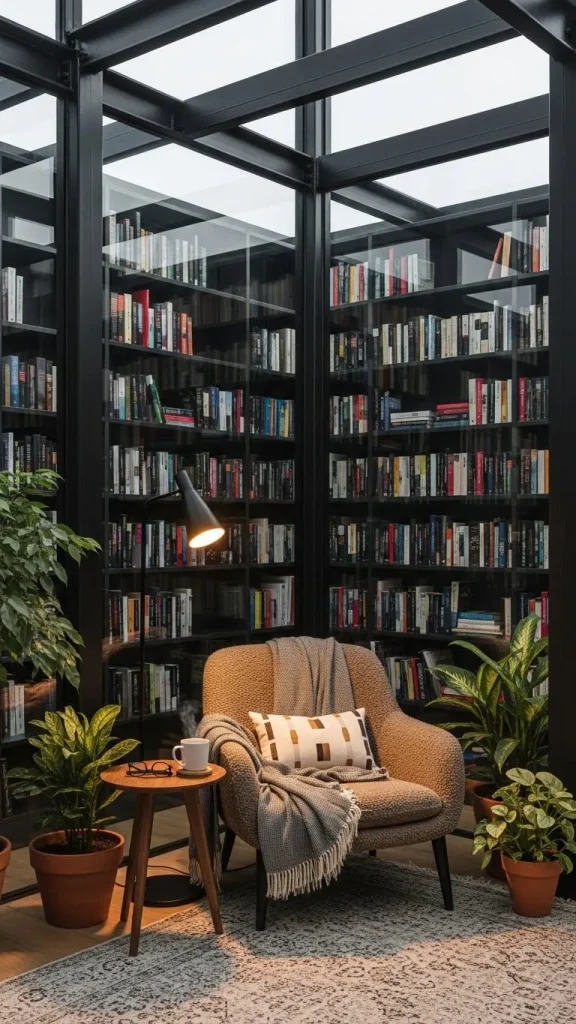
12. The Modern Glass and Steel Library
For a sleek and cutting edge aesthetic, a library constructed from glass and steel offers a sense of transparency and modern sophistication. This style is perfect for open concept homes where you want the library to feel integrated but not obstructive.
Glass shelves allow light to flow through the entire unit, making your books appear to be floating in mid air and keeping the room bright. The thin steel frame provides incredible strength without the visual bulk of traditional wood, creating a very clean look.
This aesthetic works beautifully with a monochromatic color palette, such as black steel with clear glass and white walls. It highlights the colors and shapes of the books themselves, turning your library into a crisp and organized focal point.
DIY Tips
- Use tempered glass for the shelves to ensure they are safe and durable enough to handle the weight of your book collection over time.
- Keep a high quality glass cleaner and a microfiber cloth nearby to easily remove fingerprints and keep the shelves looking crystal clear.
- Incorporate slim LED strip lights into the vertical steel supports to provide a futuristic and even glow across all the shelf levels.
- Choose a minimalist armchair with a metal frame and leather upholstery to complement the materials used in the library shelving.
- Use clear acrylic bookends to maintain the theme of transparency and to keep the books standing neatly without adding visual clutter.
- Ensure the steel frame is powder coated to prevent scratches and to provide a smooth, consistent finish that will last for many years.

13. The Botanical Sunroom Library
A sunroom library offers a unique opportunity to read while being surrounded by panoramic views of the outdoors and a wealth of natural light. It is a refreshing and airy space that feels like a bridge between your home and your garden or backyard.
The high humidity and light levels of a sunroom are perfect for growing large tropical plants that can stand alongside your bookshelves. The sound of birds outside and the sight of shifting clouds create a peaceful backdrop that enhances the reading experience.
This style is best paired with light colored furniture made of natural materials like wicker, rattan, or light oak. It is an ideal space for morning reading with a cup of tea, allowing you to enjoy the beauty of nature regardless of the weather outside.
DIY Tips
- Position your bookshelves away from the most direct sunlight to prevent the sun from drying out the leather or paper of your book collection.
- Use outdoor grade rugs and furniture fabrics that are designed to resist fading from high levels of UV exposure in the sunroom.
- Install bamboo blinds or sheer curtains that can be easily adjusted to control the amount of light and heat entering the room during the day.
- Add a small indoor fountain near your reading chair to provide the soothing sound of flowing water to your peaceful library environment.
- Choose plants that thrive in high light, such as citrus trees or succulents, to ensure your botanical library remains lush and healthy.
- Ensure the room has proper ventilation to keep the air fresh and to prevent moisture from building up and potentially damaging your books.


14. The Corner Carousel Library
A revolving or carousel bookshelf is a clever and stylish way to store a large number of books in a very small footprint. It is a highly functional choice for small bedrooms or living room corners where a traditional wide bookshelf would not fit.
The ability to spin the shelf allows you to browse your entire collection from a single seated position, making it a very convenient choice. Modern carousel shelves come in a variety of styles, from sleek metal designs to more traditional wooden versions.
This design adds a sense of movement and interaction to your library, making the act of choosing a book more engaging and fun. It is also an excellent choice for children’s rooms, as the rotating motion makes it easy for them to find their favorite stories.
DIY Tips
- Build or purchase a heavy duty lazy susan base that can support several hundred pounds of weight without becoming difficult to turn.
- Construct a circular or square wooden tower with multiple levels of shelving and secure it firmly to the center of the rotating base unit.
- Add a small lip or a decorative rail to the edge of each shelf to prevent books from sliding off when the carousel is being spun.
- Distribute the weight of your books evenly around the entire carousel to ensure it remains balanced and spins smoothly on its axis.
- Paint each level of the carousel a different color to help you categorize your books by genre or to add a playful look to the room.
- Place the carousel on a hard surface rather than thick carpet to ensure the rotating mechanism has enough clearance to move freely.


15. The Fireplace Hearth Library
There is perhaps no combination more cozy than a library and a fireplace, providing both mental and physical warmth on a cold evening. Building bookshelves into the alcoves on either side of a fireplace creates a symmetrical and comforting focal point.
The dancing flames of the fire provide a soft and flickering light that adds to the atmospheric charm of the reading nook. It is a space that naturally invites you to curl up with a blanket and a good book for hours at a time during the winter months.
A large, comfortable armchair placed directly in front of the hearth allows you to enjoy the heat of the fire while being surrounded by your books. This classic layout is timeless and works well in both traditional and modern homes, emphasizing the heart of the house.
DIY Tips
- Ensure there is a safe distance between the edge of the fireplace opening and the start of your wooden bookshelves to prevent any fire hazards.
- Use the fireplace mantle to display your most beautiful or antique books alongside candles and other decorative seasonal items.
- Install wall sconces with dimmable switches above the side shelves to provide focused reading light that does not compete with the firelight.
- Store your firewood in a dedicated lower shelf or a nearby basket to add a rustic and functional element to the library design.
- Mirror the architectural details of the fireplace surround in the molding of the bookshelves to create a cohesive and professional look.
- Place a high quality fire screen in front of the hearth to protect your rugs and books from any stray sparks or embers while the fire is lit.


Conclusion
The creation of a home library is a deeply personal project that allows you to express your identity through the books you collect and the space you build. Whether you prefer the moody atmosphere of dark academia or the bright energy of a sunroom, the goal is to foster a love for reading.
Every nook and shelf provides an opportunity to slow down and appreciate the physical presence of literature in our increasingly digital world. By following these ideas and DIY tips, you can transform any area of your home into a beautiful sanctuary that nourishes the mind and the soul.
Ultimately, the best home library is one that reflects your unique habits and brings you joy every time you sit down to read. As your collection grows and your tastes evolve, your library will continue to be a living testament to your curiosity and your passion for stories.