
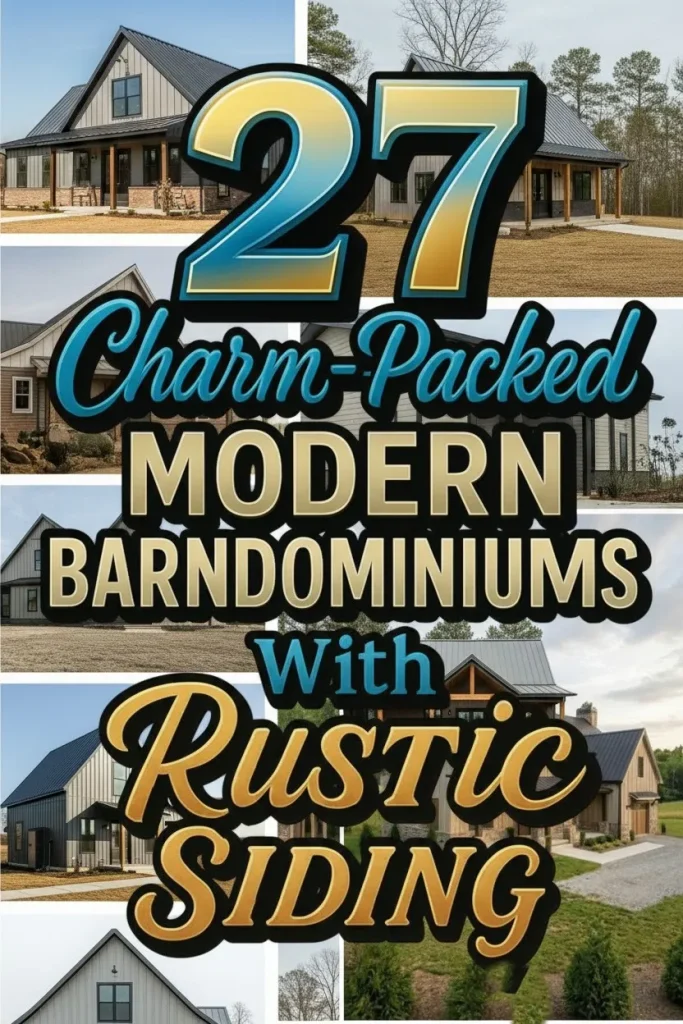

The rise of the barndominium has fundamentally changed the landscape of modern home design. These structures successfully blend the industrial durability of metal buildings with the cozy comfort of traditional homes. Adding rustic siding to the exterior transforms them from simple storage units into stunning architectural masterpieces.
This design choice bridges the gap between cold industrial aesthetics and warm traditional vibes. Wood elements work exceptionally well to soften the harsh lines typically found in steel frame construction. This combination creates a warm and inviting aesthetic that appeals to families and designers alike.
The following designs showcase this perfect union of strength and beauty in detail. We explore twenty-seven distinct styles that you can adapt for your own dream project. Each one offers a unique take on modern rustic living that will stand the test of time.

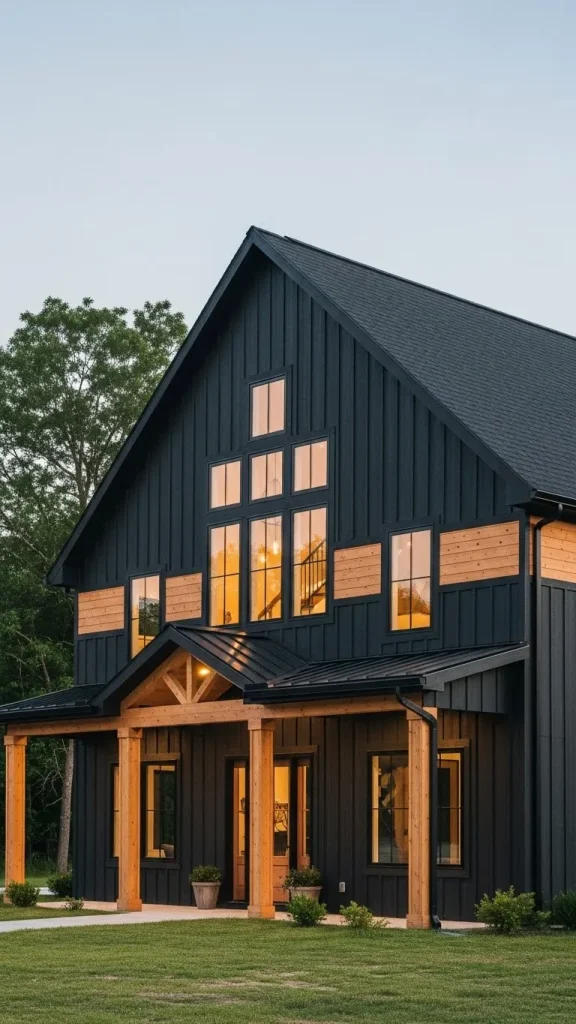
1. The Classic Timber and Stone Fusion
This design represents the quintessential rustic look that many homeowners desire. It pairs heavy timber beams with natural stone to create a sense of permanence and history. The siding often consists of horizontal cedar planks that run between the massive wooden posts.
The stone is usually applied to the foundation to ground the visual weight of the structure. This creates a connection to the earth that feels organic and settled. Large windows are used to break up the heavy wood and stone elements to keep the interior bright.
The roof is typically a matte black metal that contrasts sharply with the warm wood tones. This color palette creates a timeless appearance that fits perfectly in rural or suburban settings. It is a look that communicates luxury and comfort simultaneously.
DIY Tips:
- Apply a high-quality sealant to cedar siding immediately after installation to prevent greying.
- Consider using stone veneer instead of real stone to reduce material costs and weight.
- Install metal flashing properly between the stone and wood layers to prevent water rot.
- Rent a professional paint sprayer to apply stain to large wood areas efficiently.
- Check for moisture buildup behind the stone layer at least once a year.

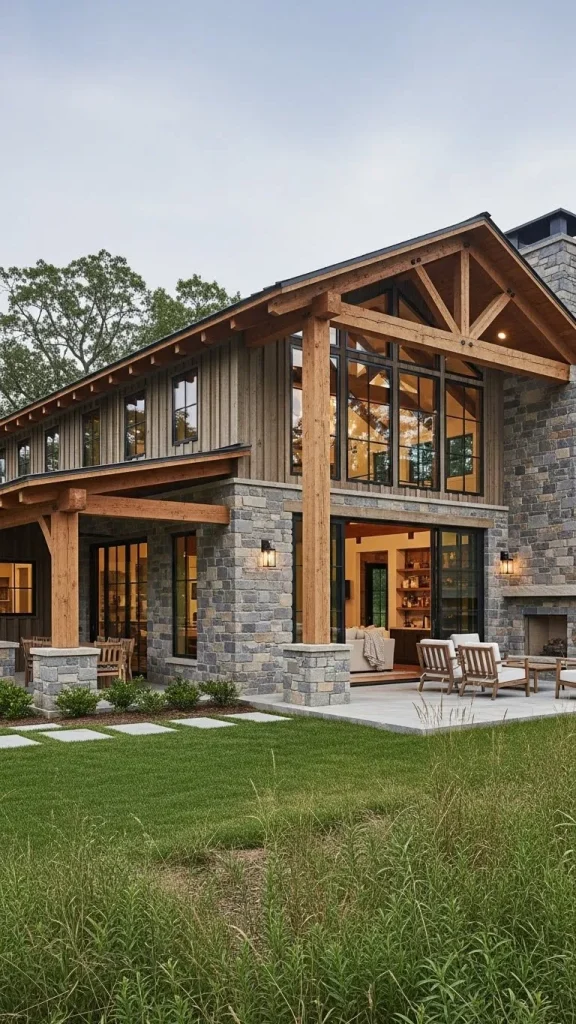
2. The Weathered Barn Wood Facade
Authenticity is the main goal of this specific style for true rustic lovers. Builders use reclaimed wood sourced from old dilapidated structures to achieve this look. The siding carries the history of decades of weather exposure and creates immediate character.
The grey and brown tones found in old barn wood are almost impossible to fake with new lumber. Every knot and nail hole tells a unique story that adds value to the home. Modern insulation systems are hidden behind this antique skin to ensure energy efficiency.
This style pairs exceptionally well with galvanized steel roofing materials. The silver metal complements the grey wood tones without overpowering the vintage aesthetic. It looks like a structure that has stood on the property for a century.
DIY Tips:
- Source wood from local demolition projects to find the best deals on reclaimed lumber.
- Remove all old nails and metal staples before cutting any reclaimed lumber to save saw blades.
- Treat old wood for termites and powder post beetles before bringing it onto your property.
- Use a wire brush to clean surface dirt without removing the valuable silver patina.
- Seal the ends of fresh cut boards to prevent moisture wicking and rotting.

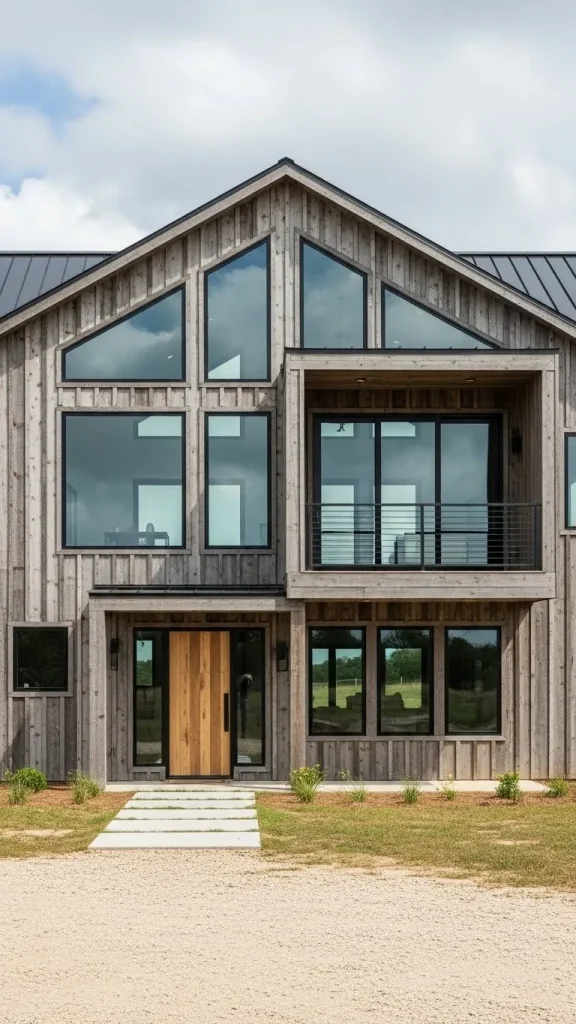
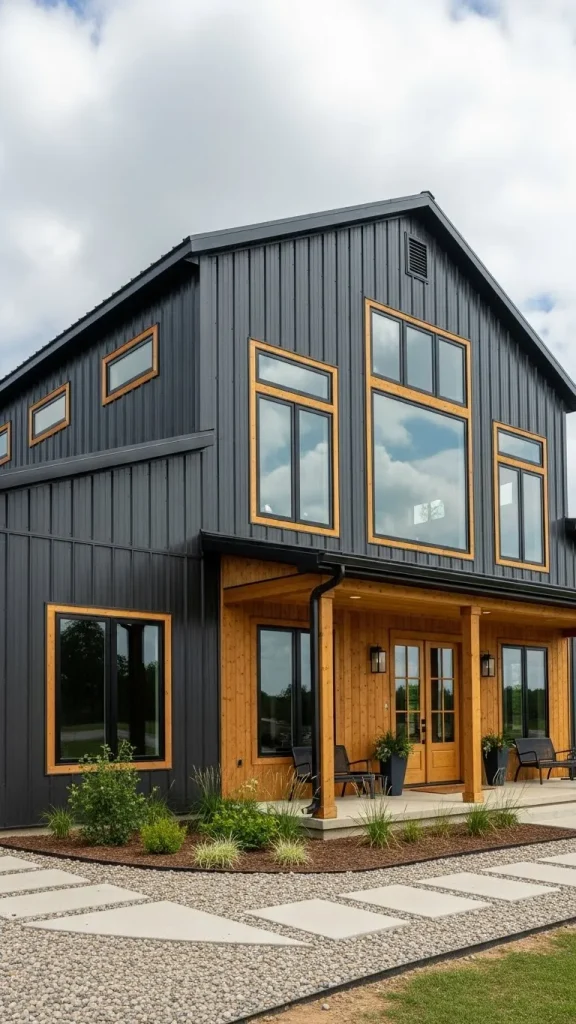
3. Dark Charcoal Siding with Honey Accents
Contrast is the driving force behind this striking and modern barndominium look. The main body of the house is painted or stained a deep and dark charcoal color. This creates a sleek and sophisticated canvas that feels very contemporary.
Honey-toned wood is used for pillars, window trim, and large entry doors to create visual pop. The bright wood warms up the dark exterior and prevents it from feeling too gloomy. This balance of light and dark is visually arresting and very popular.
This design works incredibly well in heavily wooded environments or dense forests. The dark color helps the house blend into the shadows of the tree line seamlessly. The wood accents mimic the surrounding tree trunks to ground the home in nature.
DIY Tips:
- Choose a solid body stain rather than paint for better durability against peeling.
- Test stain colors on scrap wood in different lighting conditions before committing.
- Use a UV-resistant clear coat on the honey accents to prevent them from fading.
- Apply painter’s tape carefully to ensure crisp lines between the dark and light sections.
- Plan to touch up the dark stain every three years to maintain the deep color saturation.

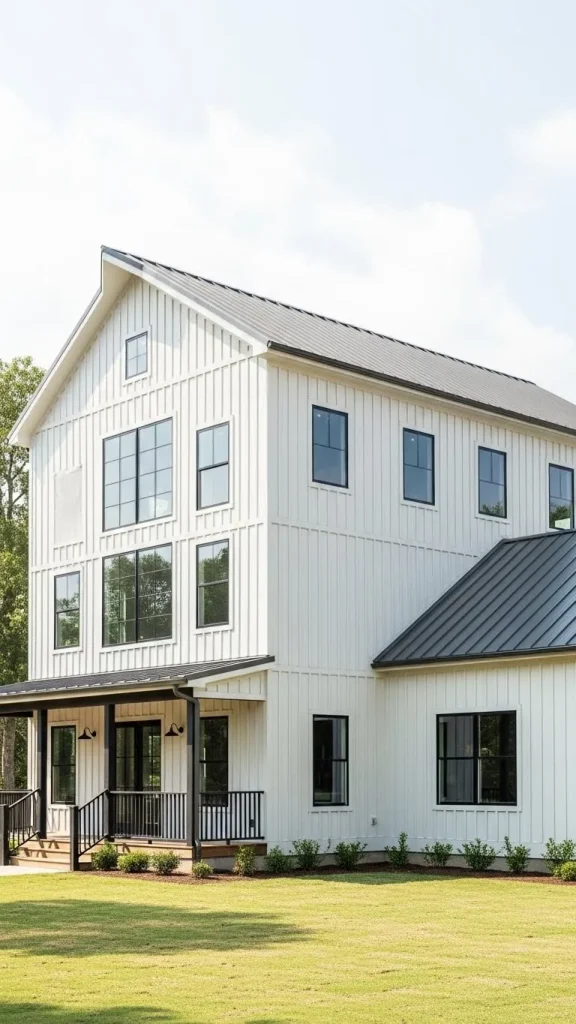
4. Vertical Board and Batten in White
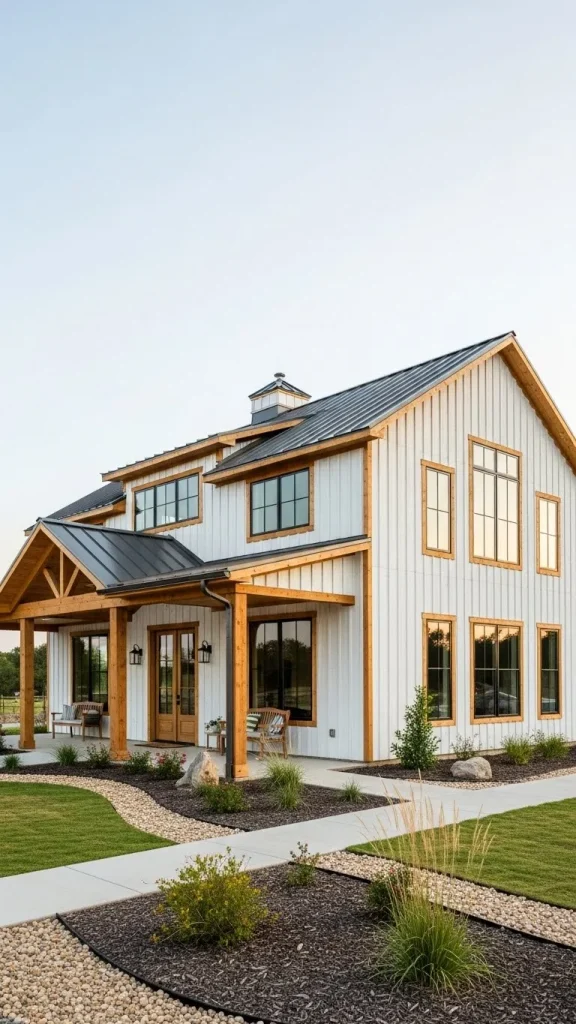
This is currently the most popular modern farmhouse variation in the barndominium market. It features vertical siding painted in a crisp and clean white tone. The rustic element usually comes from raw wood columns on the porch or gable accents.
The vertical lines of the siding make the building look much taller than it actually is. It mimics the traditional framing techniques used on old American barns for centuries. White paint reflects heat effectively and helps keep the interior cool during hot summers.
Dark bronze or black window frames are added to add a modern industrial touch. They frame the outdoor views like living artwork against the white walls. The final look is clean, bright, and incredibly welcoming to guests.
DIY Tips:
- Use a spacer block during installation to ensure the batten spacing is perfectly even.
- Caulk all vertical seams thoroughly to prevent water intrusion behind the siding.
- Select a high-quality exterior paint with mold and mildew resistance for longevity.
- Install Z-flashing above all horizontal trim boards to shed water effectively.
- Wash the white siding annually with a soft washer to keep it bright and clean.

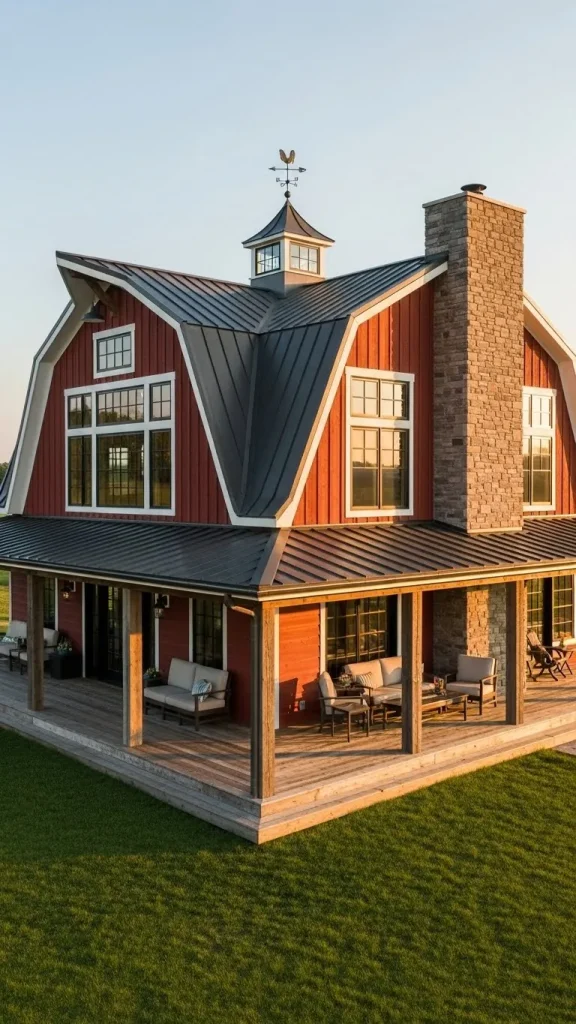
5. The Gambrel Roof Heritage Style
The gambrel roof creates the classic barn silhouette that everyone recognizes immediately. It offers immense space on the second floor due to the steep slope of the roof sides. Rustic siding is essential here to complete the nostalgic feeling of the architecture.
Rough-sawn pine is a common choice for siding on this type of barndominium. It is often stained in a medium brown tone to highlight the wood grain texture. The shape is distinct and makes a bold statement from miles away.
Dormer windows are frequently added to break up the massive roofline visually. They bring essential natural light into the upper level bedrooms and living areas. This style maximizes the usable square footage for the most efficient floor plan.
DIY Tips:
- Plan your roof sheathing carefully to accommodate the slope changes at the gambrel joint.
- Install high-quality gutter guards to handle the heavy debris flow from the steep roof.
- Use scaffolding for safety when installing siding on the high peaks of the gambrel.
- Ensure proper ventilation in the upper roof cavity to prevent heat buildup.
- Stain the siding boards on the ground before installation for better coverage.

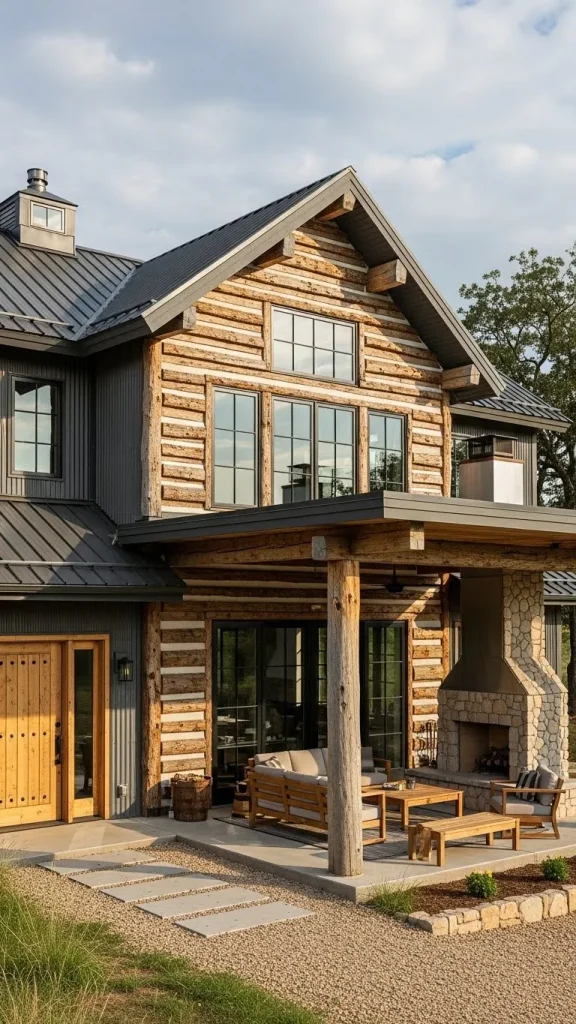
6. Industrial Steel Meets Rough Log
This style creates a heavy and masculine aesthetic that feels very secure. It combines modern corrugated metal panels with traditional stacked logs. The logs are typically used for the main structural supports and corner accents.
The metal siding is often left in a raw or galvanized finish to reflect the sun. It develops a dull patina over time that looks natural and rugged. The logs are peeled but left round to maintain their rustic charm.
This design is incredibly durable and highly resistant to fire hazards. It requires significantly less maintenance than exteriors that are clad entirely in wood. It fits perfectly in mountain regions or on large ranch properties.
DIY Tips:
- Use galvanized screws to prevent rust streaks from forming on the metal siding.
- Chink the gaps between logs with a flexible sealant to stop air drafts.
- Install rubber washers on all metal siding screws to create a watertight seal.
- Treat the logs with a borate solution to repel insects and prevent decay.
- Cut metal panels with high-quality tin snips or a nibbler for clean edges.

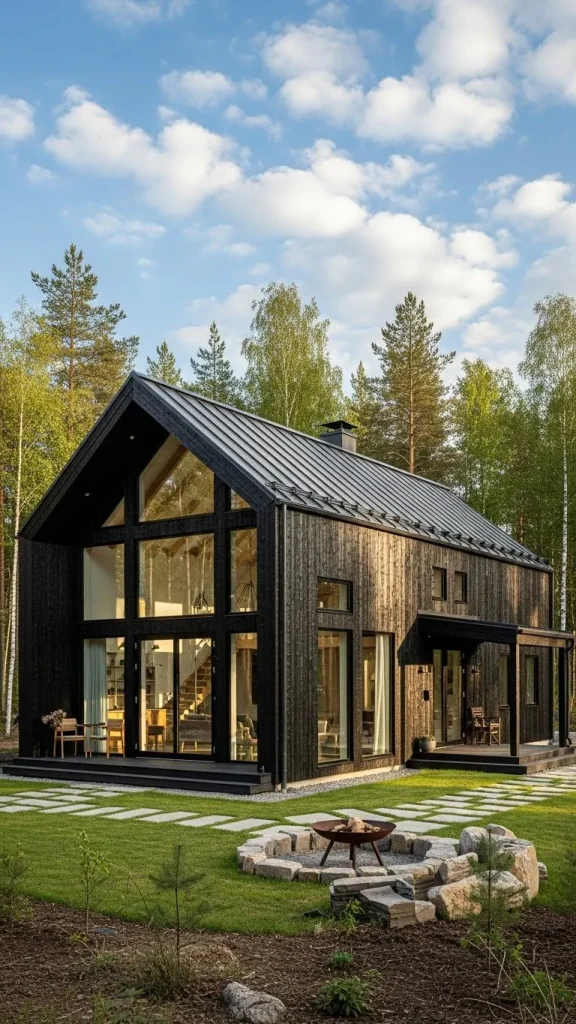
7. The Scandinavian Black Barn
Simplicity defines the Scandinavian approach to modern barndominium design. The entire exterior is often stained a pitch black color for a dramatic effect. The siding is usually composed of vertical narrow strips rather than wide planks.
The rustic texture comes from the visible wood grain beneath the dark stain. Even though the building is black the natural texture of the wood softens the look. It is often paired with large glass sliding doors to let in light.
The roof typically has no overhangs or eaves in this specific style. This creates a sharp and geometric silhouette that looks very modern. It looks like a striking shadow against a snowy or grassy landscape.
DIY Tips:
- Use a semi-transparent black stain rather than paint to allow the grain to show.
- Install hidden gutters to maintain the sleek lines of the roof edge.
- Ensure your window flashing is perfectly integrated to prevent leaks without overhangs.
- Use spruce or pine wood species to achieve the authentic Nordic appearance.
- Apply a fungicide treatment to the wood before applying the black stain.

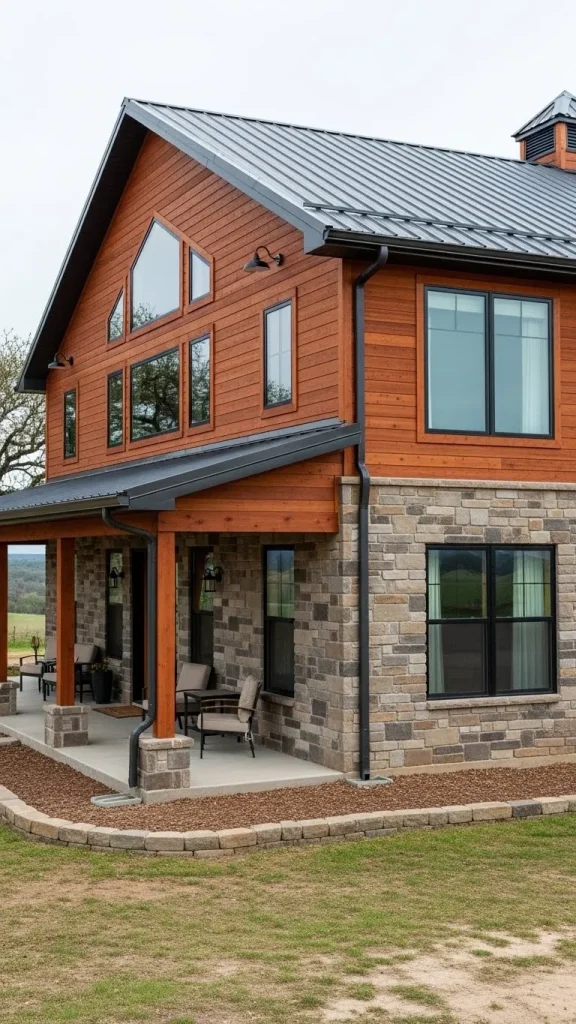
8. Stone Skirting with Red Cedar Upper
This design visually anchors the home to the earth with a heavy base. The bottom third of the exterior wall is clad in natural or cultured stone. The upper portion features beautiful horizontal red cedar siding.
The color contrast between the grey stone and red wood is vibrant and appealing. Red cedar naturally resists rot and insect damage which makes it a smart choice. The stone protects the lower wall from mud splash back during rainstorms.
Over time the cedar will naturally fade to a distinguished silver grey color. Many owners choose to stain it repeatedly to keep the warm red hue alive. It is a dynamic exterior that changes its character as the years pass.
DIY Tips:
- Install a metal drip cap between the stone and wood to direct water out.
- Use stainless steel nails to prevent unsightly black staining on the cedar.
- Keep mulch and garden soil at least six inches away from the stone base.
- Re-stain the cedar every two to three years to maintain the red color.
- Mix different stone sizes during installation for a more natural appearance.

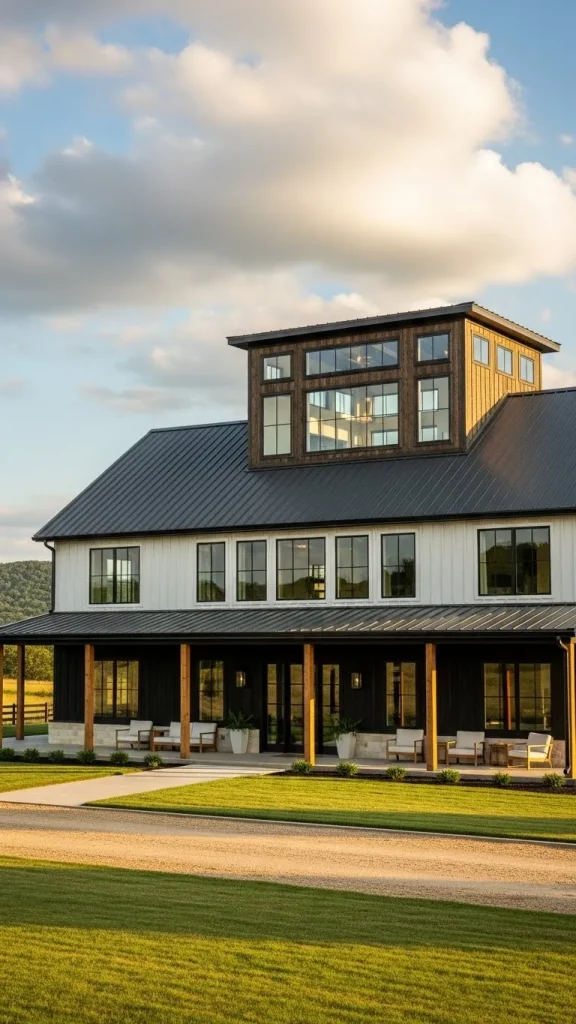
9. The Monitor Barn with Clerestory Windows
The monitor barn features a raised center section that runs the length of the building. This structural design allows for a row of high windows called clerestory windows. Rustic siding runs horizontally on the lower wings and vertically on the raised center.
This visual switch in siding direction adds architectural interest to the design. Natural light floods the center of the home through the high windows. It significantly reduces the need for artificial lighting during the day.
The airflow in this design is superior due to the high venting capability. It creates a passive cooling effect that is energy efficient. The aesthetic is grand and reminiscent of historic western stables.
DIY Tips:
- Install motorized openers for the high windows to make ventilation easy.
- Use scaffolding to safely reach the upper siding sections during construction.
- Flash the transition between the lower roof and upper wall very carefully.
- Choose energy-efficient glass for high windows to prevent heat loss.
- Plan your interior lighting to highlight the dramatic ceiling height at night.

10. The Modern Lean-To Minimalist
This design uses a single slope roof line for a sleek profile. It is simple to build and cost-effective while looking very modern. Rustic siding is used to soften the sharp angular shape of the building.
Wide plank siding works best on this shape to emphasize the length. The design usually features a large overhang to protect the front facade from weather. The high side of the house features tall glass walls for views.
The low side is meant for bedrooms and service areas to conserve heat. It is an efficient use of materials and maximizes interior volume where it counts. The single slope sheds water and snow very effectively.
DIY Tips:
- Orient the high side towards the south to capture solar heat in winter.
- Extend the roof overhang to prevent summer sun from overheating the interior.
- Use a high-quality house wrap behind the wide planks to prevent drafts.
- Install large gutters on the low side to manage the high volume of water.
- Check the roof pitch requirements for your local snow load regulations.

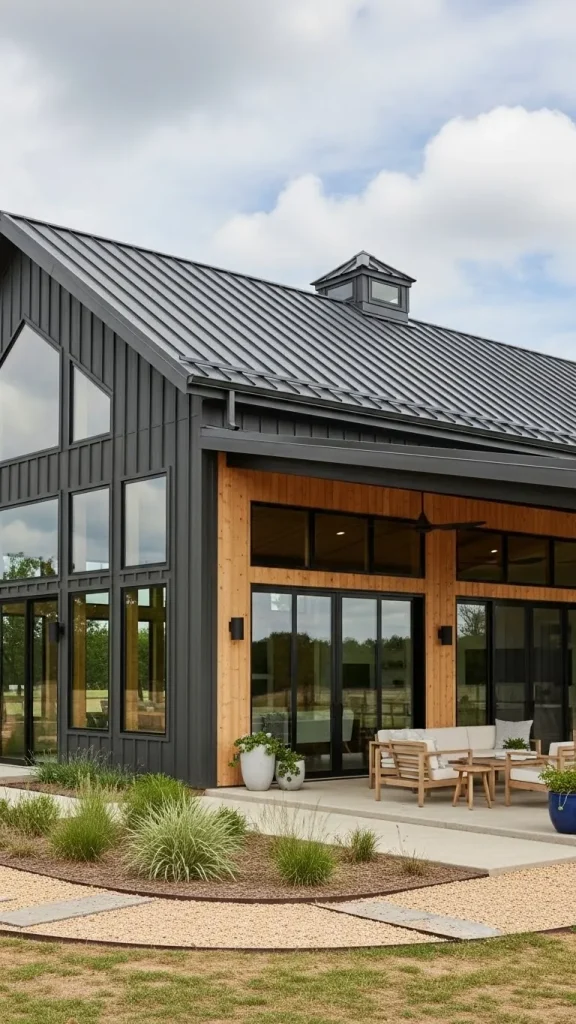
11. Corrugated Metal and Stained Pine
This is a budget-friendly option that does not sacrifice style for cost. The lower half of the wall uses durable corrugated metal panels. The upper half uses warm stained pine boards to create a soft contrast.
The metal wainscoting protects the wood from ground moisture and weed trimmers. Metal is tough against animals and resists denting from everyday activities. The pine adds the necessary warmth at eye level to make it feel like a home.
A heavy trim board usually separates the two materials distinctively. This style is very popular in agricultural areas where durability is paramount. It blends the utility of a farm building with the comfort of a residence.
DIY Tips:
- Install a heavy trim board with flashing to cover the transition between materials.
- Ensure the metal panels overlap by at least one rib to prevent leaks.
- Seal the bottom edge of the metal with foam closures to prevent pests.
- Use a solid color stain on the pine if you want a stronger contrast.
- Ground the metal siding to the electrical system for safety during storms.

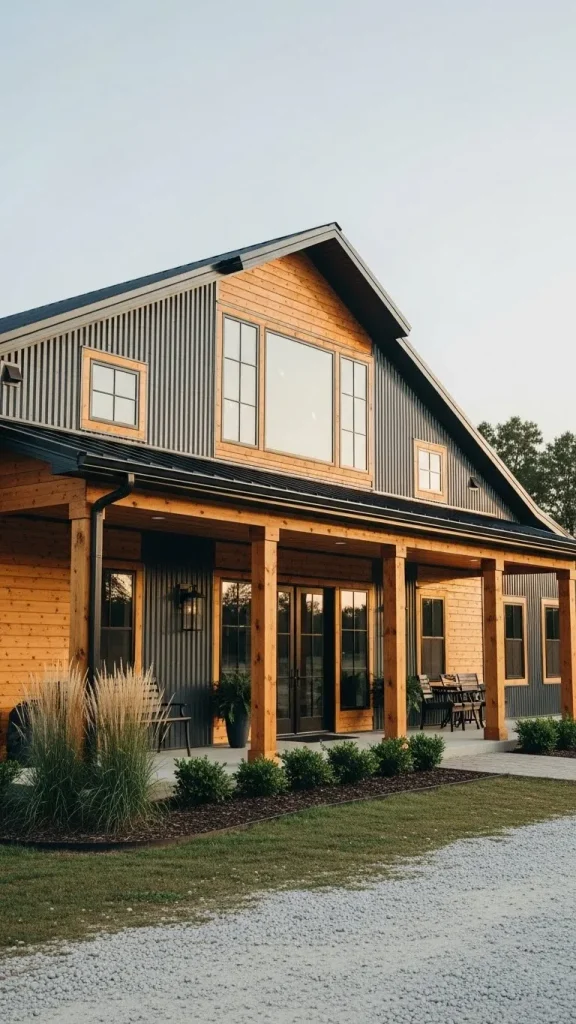
12. The Wraparound Porch Homestead
The porch is the main architectural feature of this welcoming design. It encircles the entire barndominium structure to provide 360 degrees of shelter. Rustic wood posts are used to support the porch roof and frame the views.
The siding is usually a horizontal lap siding in earth tones like sage or beige. The deep porch shade protects the siding paint from UV damage and weather. This extends the life of the exterior finish significantly compared to exposed walls.
It blurs the line between indoor and outdoor living spaces effectively. The porch creates a thermal buffer zone that helps insulate the house. It keeps the interior much cooler in the summer months by shading windows.
DIY Tips:
- Slope the porch floor away from the house wall to encourage drainage.
- Use pressure-treated lumber for all structural posts that touch the ground.
- Install porch ceiling vents to prevent moisture from getting trapped in the roof.
- Stain the porch floor with a grit additive to prevent slipping when wet.
- Wrap the bottom of wooden posts with metal to prevent wicking water.

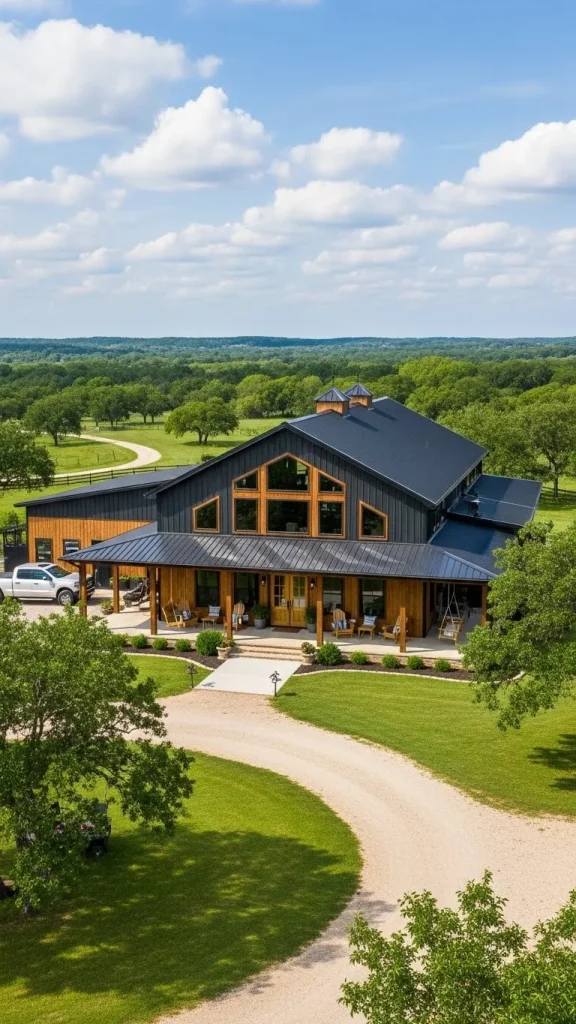
13. Shou Sugi Ban Charred Wood
This is an ancient Japanese technique for siding that is gaining modern popularity. The wood surface is charred with an open flame to preserve it. This process makes the wood waterproof and naturally fire-resistant.
The look is a deep and textured matte black that catches the light beautifully. It is incredibly dramatic and unique compared to painted siding. It requires almost no maintenance once the charring process is complete.
It can be paired with light stone accents to create a striking contrast. The charring process reveals the wood grain texture in high relief. It is both a preservation method and a bold style statement.
DIY Tips:
- Use a high-output propane torch to char the wood planks evenly.
- Brush off the loose soot with a stiff bristle brush after burning.
- Seal the charred wood with a natural oil to lock in the finish.
- Practice on scrap pieces first to get the timing and depth correct.
- Wear a respirator mask during the brushing phase to avoid inhaling soot.

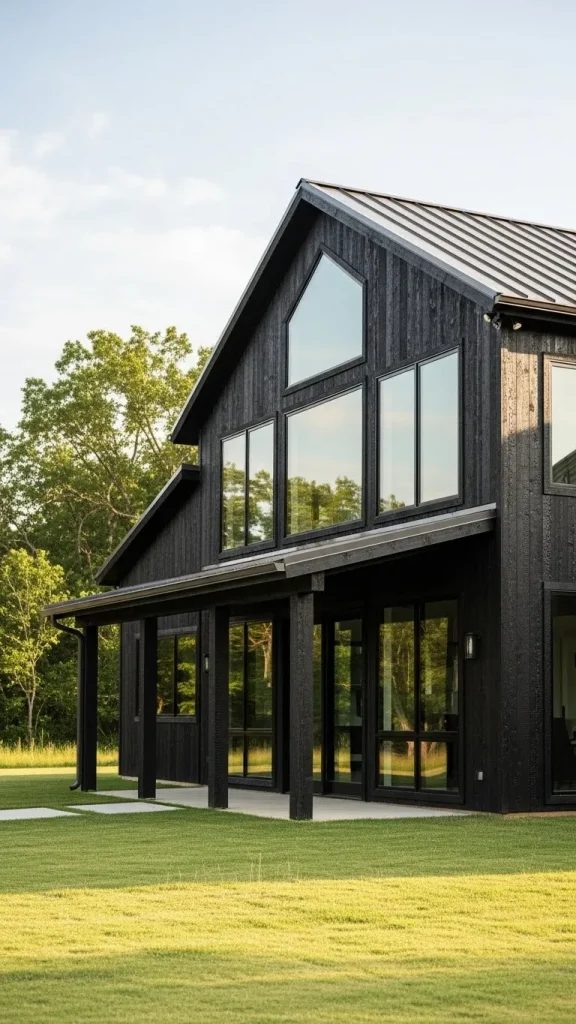
14. Brick Accents with Horizontal Siding
Brick adds a sense of permanence and history to any barndominium structure. It is often used on the entrance bump-out or key architectural features. The rest of the house uses horizontal wood siding to keep the look rustic.
Used brick is preferred for the rustic look because of its imperfections. It has varying colors and chipped edges that add immediate character. This contrasts nicely with the smooth lines of the wood siding.
The brick can also be used for a massive chimney that anchors the design. It creates a vertical focal point on the exterior that draws the eye up. The combination is classic and appeals to a wide range of tastes.
DIY Tips:
- Install brick ties to securely anchor the veneer to the wall framing.
- Keep the weep holes open at the bottom of the brick to allow drainage.
- Match the mortar color to the siding tone for a cohesive look.
- Use a masonry sealer to prevent water absorption into the old brick.
- Clean mortar smears off bricks with a stiff brush before they harden.

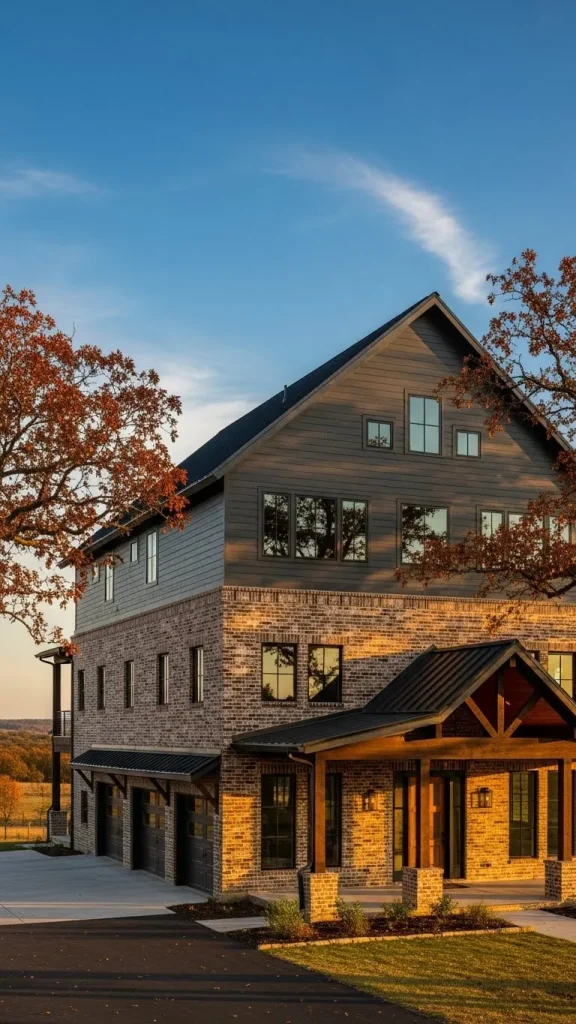
15. The Breezeway Connector Style
This design features two separate barn structures linked together. They are connected by a glass enclosed or open-air breezeway. Rustic siding covers the two main structural wings to tie them together visually.
One wing usually houses the main living quarters for the family. The other wing acts as a garage, workshop, or guest suite. The separation reduces noise and fumes transfer between the shop and the home.
The siding direction often changes on the connector to highlight the transition. This visually separates the distinct zones of the home. It creates a sprawling estate-like appearance that feels very luxurious.
DIY Tips:
- Insulate the breezeway floor well if it is an enclosed living space.
- Use distinct lighting in the breezeway passage to create evening ambiance.
- Ensure the roof flashing is seamless where the connector meets the main buildings.
- Install durable flooring in the connector area to handle heavy foot traffic.
- Align the siding lines between the two buildings for a professional look.

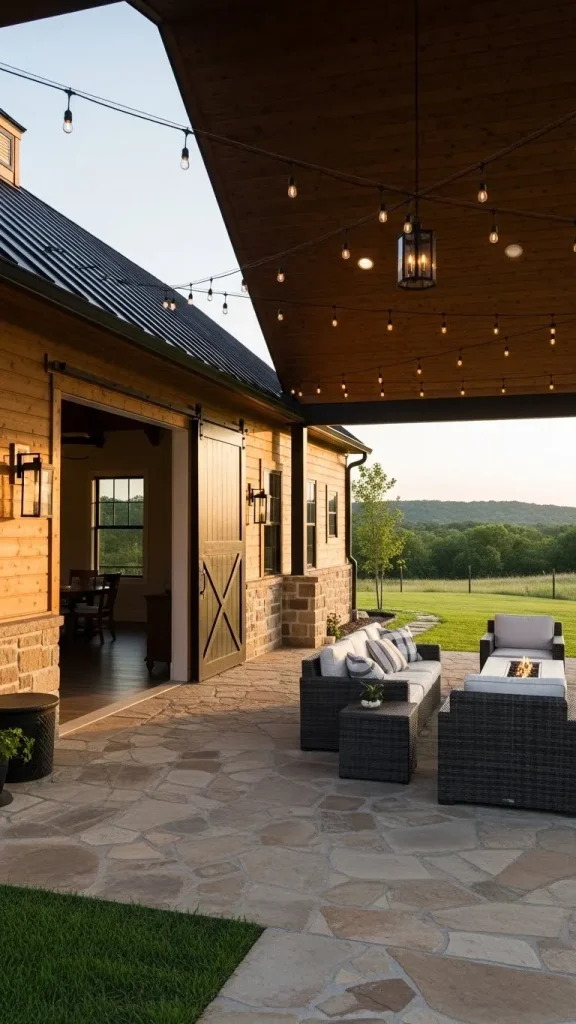
16. Green Living Walls on Wood
This is an eco-friendly modern rustic twist that brings the garden onto the house. Wooden trellises are attached directly to the wood siding. Climbing vines are encouraged to grow up them to create a green facade.
The green leaves contrast beautifully with the brown wood tones. This helps cool the house in the summer by absorbing solar heat. It changes appearance with the seasons as leaves change color or drop.
It integrates the house directly into the natural landscape. The siding needs to be very durable and rot-resistant for this design. Moisture management is the key factor for the longevity of this style.
DIY Tips:
- Leave a gap between the trellis and the siding to allow for airflow.
- Choose non-invasive vine species that are native to your specific area.
- Trim the vines away from windows and vents to prevent blockage.
- Inspect the siding behind vines twice a year for signs of rot.
- Install a drip irrigation system to keep the plants healthy automatically.

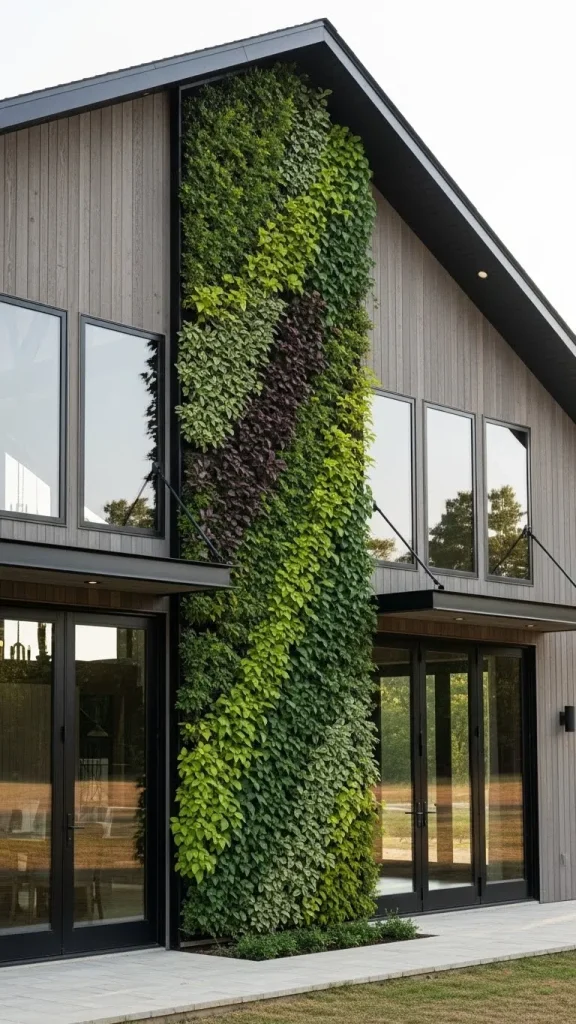
17. Rough Sawn Poplar with Copper Gutters
Poplar is a great choice for rustic siding because it is durable and often affordable. It is often locally sourced in many parts of the country. When rough sawn it has a fuzzy texture that holds stain very well.
Copper gutters add a touch of luxury to the rustic wood exterior. They start out shiny and bright orange when first installed. Over time they oxidize to turn a beautiful patina green color.
This combination screams high-end rustic charm and elegance. The poplar can be stained dark or left to weather to a natural grey. The copper acts as jewelry for the home and elevates the entire design.
DIY Tips:
- Wear gloves when handling new copper to avoid leaving oily fingerprints.
- Use copper nails or screws to prevent galvanic corrosion between metals.
- Stain poplar quickly after installation as it absorbs moisture very fast.
- Install snow guards to protect the expensive gutters from sliding ice.
- Solder the copper joints for a permanent and watertight seal.

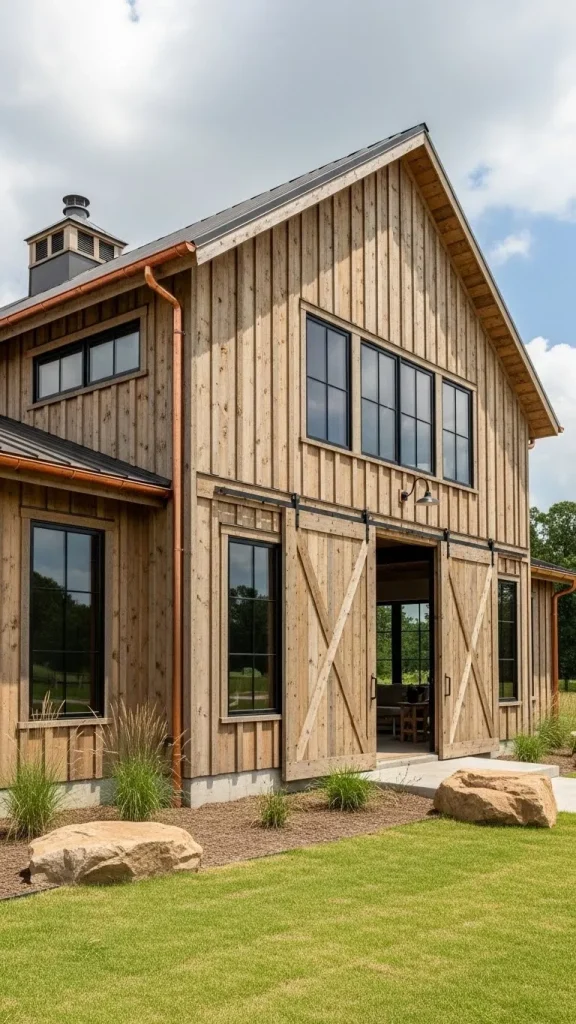
18. The Modern A-Frame Barn
This design features a steep roof pitch that reaches almost to the ground. It is a dramatic modification of the traditional barn shape. The gable ends are filled with rustic siding to frame the structure.
It is a cozy architectural shape that feels like a mountain lodge. Large windows usually fill the front triangle to maximize views. The siding frames the glass view perfectly and adds warmth.
Snow slides right off this roof design making it ideal for winter climates. It is efficient and sheds water away from the foundation quickly. The interior features soaring cathedral ceilings that feel massive.
DIY Tips:
- Install snow stops to prevent dangerous roof slides over entryways.
- Use scaffolding towers to safely perform the high peak work.
- Flash the window headers heavily for protection against driving rain.
- Insulate the roof deck rather than the attic floor for conditioned space.
- Orient the glass wall towards the most scenic view on the property.

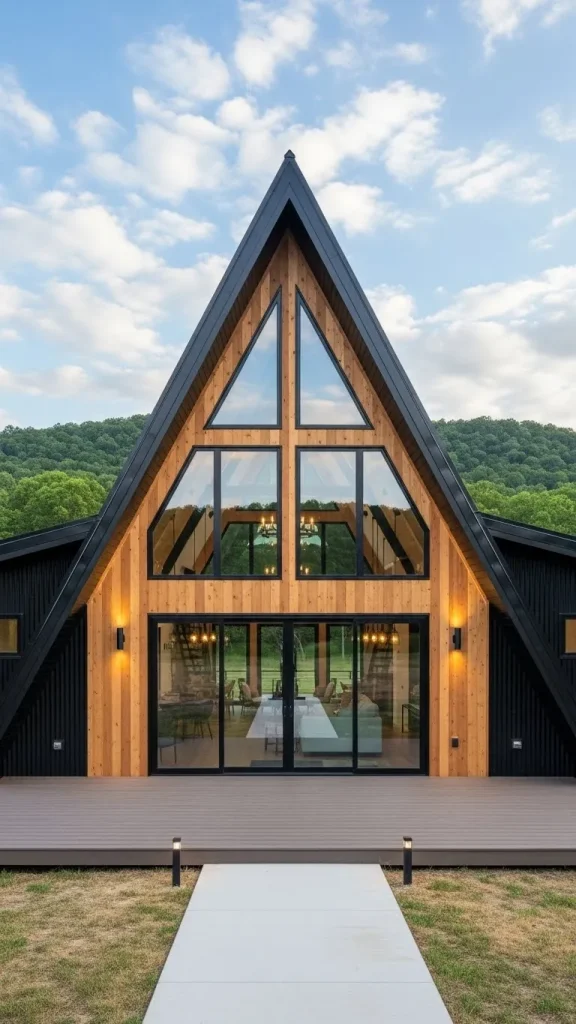
19. Mixed Width Plank Siding
Uniformity is not always the goal in high-end rustic design. This style uses boards of varying widths to create a custom look. It creates a random and organic pattern that feels historical.
You might mix four, six, and eight-inch boards in a random sequence. This mimics how pioneers used whatever trees were available to them. It adds visual complexity to what would otherwise be a flat wall.
The eye is drawn to the texture produced by the changing lines. It works well with both horizontal and vertical siding layouts. It reduces waste by utilizing different log cuts from the mill.
DIY Tips:
- Plan the pattern on the ground before installing to avoid clustering widths.
- Mark the stud locations clearly for nailing as widths change.
- Ensure the expansion gaps are uniform even if the board widths vary.
- Use a blind nailing technique for a cleaner look without visible heads.
- Calculate material needs with extra waste allowance for the pattern.

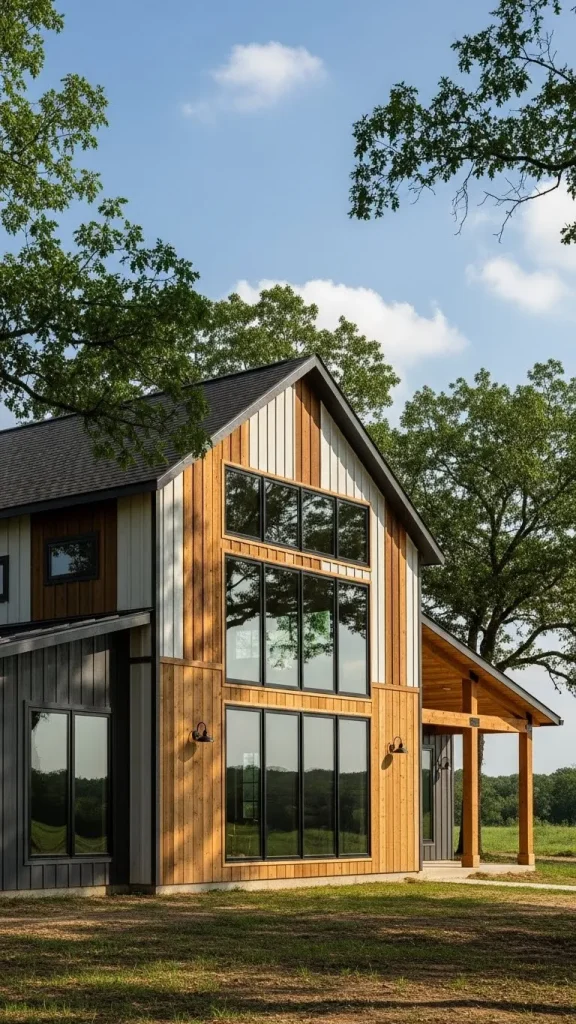
20. The L-Shaped Layout with Wrap Porch
The L-shape creates a private courtyard area that is protected from wind. It is perfect for outdoor entertaining spaces and gardens. Rustic siding makes the space feel intimate and enclosed.
The porch usually runs along the inner L to connect the wings. It creates a covered walkway between the two sections of the house. The siding protects the home from the prevailing wind direction.
This layout breaks up the visual bulkiness of a large metal building. It looks less like a commercial warehouse and more like a family home. It allows for distinct zoning of the interior living and sleeping areas.
DIY Tips:
- Place the courtyard on the leeward side of wind for comfort.
- Install outdoor lighting on the siding walls to illuminate the courtyard.
- Ensure the roof valleys are flashed properly where the roofs meet.
- Grade the courtyard to drain water away from the foundation rapidly.
- Use sliding glass doors to access the courtyard easily from both wings.

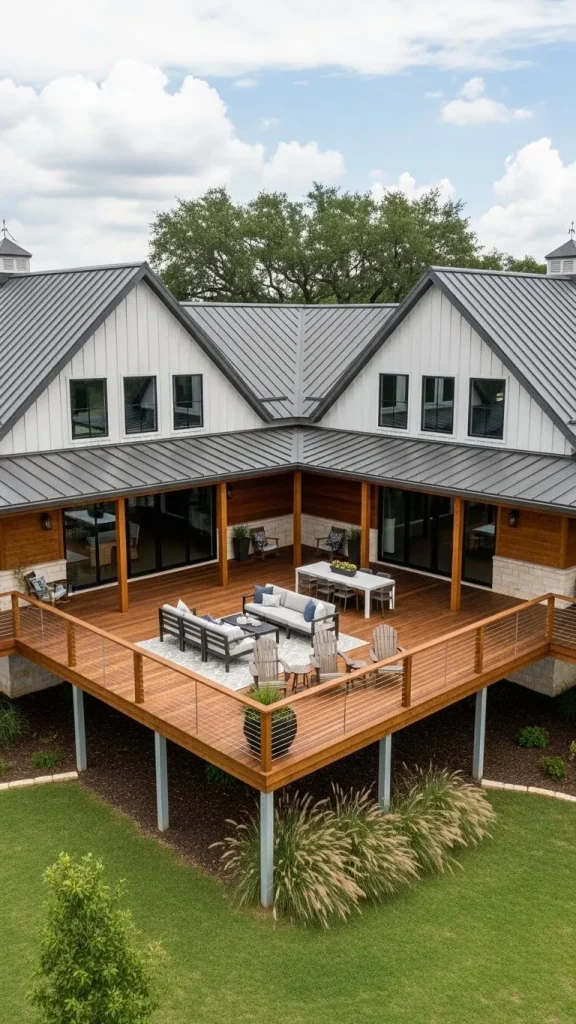
21. Glass Walls with Rustic Framing
This design is for those who love panoramic views and sunlight. Entire walls are made of glass panels rather than solid siding. Heavy rustic timbers frame these glass sections to provide structure.
The wood anchors the glass visually and connects it to the ground. It prevents the house from looking too commercial or sterile. The siding on the solid walls matches the heavy timber frames.
It creates a floating roof effect that is very stunning at night. The line between inside and outside vanishes completely. It requires privacy from trees or land position to work well.
DIY Tips:
- Hire a professional for the large glass installation to ensure safety.
- Use tempered safety glass to comply with all local building codes.
- Apply a UV film to the glass to protect interior furniture from fading.
- Seal the timber frames to prevent warping that could crack the glass.
- Clean the glass with a long-handled squeegee for the best results.

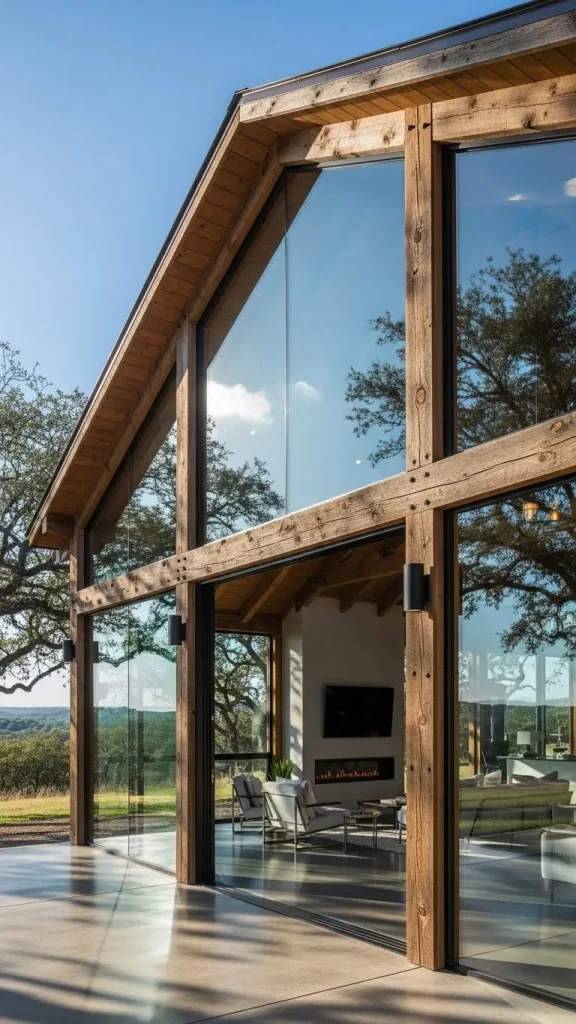
22. Concrete and Cypress Wood Blend
Concrete adds a raw industrial element that is very modern. Cypress wood adds warmth and incredible natural rot resistance. Together they create a modern fortress look that is virtually indestructible.
The concrete is often used on the lower half as a wainscot. It can be poured in place or installed as precast panels. The cypress is used for the softer upper areas and roof overhangs.
This is a low maintenance exterior option that lasts for decades. It is extremely durable against severe storms and high winds. The colors are natural and very soothing to the eye.
DIY Tips:
- Seal the concrete to prevent water staining and moss growth.
- Use stainless steel fasteners for the cypress wood to prevent streaks.
- Install a z-bar flashing between concrete and wood to shed water.
- Let the concrete cure fully before adding wood to avoid moisture transfer.
- Apply a clear sealer to the cypress to keep the golden color.

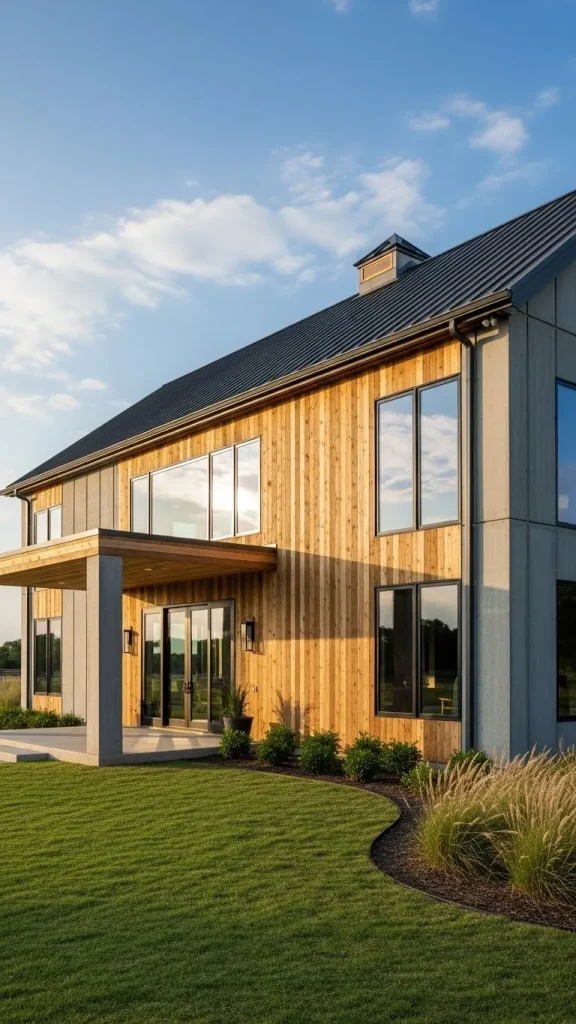
23. The Saltbox Roof Modernization
The saltbox is a colonial American design that is seeing a revival. It has a short roof in front and a long sloping roof in back. Modern barndominiums are adapting this shape for its efficiency.
Rustic siding emphasizes the historical roots of this unique shape. The long rear roof is great for mounting solar panels. The asymmetrical shape is visually interesting and breaks the mold.
It creates two stories in the front and one story in the back. This offers versatile interior volume spaces for lofts and vaulted ceilings. The siding lines generally follow the roof slope for harmony.
DIY Tips:
- Orient the long roof south for maximum solar efficiency.
- Install snow guards on the long rear roof slope to protect gutters.
- Vent the roof peak thoroughly to prevent ice dams in winter.
- Use a rain screen system behind the siding to allow drainage.
- Plan the second floor headroom carefully to avoid cramped spaces.

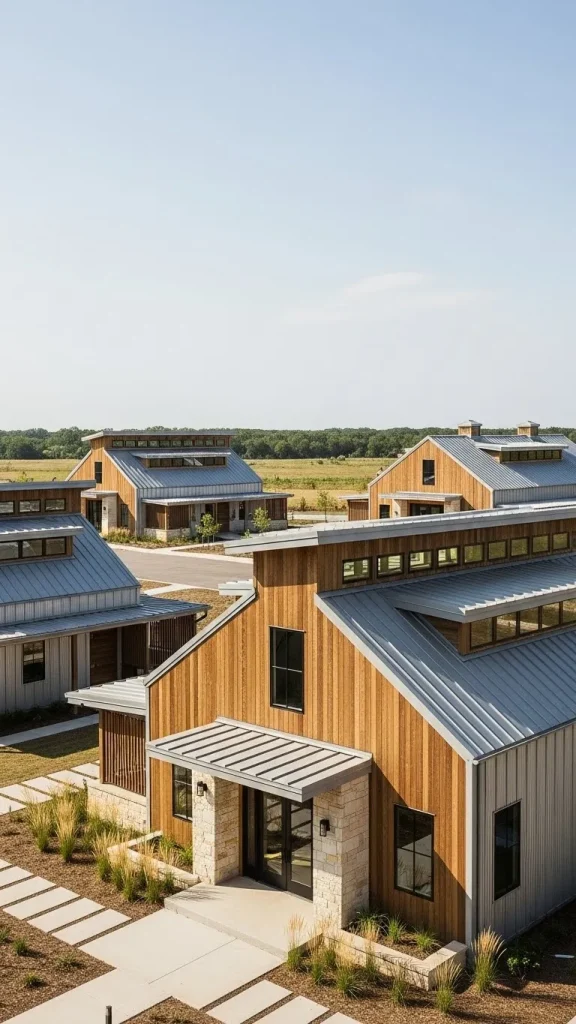
24. Live Edge Siding Planks
This is the most rustic option available for exterior cladding. The bottom edge of each board retains the natural curve of the tree. The bark is removed but the organic shape remains visible.
It creates a wavy and uneven horizontal line that is mesmerizing. No two boards are exactly the same shape or width. It looks like a cabin deep in the woods or a fairytale home.
This style is often called wavy edge siding in the lumber industry. It overlaps heavily to keep water out despite the irregular edges. It requires a specific architectural style to fit effectively.
DIY Tips:
- Overlap the boards by at least two inches to ensure a seal.
- Peel all bark completely to prevent insect infestation and rot.
- Use a penetrating oil stain for easy maintenance and re-application.
- Pre-drill nail holes to prevent splitting the irregular edges.
- Alternating wide and narrow ends helps keep the courses level.

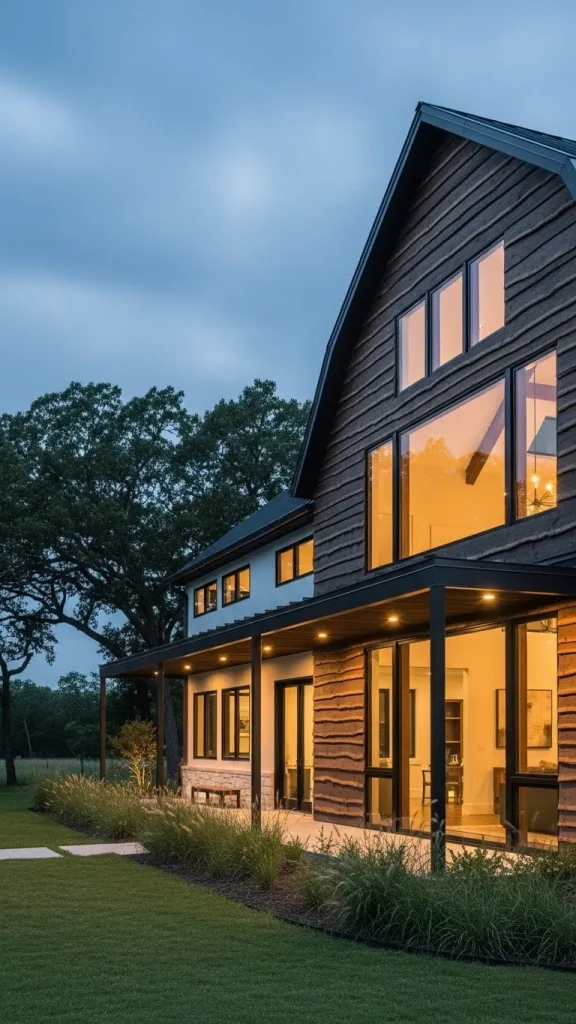
25. Board on Board Vertical Siding
This technique adds significant depth and shadow to the wall surface. First a layer of wide boards is installed with gaps between them. Then a second layer of boards is placed directly over the gaps.
This is different from board and batten because both layers are wide. It creates a very heavy and thick wall texture. It creates deep vertical shadow lines that change with the sun.
It provides excellent weather protection because of the double layer. The wood can expand and contract easily without cracking. It creates a fortress-like appearance that is very sturdy.
DIY Tips:
- Use long nails to penetrate both board layers and hit the studs.
- Install blocking between studs for adequate nailing support everywhere.
- Stain the bottom layer before adding the top layer to avoid misses.
- Check the plumb line every few feet of installation to stay straight.
- Seal the end grains of all vertical boards to prevent water uptake.

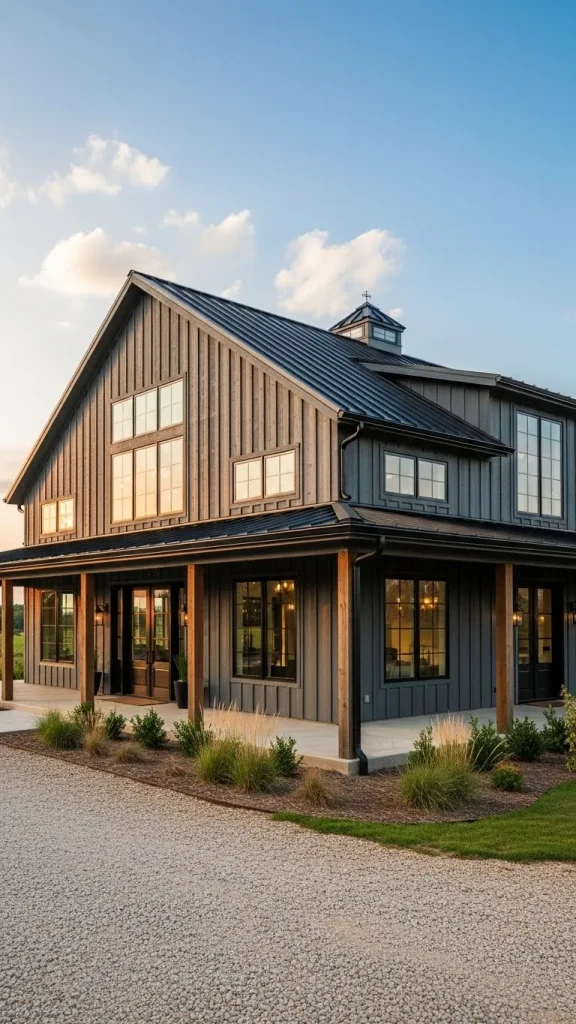
26. The Silo-Inspired Curved Feature
Some barndominiums incorporate a round room to pay homage to farm life. This mimics the grain silos of old farms and adds a unique feature. Siding a curved wall requires skill and careful planning.
Vertical narrow boards work best for curves as they can contour. They can follow the radius without breaking or cupping. Metal sheets can also be bent to fit the curve if desired.
This round room makes a great office, stairwell, or breakfast nook. It breaks up the boxy shape of the standard metal barn. It is a conversation starter for any guest who visits.
DIY Tips:
- Use thinner boards that are more flexible for tight curves.
- Install horizontal blocking at two-foot intervals for nailing.
- Soak wood boards to make them bend easier during installation.
- Use screws instead of nails for better holding power on curves.
- Create a template for the curved bottom plate to ensure accuracy.

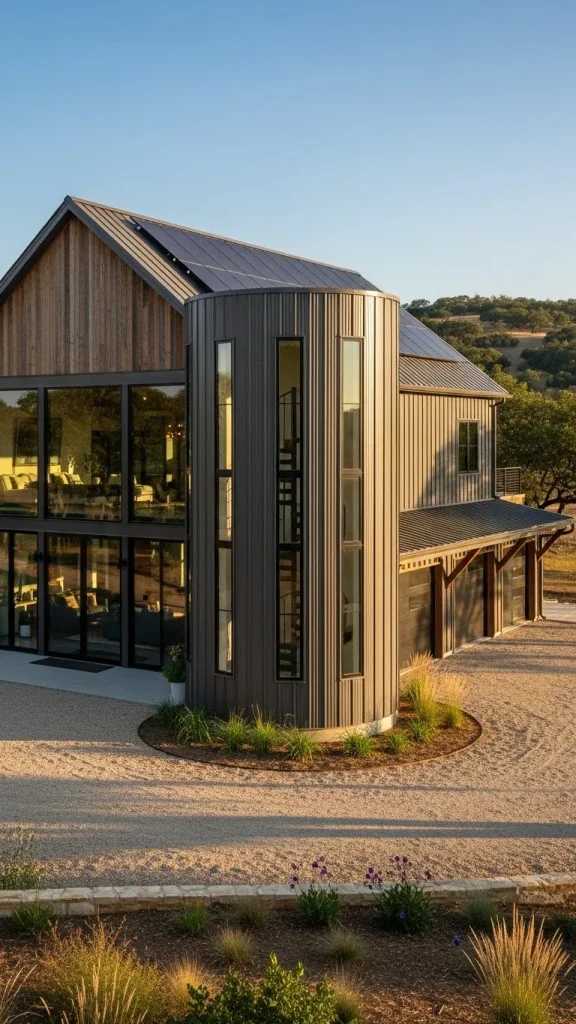
27. Whitewashed Siding with Natural Trim
Whitewashing allows the natural grain of the wood to show through. It is softer and more organic than a solid white paint application. The wood texture remains the star feature of the exterior.
Natural wood trim frames the windows and doors to add warmth. This prevents the house from looking washed out or unfinished. It creates a beachy or cottage farmhouse vibe that is very relaxing.
The look is airy, light, and very cheerful in any setting. It reflects sunlight and keeps the house cool during the summer. It ages gracefully as the whitewash fades slightly over time.
DIY Tips:
- Dilute latex paint with water to create your own whitewash mixture.
- Brush the mixture on and wipe off excess with rags immediately.
- Test the ratio on scrap wood to get the exact look you want.
- Apply a clear sealer over the whitewash layer to protect it.
- Sand the wood first for a smoother finish before applying wash.

Conclusion
Barndominiums have evolved far beyond their humble origins as simple storage sheds or barns. They are now a canvas for architectural creativity and modern living. Rustic siding is the key ingredient in this transformation that brings warmth and character to the metal structure.
The twenty-seven designs listed above prove the versatility of this housing style. From charred wood to classic cedar the options are truly endless. You can mix materials to create something truly unique that reflects your personality.
Remember that the exterior is the first impression your home makes on the world. It sets the tone for the entire home experience before you even step inside. Choose a style that reflects your personal taste and fits the landscape.
Consider your local climate carefully when choosing your siding materials. Some sidings require more maintenance than others do in harsh weather. Balance your aesthetic desire with practical needs to ensure a happy homeownership experience.
With the right planning and execution your home will stand out beautifully. These tips will help you execute the vision with confidence and skill. Start planning your dream rustic barndominium today and enjoy the process of creation.