


A truly great haunted house is more than just a collection of spooky props; it is a live, interactive performance designed to thrill, terrify, and delight. It is about crafting an immersive experience that plays with perception, builds unbearable suspense, and delivers perfectly timed scares.
Here is the summary table for the 35 genius haunted house ideas.


Whether you are a seasoned haunter or a first timer, these 35 genius ideas will help you move beyond the basics and create a frighteningly fun night that your guests will be talking about for years to come.
The Art of the Unseen: Crafting a Creepy Atmosphere
Before your guests see a single monster, they should feel that something is deeply wrong. The atmosphere is the invisible foundation of fear.
1. The Disorienting Entryway
Start the experience by messing with your guests’ equilibrium. A slightly slanted floor or a gently swaying “bridge” can be incredibly unnerving.

DIY Tips:
- Build a simple, low ramp with a slight, almost imperceptible tilt using plywood and shims.
- Create a “swaying bridge” in a hallway by laying a narrow piece of plywood over a few old tires.
- The feeling of unsteadiness will immediately put your guests on high alert.
2. The Sinister Soundscape
Use sound to tell a story and build suspense. A dynamic audio track is more effective than a constant loop of screams.

DIY Tips:
- Use multiple hidden Bluetooth speakers. Have a base layer of ambient “dread” sounds.
- Have a helper in another room act as a “sound designer,” triggering specific sounds (a baby crying, a music box, footsteps) as guests move through different areas.
- Silence is also a powerful tool. A room that is completely silent after a noisy one can be very unsettling.
3. The Temperature Drop
A sudden, inexplicable drop in temperature is a classic paranormal trope that is easy to replicate.

DIY Tips:
- In a small room or hallway, open a window slightly and place a powerful fan blowing the cold night air in.
- For a more targeted effect, have an actor armed with a can of compressed air release a quick, cold blast on the back of a guest’s neck.
- The transition from a warm room to a suddenly cold one is a guaranteed way to give someone the shivers.
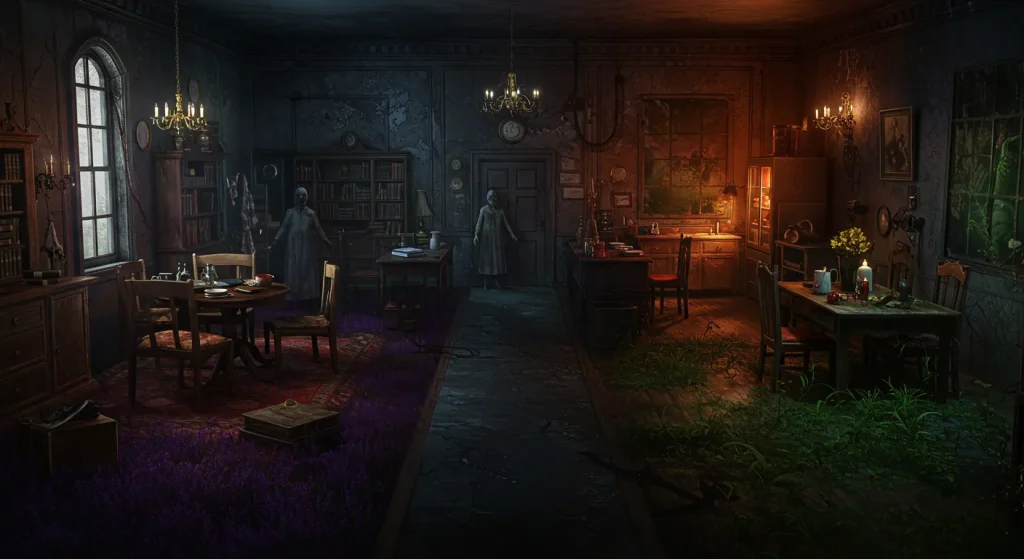
4. The Scent Story
Use different scents in different rooms to create a powerful, subconscious narrative.
DIY Tips:
- A “haunted mansion” room might have a dusty, rose potpourri scent.
- A “butcher” room could have a faint, metallic, coppery smell (achieved with specific scent oils).
- A “witch’s cabin” could smell of damp earth, cinnamon, and something vaguely unsettling, like patchouli.
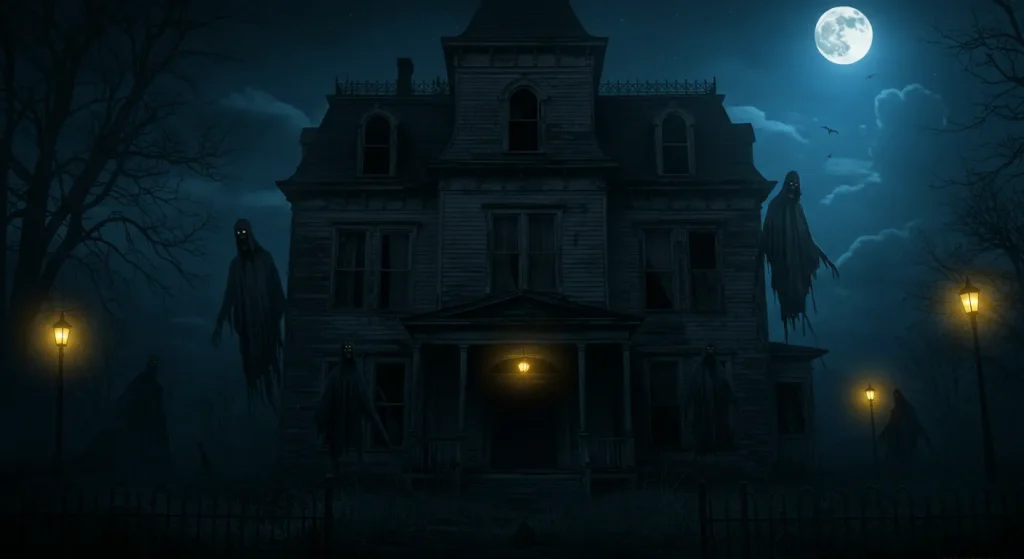
5. The Living Shadows
Use creative lighting to make it seem like the shadows themselves are alive and moving.
DIY Tips:
- Place a single, bare, swinging lightbulb in the center of a room to make shadows dance and shift.
- Have an actor hidden behind a semi translucent sheet with a light behind them, casting a giant, distorted, and moving shadow into the room.
- A slowly rotating fan in front of a light source can create a constant, creepy sense of movement.
Psychological Scares & Mind Games
These scares are designed to mess with your guests’ heads, creating a sense of paranoia and dread that is more memorable than a simple jump scare.
6. The Mirror Scare
A classic for a reason, this plays on our fear of our own reflection and what might be behind us.

DIY Tips:
- Have a hallway with a large mirror on one wall.
- Have an actor in a terrifying mask hide behind the guests as they walk down the hall.
- They will not see the actor until they look in the mirror and realize something is standing right behind them.
7. The Room of Creepy Dolls
The “uncanny valley” of dolls that look almost human is a powerful source of fear. This room is designed to be deeply unsettling.

DIY Tips:
- Collect an assortment of old, creepy looking dolls from thrift stores.
- The ultimate scare is to have a live actor dressed as a doll, sitting perfectly still among the others, who suddenly blinks or turns their head.
- Play a faint, distorted recording of a children’s lullaby or a music box to complete the scene.
8. The Changing Portrait
An object that changes when you are not looking is a classic haunting trope that can be done with modern tech.

DIY Tips:
- The easiest and most effective method is to use a digital picture frame.
- Load the frame with a series of seemingly normal, vintage portraits, and program it to have one of the portraits suddenly and briefly flash to a ghoulish, demonic version.
- The change should be quick, just a one second flash, to make guests question if they really saw it.
9. The Hall of Whispers
This scare uses only audio to create a deeply unsettling, personal experience.

DIY Tips:
- Place several small, hidden Bluetooth speakers along a dark hallway.
- Have helpers in another room whisper creepy phrases into their phones, which are connected to the speakers.
- Whispering a guest’s name as they walk by is an advanced and truly terrifying technique that costs nothing.
10. The False Sense of Security
Give your guests a moment of respite that is actually a setup for a bigger scare.

DIY Tips:
- Create a room that seems safe and well lit, maybe with a friendly looking actor offering a (fake) cup of cider.
- This room should be a “breather” after a few intense scares.
- The scare comes when the friendly actor suddenly transforms, or a monster bursts from a hidden panel in the “safe” room.
11. The “Don’t Blink” Room
Inspired by Doctor Who, this scare involves actors who only move when they are not being looked at.

DIY Tips:
- Have several actors dressed as creepy statues (like angels or gargoyles) in a room lit by a flickering light.
- Instruct them to freeze in a terrifying pose whenever a guest is looking directly at them.
- When the guests turn their backs, the actors should change their position, getting closer each time.
High-Impact Startles & Jump Scares
These are the heart pounding moments that make a haunted house so much fun. They are all about timing, misdirection, and a powerful reveal.
12. The Mannequin That Is Not
Blur the line between what is real and what is not to create incredible suspense and a powerful payoff.

DIY Tips:
- Set up a room with several spooky looking, non moving figures, like scarecrows or dummies.
- Have a live actor dress in an identical costume and stand perfectly still among the decoys.
- The scare comes when a guest gets very close to inspect the “props.” The live actor should then suddenly move or reach out.
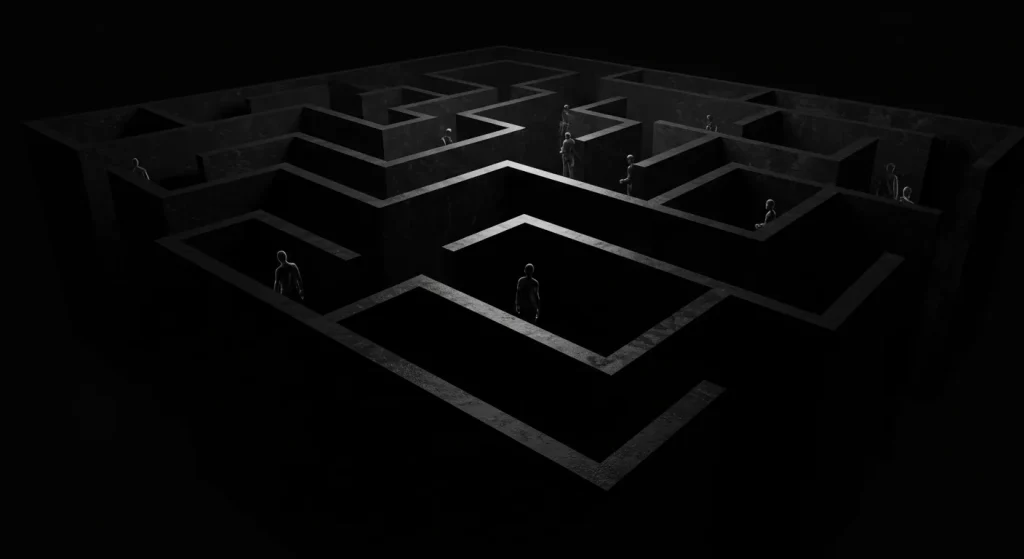
13. The Strobe Light Maze
A strobe light is disorienting and creates a sense of panic. A maze made of simple black plastic sheeting becomes a terrifying obstacle in a strobe.
DIY Tips:
- The flashing lights will make it hard for guests to get their bearings.
- Have an actor in the maze who is only visible in brief, terrifying glimpses, making it impossible to track their movements.
- WARNING: Strobe lights can be dangerous for people with epilepsy. It is essential to have a clear warning sign posted at the entrance.
14. The Air Cannon Scare
A sudden, powerful blast of air is a huge and unexpected scare that is completely harmless.

DIY Tips:
- You can build a simple air cannon with PVC pipes and a sprinkler valve (tutorials are available online).
- Hide the cannon behind a prop or in the ceiling.
- Trigger it with a button as guests walk by for a huge jump scare that they will never see coming.
15. The Drop Down Panel
A classic scare that is incredibly effective. A seemingly solid wall has a hidden panel that can drop open.

DIY Tips:
- Create a simple panel on hinges in a false wall made of painted cardboard or foam board.
- Have an actor hidden behind the wall.
- As guests pass, the actor should drop the panel and lunge through the opening.
16. The Hidden Swamp Monster
A great scare for a room with a lot of fog or a “laser swamp” effect.

DIY Tips:
- Have an actor in a ghillie suit or a mossy monster costume lie perfectly still on the floor.
- The costume will help them blend in with the environment.
- As guests carefully step over what they think is a prop, the actor should grab their leg.
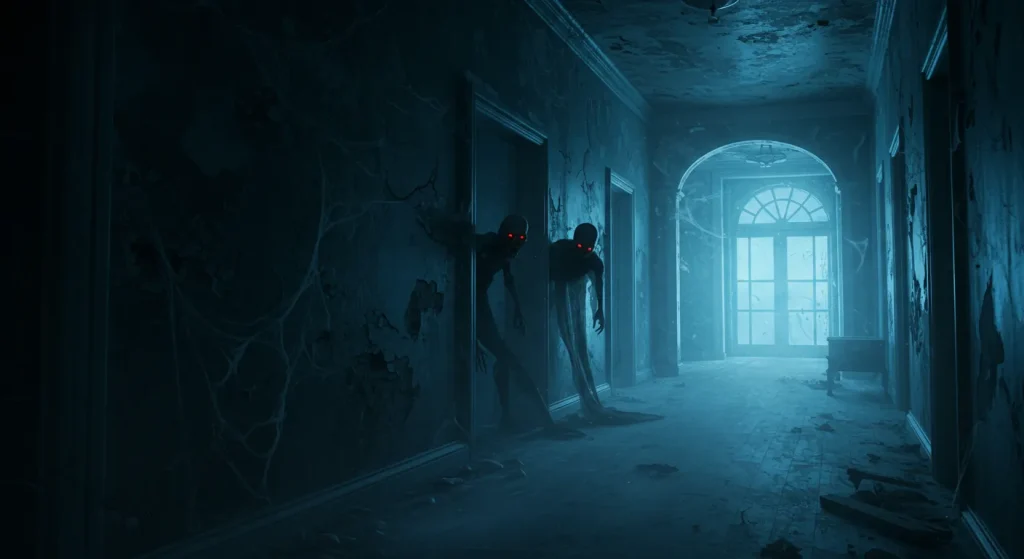
17. The Creature in the Corner
A simple but effective scare that uses a common fear of dark corners.
DIY Tips:
- Drape a large, dark piece of fabric from the ceiling to the floor across a corner of a room, creating a hidden space.
- Have an actor hide behind the fabric.
- As guests pass, the actor can either push their face against the fabric to create a terrifying shape, or rip the fabric down and lunge out.
Tactile Terrors: It’s All in the Touch
These scares target the physical senses, creating discomfort and a feeling of being trapped by what your guests can feel but not see.
18. The Claustrophobic Hallway
Forcing guests into a tight, enclosed, and moving space is a powerful way to induce a primal sense of panic.

DIY Tips:
- Inflate large, black trash bags and tape them to the walls of a hallway.
- This will create bulging, yielding walls that press in on the guests as they try to squeeze through, making the space feel like it is breathing.
- The hallway should be dark, so guests have to feel their way through.
19. The Spider Web Passage
A simple but incredibly effective tactile scare that preys on a common phobia.

DIY Tips:
- Buy several bags of cheap, stretchy spider web material.
- The secret to making it look and feel creepy is to stretch it as thin as possible until it is barely visible.
- Stretch the material across a dark hallway at varying heights, and add a few lightweight plastic spiders that can fall on guests.
20. The “Body Bag” Obstacle
A deeply unsettling tactile scare for a hallway that is cheap to create but very effective.

DIY Tips:
- Stuff several large, black trash bags with pillows or soft foam to create the shape of bodies.
- Hang them from the ceiling of a dark hallway so that guests have to push their way through the “body bags.”
- The weight and shape of the bags is what makes this scare so effective.
21. The Unstable Floor
The feeling of the ground shifting beneath your feet is a deeply primal fear.

DIY Tips:
- In a small, dark room, place a layer of pillows, cushions, or even deflated pool floats on the floor.
- Cover the entire floor with a large, heavy duty black tarp, securing it at the edges.
- Guests will be completely unnerved as they try to walk across the shifting, unstable surface in the dark.
22. The “Feely Box” Wall
A classic carnival trick that can be terrifying in a haunted house setting.

DIY Tips:
- Cut several holes in a false wall or a large piece of cardboard.
- Behind each hole, have an actor ready with a different, gross feeling object.
- As guests put their hands through to feel their way, they will touch things like cold, cooked spaghetti (“worms”), peeled grapes (“eyeballs”), or a wet, fur-lined glove.
The Grand Finale: The Lasting Scream
The final scare is the one your guests will remember most. It should be a high energy, terrifying climax to their journey.
23. The Chainsaw Chase Out
This is the ultimate, classic haunted house finale. It is pure, adrenaline fueled terror.

DIY Tips:
- SAFETY FIRST. Use a real chainsaw, but you absolutely must remove the chain. The noise and the smell are what create the scare.
- Have your scariest looking actor wait just outside the final exit door.
- As guests emerge, thinking they are safe, the actor should start the chainsaw and chase them out into the yard.
24. The False Exit Room
Lead your guests to a door that they think is the exit, only for it to open into one final, terrifying room.

DIY Tips:
- Label a door clearly with a glowing “EXIT” sign.
- When they open the door, it should lead into a small, dark room with your most terrifying monster.
- The real exit should be an unassuming, hidden door on another wall of the same room.
25. The Car Scare
If your haunt exits near your driveway, this is a terrifying and unexpected final scare.
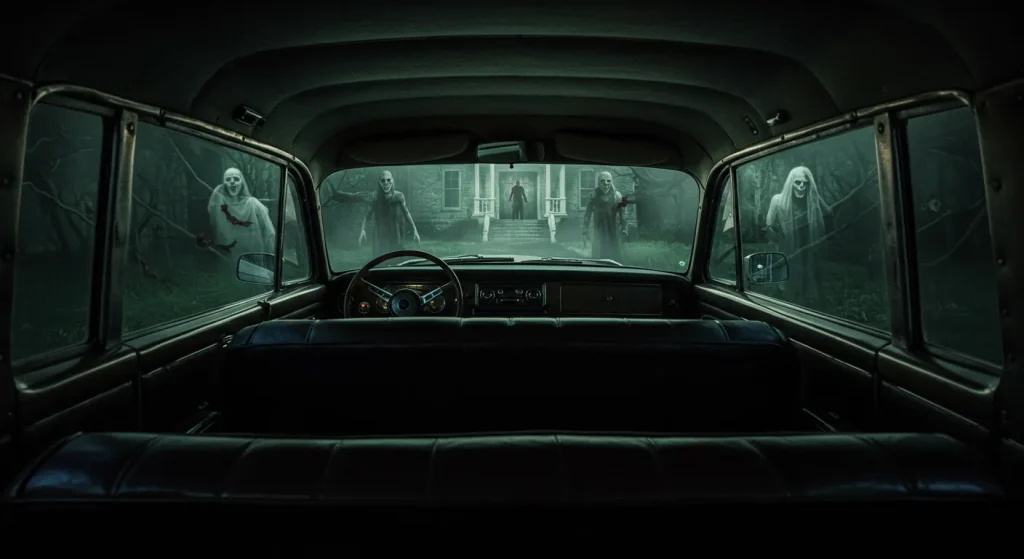
DIY Tips:
- Park a car in the driveway, facing the exit.
- Have an actor in a mask hide in the driver’s seat.
- As the guests walk past the car, the actor should suddenly turn on the headlights and honk the horn loudly.
26. The Final Window Scare
Give them one last jump scare when they least expect it, proving that they are never truly safe.

DIY Tips:
- As guests are leaving and saying their goodbyes in a well lit, “safe” area, have an actor in a terrifying mask suddenly appear and slam their hands against the outside of a nearby window.
- This works best when everyone’s guard is down and they believe the haunt is over.
- It is a perfect, final punctuation mark of fear.
27. The “It’s Still Behind You” Scare
A silent, psychological scare that creates a lasting sense of dread that follows your guests home.

DIY Tips:
- As the last group of guests is leaving your property, have one of your scariest actors slowly emerge from the shadows and begin following them down the street from a distance.
- The actor should never run or speak, just walk at a steady, relentless pace.
- One of the guests will eventually look back and see the figure, creating a final, authentic scream.
28. The Hidden Photographer
Capture the terror for a hilarious party favor.

DIY Tips:
- At the moment of your biggest, most reliable jump scare, set up a camera with a motion activated flash.
- You will capture priceless photos of your guests screaming in terror.
- Printing these out or emailing them to your guests after the party is a fantastic and fun memento.
29. The “Contaminated” Zone Exit
A modern, anxiety inducing finale.

DIY Tips:
- Make the final hallway a “decontamination” zone. Cover the walls in white plastic sheeting.
- Have an actor in a full hazmat suit spray the guests with a fine mist of water from a spray bottle as they run through.
- Flashing red lights and a siren sound effect will complete the chaotic scene.
30. The Infestation Room
A room that seems to be teeming with bugs or rats.

DIY Tips:
- Buy hundreds of cheap, plastic roaches, spiders, or rats.
- Use a hot glue gun to cover the walls, floor, and ceiling of a small room with the plastic critters.
- The overwhelming sight of the sheer number of pests is the scare. A hidden actor can throw a handful of the plastic bugs at the guests.
31. The Mirror Maze
Create a simple but incredibly disorienting maze using cheap, full length mirrors.

DIY Tips:
- Set up a few full length mirrors from a department store in a zig zag pattern in a dark room.
- The reflections will make it incredibly difficult to tell which path is the correct one.
- Have an actor in a creepy mask appear in the reflections for a terrifying scare.
32. The Scarecrow Field
If you have a backyard, this is a classic and effective outdoor scene.

DIY Tips:
- Set up several scarecrows in a small area of your yard.
- Have one or two of them be live actors who will remain perfectly still until guests get close.
- Dim lighting and a cornfield sound effect will complete the illusion.
33. The Butcher’s Kitchen
A gruesome and classic haunted house room.

DIY Tips:
- Cover the walls and tables in plastic sheeting and splatter with fake blood.
- Use meat hooks to hang fake body parts (from a Halloween store) from the ceiling.
- Have an actor in a bloody apron and a pig mask working with a cleaver on a piece of meat.
34. The Asylum Room
A deeply unsettling room that plays on fears of madness.

DIY Tips:
- Paint the walls white and scrawl creepy messages and drawings on them with a black marker.
- Have a single, bare mattress on the floor.
- An actor in a hospital gown can be rocking in a corner, muttering to themselves, or can lunge at the guests.
35. The “Game Over” Room
A final, terrifying room themed around a deadly game.

DIY Tips:
- Set up a room like a scene from a horror movie like Saw.
- Have a creepy puppet on a tricycle and a TV screen with static.
- An actor can explain the “rules” of the game the guests are now a part of, before another actor bursts in for the final scare.
Conclusion
A truly genius haunted house is a carefully orchestrated symphony of fear, built on a foundation of suspense and punctuated by moments of pure terror. By layering atmospheric effects, psychological tricks, and high energy startles, you can create an unforgettable and thrilling experience for your guests. Remember that safety is paramount, always use battery operated lights, ensure clear pathways, and make sure your actors know their boundaries. Now go forth, embrace the darkness, and get ready to craft a frighteningly fun night that will haunt your friends’ dreams for years to come.