


Table of Contents
- The L-Shape Formula: Choosing Between 8×10 and 9×12 Based on Width
- U-Shaped Configurations: Mastering the All-Legs-On Layout with 10×14 Rugs
- Asymmetrical & Deep Chaises: Determining Portrait vs. Landscape Orientation
- Curved Modulars: Using Organic Shapes to Soften Modern Angles
- The Floating Rule: Balancing Rug Borders with Room Dimensions
- The Final Layer: Anchoring Your Sectional
- Common Rug Sizing Dilemmas
Selecting the perfect rug for a sectional is often the most challenging piece of the living room puzzle.
Because these sofas dominate the visual weight of a room, choosing a foundation that is too small looks disconnected, while one that is too large can swallow the floor space entirely.
Many design enthusiasts find themselves stuck choosing between the standard 8×10 and the more expansive 9×12 option.
The choice ultimately relies on the balance between intimacy and grandeur in your layout.
An 8×10 usually serves as a versatile anchor for apartments or cozy dens, allowing the rug to sit just under the front legs of the sofa for a grounded look.
On the other hand, a 9×12 offers a sense of luxury and boundary, often accommodating all the furniture legs to create a distinct zone within an open concept space.
We are here to help you navigate these dimensions so you can invest in a piece that elevates your home. This guide compares the spatial impact of both sizes to ensure your final pick feels intentional and stylish.
By understanding the rules of scale and proportion, you will be ready to transform your seating area into a harmonious retreat that looks professionally curated.
The L-Shape Formula: Choosing Between 8×10 and 9×12 Based on Width


Selecting the right rug for a sectional is less about guessing and more about simple geometry. The goal is to anchor the furniture without crowding the room.
The “L-Shape Formula” relies entirely on the width of your sofa’s longest side. This measurement dictates whether you fall into the 8×10 or 9×12 camp.
A rug is the foundation of a room; if it is too small, the entire design feels unmoored and temporary.
Designer Hack
- Use painter’s tape to outline both 8×10 and 9×12 dimensions on your floor before buying; this helps you visualize exactly how the rug interacts with your sectional’s footprint.
- Follow the ‘Front Legs Rule’: Ensure the rug is large enough that the front legs of every piece of the sectional rest firmly on the rug to keep the seating area unified.
- If your sectional’s longest side measures close to 9 feet, size up to the 9×12 option to allow for 6-8 inches of rug exposure on either side, which creates a more luxurious look.
The 6-Inch Extension Rule


To achieve a sophisticated look, your rug must extend at least 6 to 10 inches beyond the arms of the sectional. This negative space is crucial.
It creates a visual border that defines the living zone. Without this extension, the furniture appears to be swallowing the rug, making the room feel cluttered.
If you are working with an open floor plan, this extension helps separate the lounge area from the dining space or walkways.
For those seeking inspiration on how to arrange furniture in airy environments, checking out 52 Scandinavian living room layouts for open spaces can offer great visual examples of proportion.
Designer Secret
- Tape It Out: Before purchasing, use blue painter’s tape to mark the rug’s outline on your floor. Measure exactly 6 to 10 inches past your sectional’s arms to visualize the footprint and ensure it fits the room scale.
- The Layering Hack: If you possess a vintage rug that is too small to meet the extension rule, layer it on top of a larger, affordable natural fiber rug (like jute or sisal) that provides the necessary border width.
- Watch the Walkways: While extending the rug adds sophistication, ensure the extra inches do not creep into high-traffic paths where they might become a tripping hazard or curl up.
When to Choose an 8×10 Rug
An 8×10 rug is the standard choice for apartment-sized sectionals. It works best if your sofa measures between 80 and 95 inches in width.
In this setup, you will typically place just the front legs of the sectional on the rug. This binds the piece to the floor while leaving the back airy.
Texturally, a low-pile wool or flatweave blend works beautifully here. It keeps the visual weight light and maintains a clean, modern spatial flow.
Style Secret
- Always measure your sectional width first; if it falls between 80 and 95 inches, an 8×10 rug provides the perfect scale.
- Maximize the feeling of space in an apartment by anchoring only the front legs of the sofa on the rug.
- Choose flatweave or low-pile wool textures to ensure the room feels open and modern rather than cluttered.
When to Upgrade to a 9×12 Rug
If your sectional is a standard family size, usually between 96 and 110 inches wide, an 8×10 will look like a postage stamp. You need a 9×12.
The 9×12 allows for a more luxurious arrangement. You can often fit all legs of the sectional on the rug, which instantly elevates the room’s status.
This size creates a “room within a room” effect. It is perfect for large, open basements or great rooms where you need to carve out a cozy zone.
| Sectional Width (Longest Side) | Recommended Rug Size | Visual Effect |
|---|---|---|
| Under 95 Inches | 8′ x 10′ | Cozy, compact, defines the zone. |
| 96 to 110 Inches | 9′ x 12′ | Spacious, luxurious, anchors the room. |
| Over 115 Inches | 10′ x 14′ (or larger) | Grand scale, custom feel, estate style. |
The number one mistake is buying a rug that is too small. It makes the room look smaller and disjointed. You want the rug to feel like a stage that the furniture sits on.
Emily Henderson, Style by Emily Henderson
Regardless of size, consider the texture. A high-pile Moroccan rug adds softness, while a jute rug brings an organic, earthy element to the scheme.
Layering textures is a key strategy found in 50 cozy room decor tips to create the ultimate relaxing retreat, which can help soften the look of a large sectional.
Designer Cheat Sheet
- Measure the longest side of your sectional first; if it falls between 96 and 110 inches, upgrade to a 9×12 to avoid the ‘postage stamp’ look.
- Aim to place all legs of the sectional on the rug to create a ‘room within a room’ effect that instantly anchors open floor plans.
- Soften the visual weight of a large sectional by choosing a textured rug, such as high-pile Moroccan or organic jute, to act as a cozy stage for the furniture.
U-Shaped Configurations: Mastering the All-Legs-On Layout with 10×14 Rugs


A U-shaped sectional is the ultimate comfort zone, but it demands a substantial foundation to feel grounded. Without the right anchor, this massive piece can feel disconnected from the rest of the room.
The “all-legs-on” approach is widely considered the most luxurious way to style this configuration. A 10×14 rug typically provides ample coverage for the entire footprint of the sofa.
This layout unifies the seating area, creating a cohesive island of comfort. It prevents the sectional from looking like it is swallowing the room or floating aimlessly in an open plan.
A large rug doesn’t just fill space; it defines the boundaries of your conversation zone, turning furniture into a home.
Visually, this setup works best when you layer textures. Imagine a chunky jute or plush wool rug peeking out from beneath a velvet sectional. The contrast adds depth to the design.
The extra rug surface around the perimeter also softens the acoustics. In large rooms with hard flooring, this absorption is crucial for keeping the atmosphere warm and inviting.
For a large room, choose a rug that is large enough to fit all of the furniture legs on top of it. This creates a more defined seating area.
Architectural Digest Editors, How to Choose the Right Rug Size
Defining the Spatial Boundaries


When using a 10×14 rug, you must ensure you have enough floor space remaining. You generally want 12 to 18 inches of bare floor visible between the rug edge and the walls.
This negative space is essential for maintaining good flow. It ensures the room breathes and does not feel like it has wall-to-wall carpeting, which can look dated in modern homes.
If you are working with layouts for open spaces, use the rug’s edge to create a virtual hallway. This guides foot traffic around the seating zone rather than through it.
Always measure the depth of your U-shape carefully. Some modern sectionals are incredibly deep, and you want at least 6 inches of rug extending behind the back legs for a tailored look.
Texture and Functionality


Since U-shaped sectionals are gathering magnets, your rug needs to handle traffic. Low-pile wool or performance blends are excellent choices because they resist crushing under heavy furniture feet.
Avoid high-pile shags if the sectional has intricate legs. The legs can get lost in the fibers, making the sofa look unstable or uneven. A flat weave offers a cleaner architectural line.
For those trying to create the ultimate relaxing retreat, consider a rug with a subtle organic pattern. This hides minor stains and adds visual interest to the large expanse of fabric.
Before purchasing, run through this quick placement checklist to ensure your 10×14 choice will function perfectly in your specific room configuration.
The All-Legs-On Success Checklist:
- Back Clearance: Ensure at least 6 inches of rug extends past the back of the sofa frame.
- Side Extension: Check that the rug extends 8-10 inches beyond the side arms for balance.
- Traffic Flow: Verify that the rug corners do not intrude into main walking paths or doorways.
- Table Centering: Confirm your coffee table can sit in the center without feeling crowded by the sofa edges.
- Ventilation: Make sure the rug does not cover floor vents, which is common with such a large surface area.
Pro Styling Secrets
- Mind the Gap: Avoid the “wall-to-wall” carpet look by ensuring there are 12 to 18 inches of bare floor visible between the rug edges and your walls to let the room breathe.
- The 6-Inch Rule: For a truly tailored appearance, double-check that your rug extends at least 6 inches beyond the back legs of the sectional so the furniture doesn’t look like it’s falling off a cliff.
- Traffic Control: In open-concept homes, use the distinct edge of a 10×14 rug to create a “virtual hallway” that subtly guides foot traffic around your conversation zone rather than through it.
Asymmetrical & Deep Chaises: Determining Portrait vs. Landscape Orientation

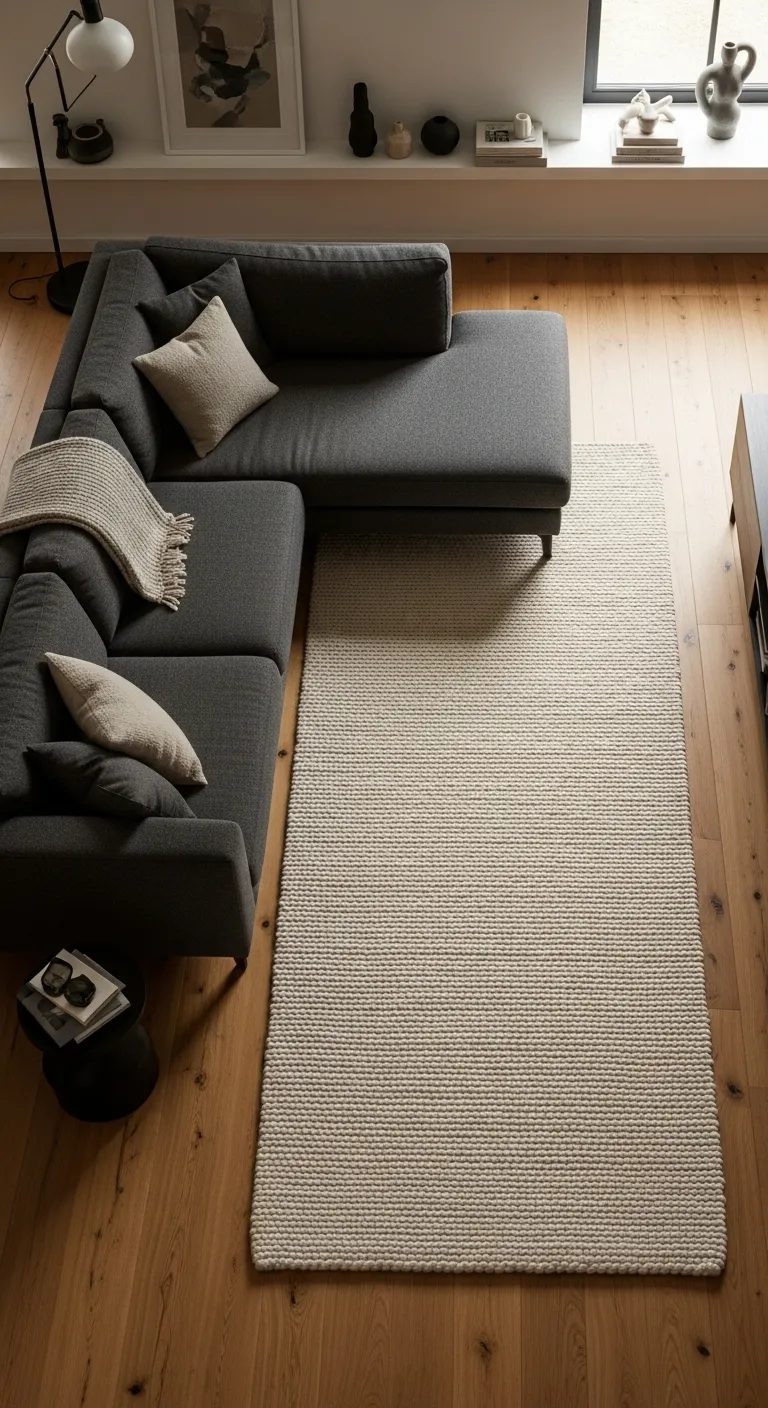
Sectionals with extended chaises create a unique footprint that can challenge standard layout rules. This footprint requires a thoughtful approach to rug orientation to maintain visual balance.
The asymmetric shape of an L-sectional often leaves homeowners debating between a portrait or landscape placement. Your choice depends heavily on the dimensions of the room and the sofa itself.
The orientation of your rug dictates the flow of the room; let the longest lines of your furniture guide the path.
The Landscape Approach


Placing a rug in “landscape” mode means the longer edge runs parallel to the main back of the sofa. This is the most traditional choice for open-concept spaces.
It creates a wide visual field that makes the room feel expansive. This orientation works best when the main seating section is significantly longer than the chaise extension.
Ideally, the rug should extend past the end of the chaise. If the rug stops short of the chaise’s feet, the furniture creates a visual cliff that disrupts the spatial flow.
For renters or those looking for easy rental decorating fixes, simply rotating an existing rug to landscape can instantly widen a cramped living area.
The Portrait Approach
A “portrait” orientation turns the rug so the longer edge runs parallel to the chaise. This is a brilliant tactic for narrow rooms or deep sectionals.
By aligning the rug with the deepest part of the sofa, you draw the eye lengthwise. This emphasizes the depth of the room rather than its width.
This method is essential if your chaise is extra-long. A portrait rug ensures the entire length of the chaise rests comfortably on the texture, preventing awkward gaps.
When in doubt, go bigger. A rug that encompasses the entire footprint of the sectional, including the chaise, unifies the pieces into a single cozy zone.
Shea McGee, Studio McGee Rug Guide
Key Factors for Orientation
Choosing the right direction helps ground the furniture. Consider these elements when deciding between portrait and landscape for your specific layout.
- Room Dimensions: Mimic the shape of the room. If the room is long and narrow, a portrait rug reinforces that flow.
- Chaise Length: If the chaise is the dominant feature, align the rug vertically to support its scale.
- Traffic Flow: Ensure the rug orientation does not create a tripping hazard in high-traffic walkways.
- Flooring Exposure: Aim to leave 12 to 18 inches of exposed floor around the perimeter to frame the vignette.
Texture plays a role here as well. A low-pile wool rug in a portrait layout helps elongate the sightlines, while a chunky jute in landscape adds width and weight.
Designer Cheat Sheet
- Avoid a ‘visual cliff’ by ensuring your landscape rug extends past the feet of the chaise; if it stops short, the flow is disrupted.
- Mimic your architecture by aligning the rug’s orientation with the room’s shape; use portrait for narrow rooms and landscape for wide, open spaces.
- When in doubt, size up to encompass the entire sectional footprint, ensuring every leg rests on the rug for a unified zone.
Curved Modulars: Using Organic Shapes to Soften Modern Angles

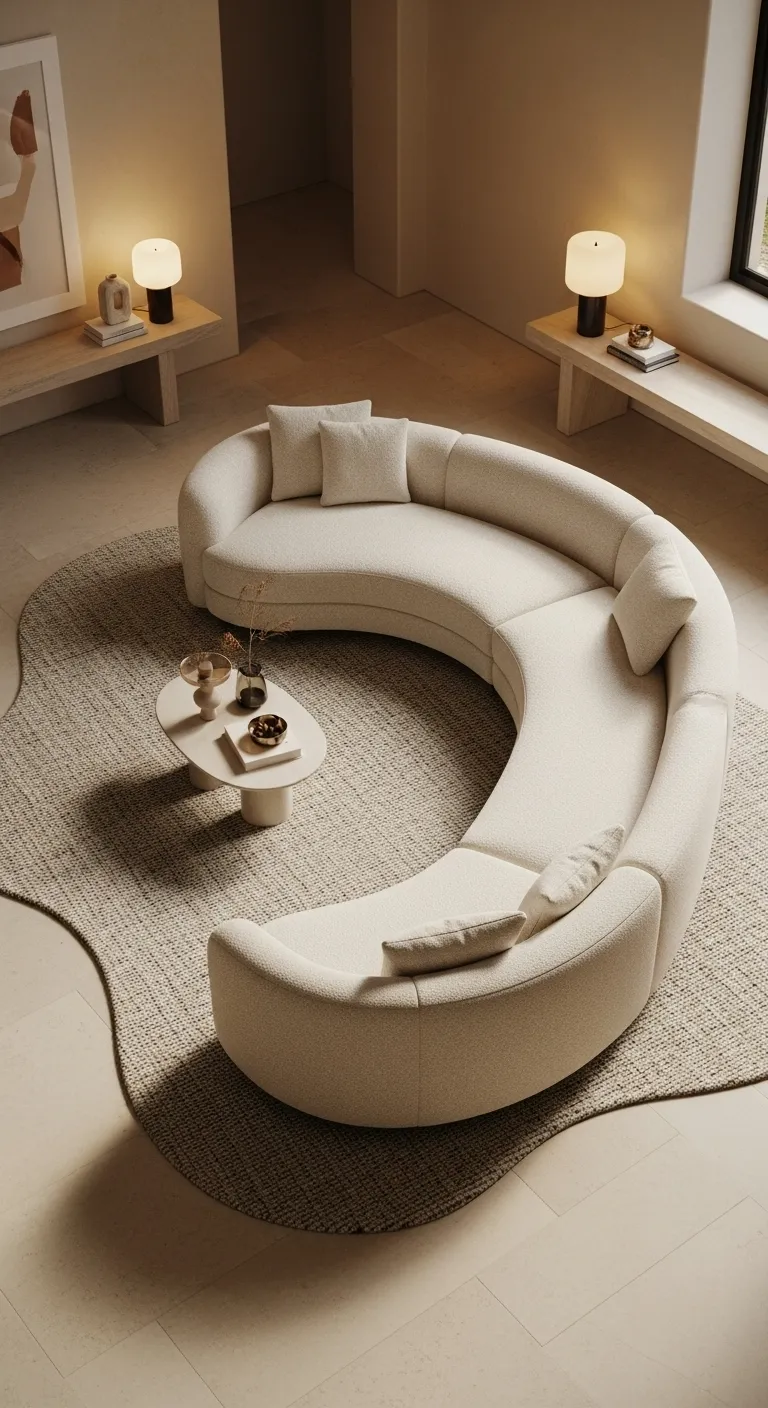
Curved sectionals are currently transforming living spaces by breaking up the rigid grid of standard architecture. These organic shapes add an immediate sense of flow and softness.
However, styling a rug with a curved sofa presents a unique challenge. A standard rectangular rug can often feel disconnected from the fluid lines of the furniture.
To maintain spatial flow, the rug must complement the furniture’s arc rather than fight against it. The goal is to create a cohesive vignette where the sofa feels anchored.
Design is about fluidity. Let your rug be the water that your furniture floats upon, creating a seamless island of comfort.
Embracing Round and Kidney Shapes
The most natural pairing for a curved modular sofa is a round or kidney-shaped rug. Mirroring the curve of the seating creates a harmonious look that feels intentional.
Imagine a white boucle sofa paired with a high-pile circular wool rug. The textures blend to create a cozy, cloud-like atmosphere perfect for lounging.


When selecting a round rug, ensure the diameter is large enough. The front half of the sectional should sit comfortably on the rug to unify the zone.
This approach works exceptionally well in modern house designs where open floor plans require distinct zones without blocking traffic paths.
The Oversized Rectangular Solution
You can still use a rectangular rug with a curved sofa, but scale is everything. The rug must be large enough to act as a stage for the entire piece.
If the rug is too small, the curved corners of the sofa will spill over the straight edges of the rug. This creates visual tension that disrupts the room’s calm.
Opt for a rug that extends at least 12 inches beyond the deepest curve of the sofa. This creates a generous border that frames the organic shape beautifully.
When working with curved furniture, you want to avoid ‘floating’ the piece. Ensure your rug is large enough to encompass the entire footprint of the curve to ground the space.
Jessica Bennett, Better Homes & Gardens
Styling Textures for Organic Flow
Since curved furniture often leans towards a modern or serene Scandinavian style, natural materials are your best friend. They add warmth to the contemporary silhouette.
Jute, wool, and shearling offer tactile feedback that enhances the “soft” look of the curves. Avoid busy geometric patterns that might clash with the sofa’s structural lines.
Checklist: Achieving the Perfect Curved Layout
- Center the Arc: Align the center point of the rug with the center point of the sofa’s curve for symmetry.
- Check the Depth: Measure from the back of the sofa to the front leg. Ensure the rug is deep enough to catch those front legs.
- Negative Space: Leave at least 18 inches of bare floor visible around the perimeter of the room to let the curves “breathe.”
- Traffic Flow: Ensure the curved edges of the rug do not protrude into main walkways, which can be a tripping hazard.
- Material Contrast: If the sofa is velvet (smooth), choose a rug with a nubby texture (rough) to create depth.
By respecting the lines of your furniture, you turn a potential layout headache into a sophisticated design statement. The result is a room that feels curated and effortlessly cool.
Curve Styling Secrets
- Mirror the Silhouette: Pair curved modulars with round or kidney-shaped rugs to echo their organic lines, ensuring the front legs sit firmly on the rug to ground the space.
- The Oversized Rule: If you prefer a rectangular rug, size up significantly so it extends at least 12 inches beyond the sofa’s deepest curve to avoid visual tension.
- Texture Over Pattern: Skip sharp geometric rug patterns that clash with fluid furniture lines; instead, opt for high-pile wool or jute to enhance the soft, serene aesthetic.
The Floating Rule: Balancing Rug Borders with Room Dimensions


The “Floating Rule” is a fundamental principle that defines the relationship between your textiles and your architecture. It dictates how much bare floor should remain visible around the perimeter of your rug.
Think of your floor as a picture frame. The rug is the art, and the exposed flooring is the matting. This negative space is crucial for preventing a room from feeling cluttered or enclosed.
Negative space is the secret ingredient that allows your furniture layout to breathe and feel intentional.
When you cover the entire floor, you risk creating a “carpeting effect” that swallows the design. This often makes the room appear smaller than it actually is. Instead, aim for a balanced contrast.
Visualizing this balance is key. Imagine the tactile shift from cool, sleek hardwood to the soft warmth of a high-pile wool rug. This transition adds sensory depth to your living area.
Establishing the Standard Border


The classic design standard suggests leaving 18 inches of bare floor exposed between the rug edge and the room’s walls. This works perfectly in standard enclosed living rooms.
However, modern homes often feature open floor plans or smaller footprints. In these cases, the 18-inch rule acts more like a guideline than a strict law.
For smaller spaces, such as apartments or cozy dens, an 18-inch border might result in a “postage stamp” rug. In these scenarios, reducing the border to 8 to 10 inches is acceptable.
This modification maximizes comfort while maintaining distinct zones. It is particularly useful if you are exploring trendy yet temporary decor ideas for renters who cannot alter the actual flooring.
A rug that is too small for the space is one of the most common decorating mistakes. It makes the room look disjointed and cheap. The rug should define the area, not just float in the middle of it.
Justina Blakeney, The New York Times Wirecutter Interview
Sectionals and Asymmetrical Layouts
Sectionals present a unique challenge regarding borders because they are often pushed against one or two walls. In this layout, the floating rule requires adaptation.
If your sectional is against a wall, you do not need a border on that side. Instead, focus on the “floating” effect on the sides of the rug that face the open room.
This technique creates a visual anchor. It grounds the sofa while directing traffic flow around the seating area rather than through it. It improves the spatial flow significantly.
Below is a checklist to determine the ideal border width based on your specific room type. Use these measurements to ensure your purchase fits the scale of your home.
Ideal Border Widths by Room Type
- Grand Living Rooms: Aim for 18 to 24 inches of exposed floor to highlight architectural scale.
- Standard Open Concept: Stick to the classic 12 to 18 inches to define the “living zone” without walls.
- Small Apartments: Reduce the border to 6 to 10 inches to maximize soft surface area.
- Narrow Rooms: Ensure the border is equal on opposite sides to maintain symmetry, even if the ends differ.
By respecting these borders, you highlight the finish of your flooring. Whether it is rustic oak or polished concrete, the visible edge acts as a high-contrast design element.
Proper spacing also protects your baseboards. keeping the rug away from the wall prevents dust bunnies from accumulating in hard-to-reach corners, making cleaning much easier.
Style Secret
- Use painter’s tape to mark the potential rug outline on your floor before buying; this lets you physically verify if the remaining border feels balanced or too narrow.
- In compact apartments, don’t be afraid to break the 18-inch rule; shrinking the border to 6–10 inches creates a cozy, maximised look without shrinking the visual space.
- Prioritize side-to-side symmetry in narrow rooms; keeping the bare floor width equal on the long sides is more visually important than matching the ends.
The Final Layer: Anchoring Your Sectional
Choosing the perfect rug size for your sectional isn’t magic; it is simply about measuring twice and buying once. Let the width of your sofa guide your decision.
Remember the golden rule of scale: when in doubt, go bigger. An undersized rug makes a room feel disjointed, while a generous 9×12 brings luxury to the space.
Finally, ensure you leave that crucial six-inch border beyond the arms. This small detail creates the breathing room your layout needs to feel professionally styled.
Common Rug Sizing Dilemmas
It depends on the rug size. For an 8×10, placing just the front legs is standard practice. If you have a 9×12, fitting all legs on the rug creates a more grounded, high-end look.
The rug must extend beyond the foot of the chaise. If the chaise hangs off the edge, the rug is too small. Aim for the rug to extend at least 6 inches past the chaise end.
It is risky but possible. Rectangular rugs usually mirror the lines of a sectional best. A round rug works only if it is large enough to soften the angles without looking like a floating island.
Prioritize the rug placement for design balance. You can place the rug over a vent if you use a vent deflector, or simply choose a breathable flatweave material that allows air to circulate.